The First Human Blood Transfusion: June 15, 1667
1667 · Paris, France
The first human blood transfusion was administered by Dr. Jean-Baptiste Denys, the physician to King Louis XIV of France.
November 14, 1666
Samuel Pepys reports on the first blood transfusion performed on a dog by Richard Lower in England.
Oxford, England | University of Oxford
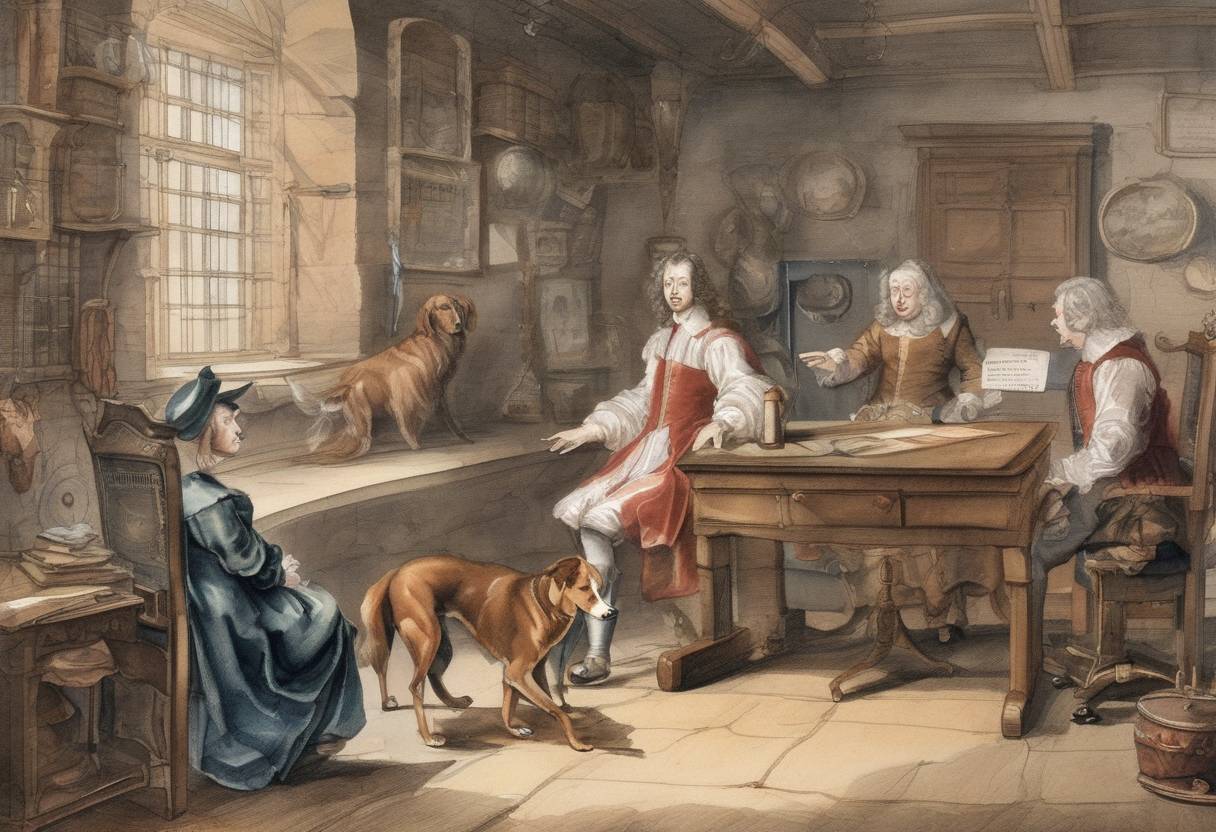
On November 14, 1666, a significant milestone in medical history was recorded by Samuel Pepys, the renowned English diarist, who documented the first blood transfusion performed on a dog by Richard Lower in England. This event marked a pivotal moment in the development of transfusion medicine and experimental physiology.
During the 17th century, the scientific revolution was in full swing, characterized by a surge in experimental inquiry and the challenging of traditional medical practices. The Royal Society, founded in 1660, played a crucial role in promoting scientific research and experimentation. Richard Lower, a prominent physician and physiologist, was a member of this society and was deeply involved in the study of the circulatory system.
Richard Lower’s experiment on November 14, 1666, involved the transfusion of blood between two dogs. This procedure was groundbreaking as it demonstrated the feasibility of transferring blood from one living creature to another. Lower’s work was influenced by earlier experiments conducted by William Harvey, who had discovered the circulation of blood, and by the work of Christopher Wren, who had experimented with intravenous injections.
Lower’s experiment was meticulously documented by Samuel Pepys, who was known for his detailed and vivid diary entries. Pepys’ account provides valuable insights into the scientific practices of the time and the public’s interest in such experiments.
The successful transfusion performed by Richard Lower laid the groundwork for future developments in blood transfusion. Although the procedure was initially limited to animals, it sparked interest and debate within the scientific community about the potential for human blood transfusions.
In the years following Lower’s experiment, transfusion research continued to evolve. By the early 19th century, blood transfusions in humans became more common, although they were not without risks due to the lack of understanding of blood types and compatibility.
Richard Lower’s pioneering work in blood transfusion is a testament to the spirit of innovation and inquiry that characterized the scientific revolution. It paved the way for modern transfusion medicine, which has since become a critical component of medical practice, saving countless lives through the safe and effective transfer of blood and blood products.
The documentation by Samuel Pepys not only highlights the scientific achievements of the era but also serves as a reminder of the importance of recording and sharing scientific knowledge for future generations.
Source: en.wikipedia.org