The Premiere of Igor Stravinsky's *The Rite of Spring*
1913 · Paris, France
Igor Stravinsky's ballet 'The Rite of Spring' premiered in Paris, causing a riot due to its avant-garde music and choreography.
December 18, 1892
The first performance of Tchaikovsky's ballet 'The Nutcracker' takes place at the Mariinsky Theatre in St. Petersburg, Russia.
St. Petersburg, Russia | Mariinsky Theatre
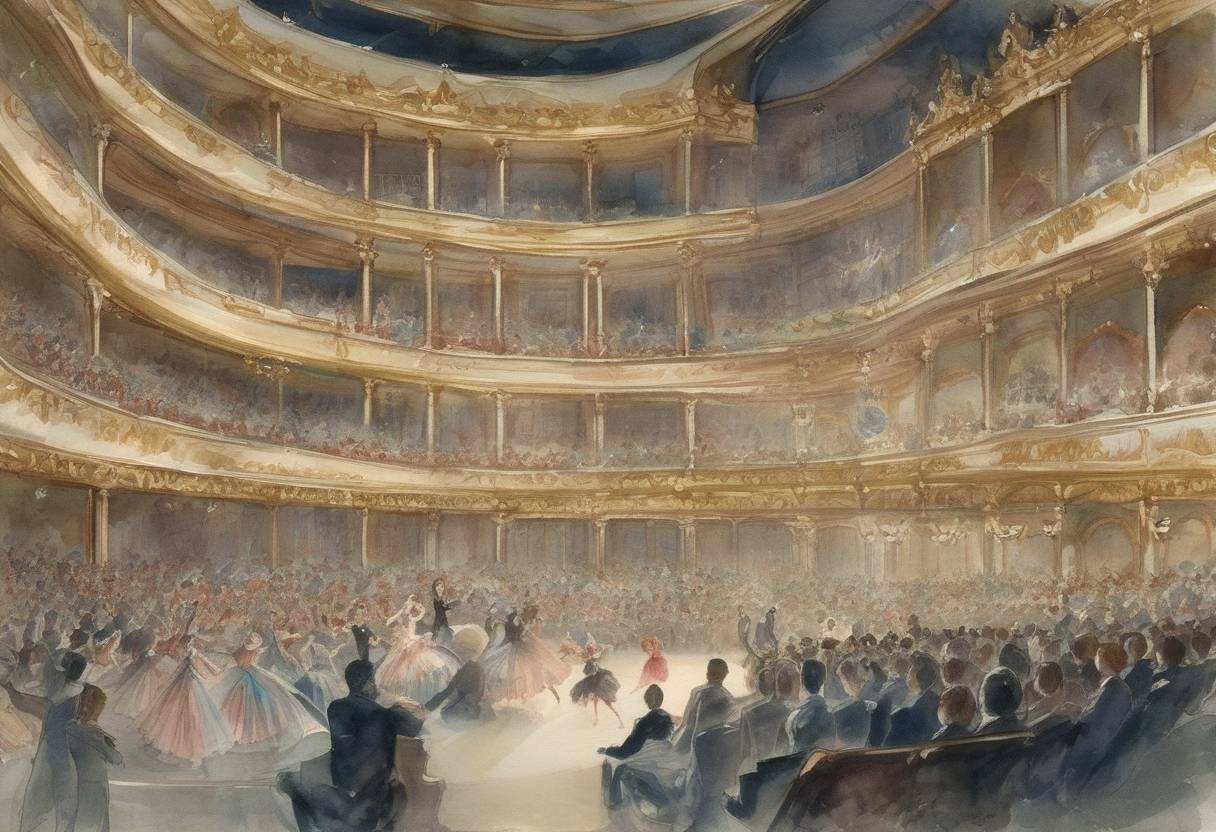
The ballet The Nutcracker was composed by Pyotr Ilyich Tchaikovsky, a renowned Russian composer known for his contributions to classical music, including symphonies, operas, and ballets. The Nutcracker was commissioned by the director of the Imperial Theatres, Ivan Vsevolozhsky, and is based on E.T.A. Hoffmann’s story “The Nutcracker and the Mouse King,” adapted by Alexandre Dumas.
Tchaikovsky began composing the music for The Nutcracker in 1891, following the success of his previous ballet, The Sleeping Beauty. The composition was completed in 1892. Marius Petipa, the original choreographer, fell ill during the production, leading Lev Ivanov, his assistant, to take over the choreography.
The premiere of The Nutcracker was part of a double-bill performance, paired with Tchaikovsky’s opera Iolanta. The initial reception of the ballet was mixed. Critics and audiences were not immediately impressed, particularly with the ballet’s structure and the prominence of children in the performance.
Despite its lukewarm initial reception, The Nutcracker has become one of the most popular ballets in the world, especially during the Christmas season. Its music and choreography have been adapted and reinterpreted countless times, making it a staple of ballet companies globally.
Over time, The Nutcracker gained popularity, particularly in the United States, where it became a holiday tradition. The ballet’s success contributed to Tchaikovsky’s enduring legacy as one of the greatest composers of the Romantic era.
In summary, the first performance of The Nutcracker marked the beginning of a cultural phenomenon that continues to enchant audiences worldwide, showcasing Tchaikovsky’s musical genius and the timeless appeal of ballet.
Source: en.wikipedia.org