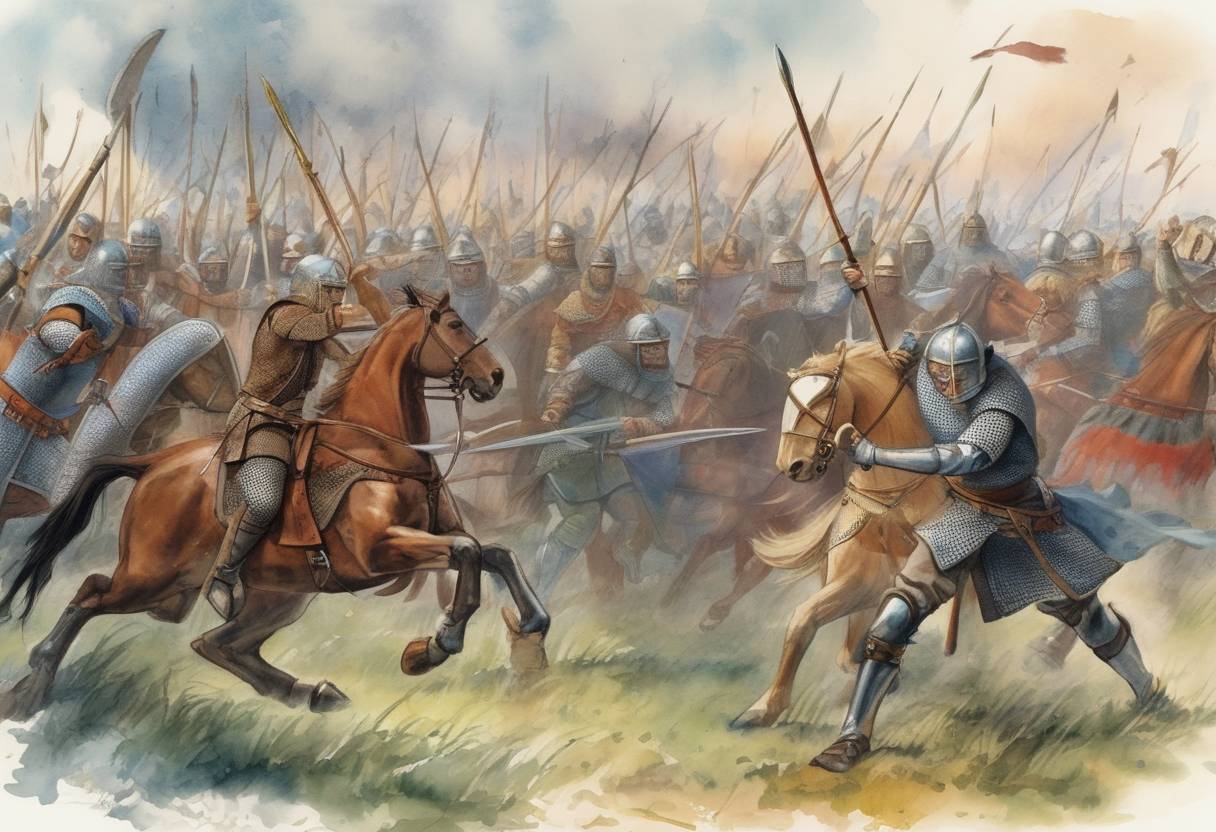
The Battle of Reading - January 5, 871
The Battle of Reading, fought on January 5, 871, was a significant conflict during the Viking invasions of England. This battle was part of a larger series of confrontations between the invading Danish Vikings and the Anglo-Saxon kingdoms, particularly the Kingdom of Wessex.
Context and Background
- Viking Invasions: By the late 9th century, Viking raids had become a persistent threat to the British Isles. The Danes, in particular, were known for their aggressive expansion and had established several settlements in England.
- Kingdom of Wessex: At this time, Wessex was one of the most powerful Anglo-Saxon kingdoms. King Æthelred and his younger brother, Alfred (later known as Alfred the Great), were key figures in the defense against the Viking incursions.
Lead-Up to the Battle
- Danish Encampment: In late 870, a large Danish army, known as the “Great Heathen Army,” had established a fortified camp at Reading in Berkshire. This strategic location allowed them to launch further incursions into Wessex.
- West Saxon Response: In response to the threat, King Æthelred and Alfred gathered their forces to confront the Danes and attempt to drive them out of their territory.
The Battle
- Engagement: The West Saxon army attacked the Danish encampment at Reading. The battle was fierce, with both sides suffering significant casualties.
- Outcome: Despite their efforts, the West Saxons were unable to breach the Danish defenses. The battle ended in a defeat for King Æthelred and Alfred, forcing them to retreat.
Aftermath and Significance
- Continued Conflict: The defeat at Reading did not end the struggle between the West Saxons and the Danes. It was followed by a series of battles throughout 871, including the notable Battle of Ashdown, where the West Saxons achieved a temporary victory.
- Alfred’s Rise: Although the Battle of Reading was a setback, it was part of the formative experiences that shaped Alfred’s military strategies and leadership. Alfred would later become one of England’s most celebrated kings, known for his defense against the Vikings and his efforts to unify and strengthen the Anglo-Saxon kingdoms.
Broader Historical Impact
- Viking Influence: The Viking invasions had a profound impact on the political landscape of England, leading to significant cultural and societal changes.
- Anglo-Saxon Resilience: The battles of 871 demonstrated the resilience and determination of the Anglo-Saxon kingdoms to resist Viking domination, setting the stage for future conflicts and eventual peace treaties.
The Battle of Reading is a reminder of the turbulent period of Viking invasions and the enduring legacy of leaders like Alfred the Great in shaping the history of England.