The Siege of Yorktown Begins: September 28, 1781
1781 · Yorktown, United States
The Siege of Yorktown begins during the American Revolutionary War, leading to the eventual surrender of British forces.
October 19, 1781
The Siege of Yorktown ends with the British Army's surrender to American and French forces, effectively ending the American Revolutionary War.
Yorktown, United States | Continental Army
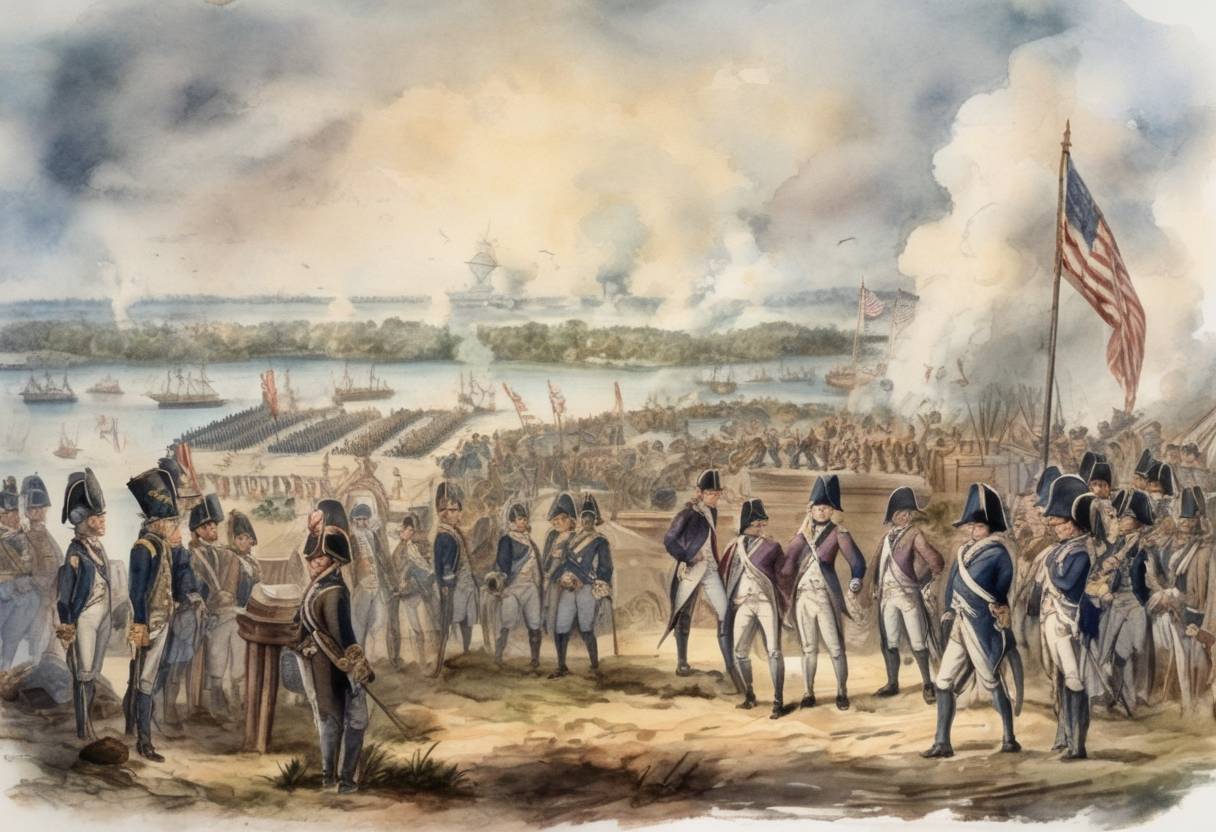
The Siege of Yorktown, culminating on October 19, 1781, marked a decisive turning point in the American Revolutionary War. This event effectively ended major military operations in the conflict and paved the way for American independence.
The American Revolutionary War, which began in 1775, had seen numerous battles and shifting fortunes for both the British and the American forces. By 1781, the war had reached a critical juncture. The British, led by General Lord Charles Cornwallis, sought to maintain control over the southern colonies, which they believed were more loyal to the Crown.
Cornwallis established a fortified position at Yorktown, Virginia, hoping to maintain a strategic foothold and await reinforcements from the British navy. However, the American and French forces, under the command of General George Washington and the French General Comte de Rochambeau, saw an opportunity to trap Cornwallis.
The siege began in earnest in late September 1781. The Franco-American alliance proved crucial, as the French fleet, commanded by Admiral François Joseph Paul de Grasse, successfully blocked British naval reinforcements from reaching Yorktown. This naval blockade was instrumental in isolating Cornwallis’s forces.
On land, the combined American and French armies, numbering approximately 17,000 troops, laid siege to the British position. They constructed a series of trenches and artillery positions, gradually tightening the noose around the British defenses. The siege involved intense artillery bombardments and strategic assaults on key British fortifications.
After weeks of relentless siege warfare, Cornwallis found his position untenable. Supplies were dwindling, and the prospect of relief from the British navy was bleak. On October 17, 1781, Cornwallis initiated negotiations for surrender. Two days later, on October 19, the formal surrender ceremony took place.
In a symbolic gesture, British troops marched out of Yorktown to the tune of “The World Turned Upside Down,” laying down their arms before the victorious American and French forces. Cornwallis, citing illness, did not attend the ceremony, delegating the task to his second-in-command, General Charles O’Hara.
The surrender at Yorktown effectively ended major combat operations in the American Revolutionary War. Although the war would not officially conclude until the signing of the Treaty of Paris in 1783, the victory at Yorktown galvanized American morale and weakened British resolve to continue the conflict.
The siege demonstrated the effectiveness of the Franco-American alliance and underscored the strategic importance of naval power in the war. It also marked a significant step towards the recognition of American independence, as the British government began to reconsider its position and negotiate peace.
The Siege of Yorktown remains a pivotal moment in American history, symbolizing the triumph of the revolutionary cause and the birth of a new nation.
Source: en.wikipedia.org