Captain James Cook's Arrival in Australia - April 20, 1770
1770 · Botany Bay, Australia
Captain James Cook arrives in Australia, marking the first European contact with the eastern coastline of the continent.
April 29, 1770
British explorer James Cook makes his first recorded European contact with the eastern coastline of Australia.
Botany Bay, Australia | British Royal Navy
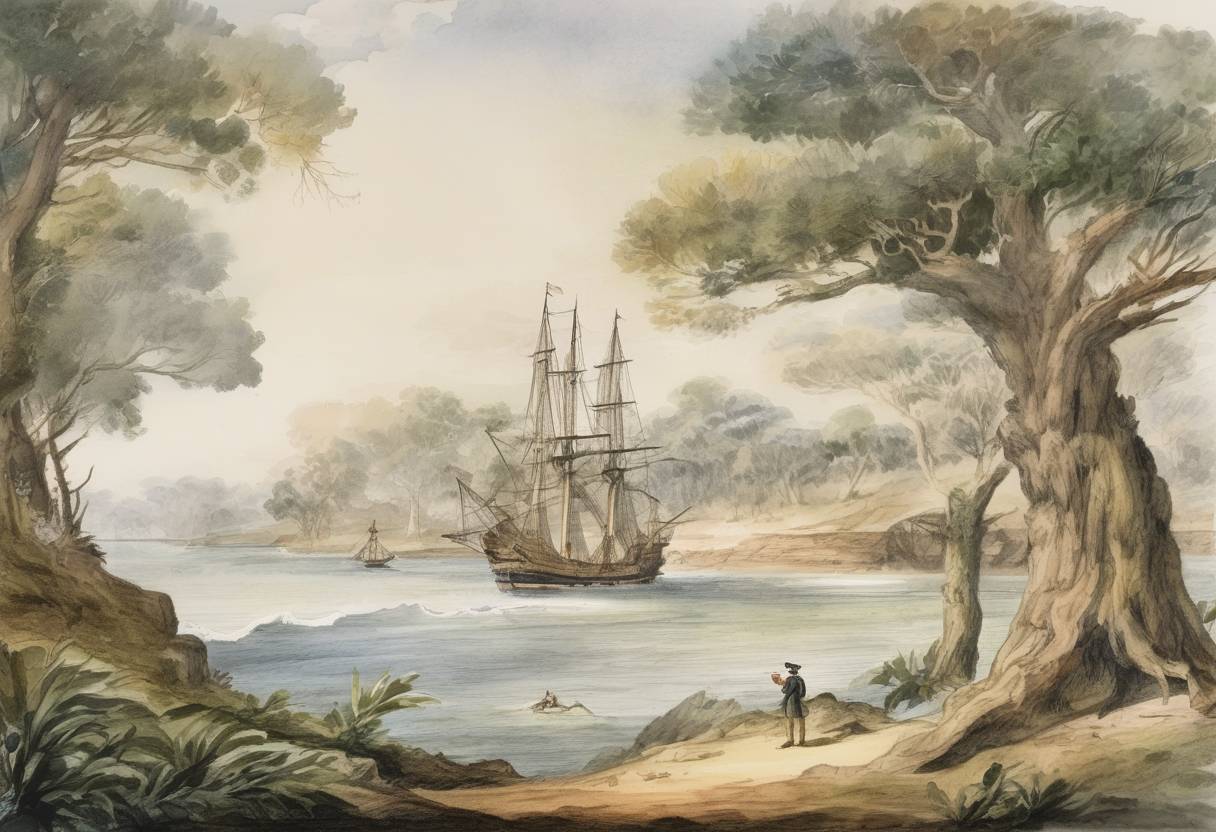
On April 29, 1770, British explorer Captain James Cook made his first recorded European contact with the eastern coastline of Australia. This significant event marked a pivotal moment in the history of European exploration and the subsequent colonization of Australia.
James Cook, a seasoned navigator and cartographer, was commissioned by the British Admiralty to lead an expedition aboard the HMS Endeavour. The primary objective of this voyage was to observe the transit of Venus across the sun from Tahiti, which was crucial for improving navigation and understanding the size of the solar system. Following this scientific mission, Cook had secret orders to search for the fabled “Terra Australis Incognita,” a hypothetical southern continent.
After successfully observing the transit of Venus in June 1769, Cook set sail from Tahiti, navigating through the South Pacific. He charted several islands, including New Zealand, before heading westward towards the Australian continent. Cook’s meticulous mapping and documentation skills were instrumental in expanding European knowledge of the Pacific region.
On April 29, 1770, Cook and his crew sighted the eastern coast of Australia, landing at a place he named Botany Bay, located in present-day New South Wales. The name was inspired by the diverse plant species collected by the expedition’s botanists, Joseph Banks and Daniel Solander. This landing marked the first recorded European contact with the eastern coastline of Australia.
During their stay, Cook and his crew encountered the indigenous Gweagal people. Initial interactions were cautious and marked by mutual curiosity, though they were also fraught with misunderstandings and tensions. Cook’s journals provide a detailed account of these encounters, offering insights into the cultural exchanges and conflicts that ensued.
Cook’s exploration of Australia’s eastern coast had profound implications. His detailed maps and reports provided the British government with valuable information that would later influence their decision to establish a penal colony in New South Wales in 1788. This event marked the beginning of British colonization in Australia, leading to significant and lasting impacts on the indigenous populations and the continent’s history.
Cook’s voyages also contributed to the broader Age of Enlightenment, characterized by scientific exploration and the expansion of European empires. His meticulous documentation and scientific approach set new standards for exploration and had a lasting influence on navigation and cartography.
In summary, James Cook’s first recorded European contact with Australia’s eastern coastline on April 29, 1770, was a landmark event in the history of exploration, setting the stage for future interactions between Europe and the Australian continent.
Source: en.wikipedia.org