Death of Henry IV and Accession of Henry V
1413 · London, England
Henry IV of England died, leading to the accession of his son, Henry V.
September 30, 1399
Henry Bolingbroke is proclaimed King Henry IV of England, marking the beginning of the Lancastrian dynasty.
London, England | English Monarchy
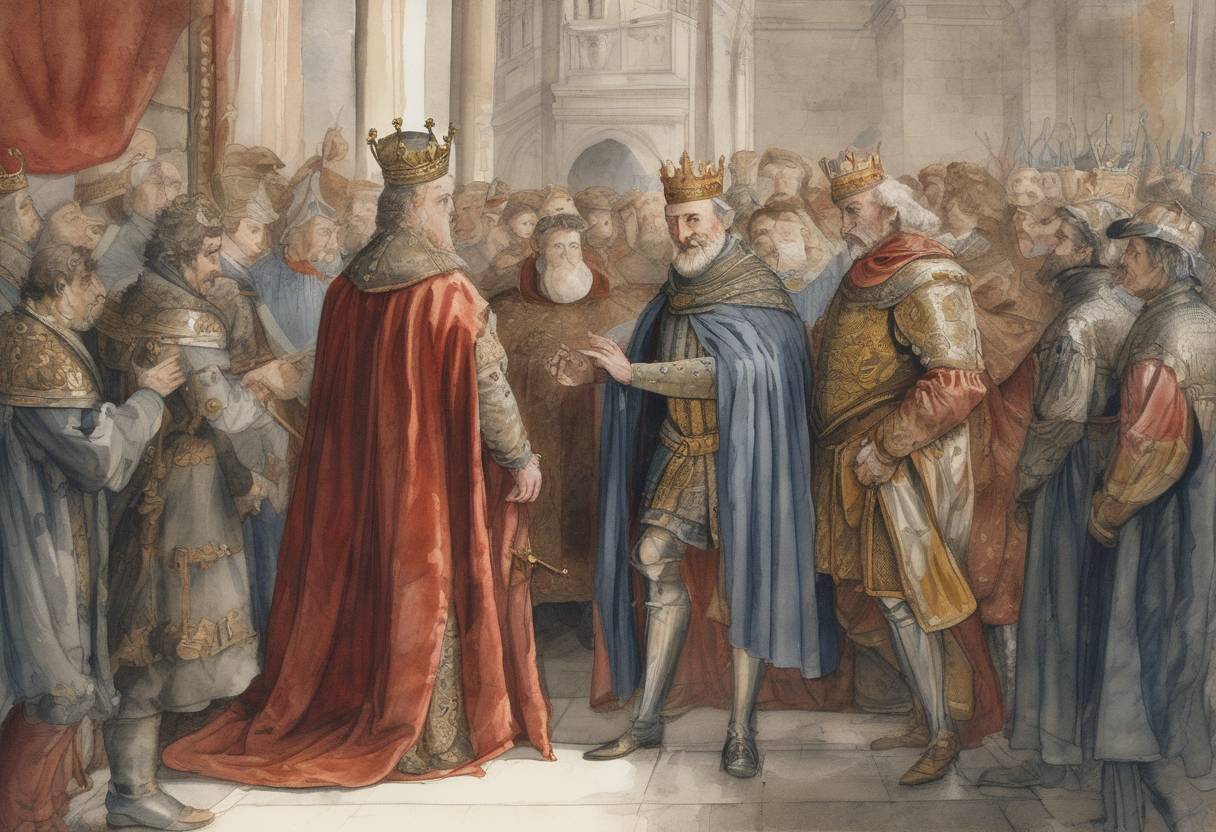
On September 30, 1399, Henry Bolingbroke was proclaimed King Henry IV of England, marking the beginning of the Lancastrian dynasty. This event was a pivotal moment in English history, characterized by political intrigue, familial conflict, and the shifting dynamics of power.
Henry Bolingbroke was the son of John of Gaunt, Duke of Lancaster, and a grandson of King Edward III. His claim to the throne was rooted in his Lancastrian lineage, which was a cadet branch of the Plantagenet dynasty. The political landscape leading up to his ascension was fraught with tension:
Reign of Richard II: King Richard II, who ascended the throne in 1377, faced numerous challenges during his reign, including domestic unrest and dissatisfaction among the nobility. His rule was marked by autocratic tendencies and favoritism, which alienated many powerful nobles.
Exile and Return: In 1398, Henry Bolingbroke was exiled by Richard II following a dispute with another noble, Thomas Mowbray, Duke of Norfolk. The following year, upon the death of his father, John of Gaunt, Richard II seized the Lancastrian estates, further antagonizing Henry.
Seizing the Throne: In June 1399, while Richard II was campaigning in Ireland, Henry returned to England with a small force, ostensibly to reclaim his inheritance. However, he quickly garnered support from disaffected nobles and commoners alike, capitalizing on widespread discontent with Richard’s rule.
Henry’s campaign against Richard II was swift and effective. By August 1399, Richard was captured and forced to abdicate. On September 30, 1399, Henry Bolingbroke was proclaimed King Henry IV in Westminster Hall. His ascension was significant for several reasons:
Legitimacy and Precedent: Henry’s claim to the throne was not without controversy. Although he was a direct descendant of Edward III, his claim bypassed the senior line of succession. His rise set a precedent for the deposition of a reigning monarch, which would have lasting implications for the English crown.
Beginning of the Lancastrian Dynasty: Henry IV’s reign marked the start of the Lancastrian dynasty, which would rule England until 1461, interrupted briefly by the Yorkist Edward IV, and then again from 1470 to 1471.
Henry IV’s reign was marked by efforts to consolidate power and address the challenges he inherited:
Rebellions and Challenges: His rule faced several uprisings, including the Percy Rebellion and the revolt led by Owain Glyndŵr in Wales. These conflicts underscored the instability that characterized his reign.
Legacy: Despite the challenges, Henry IV’s ascension laid the groundwork for the Wars of the Roses, a series of dynastic conflicts between the houses of Lancaster and York. These wars would shape the future of England and ultimately lead to the rise of the Tudor dynasty.
In summary, the proclamation of Henry Bolingbroke as King Henry IV was a transformative event in English history, marking the beginning of a new dynasty and setting the stage for future conflicts that would reshape the monarchy and the nation.
Source: en.wikipedia.org