The Council of Troyes and the Knights Templar: January 14, 1129
1129 · Troyes, France
The Council of Troyes opens, during which the Knights Templar are officially recognized and given a rule by Bernard of Clairvaux.
January 13, 1128
Pope Honorius II grants a papal sanction to the military order known as the Knights Templar, declaring it to be an army of God.
Rome, Italy | Catholic Church
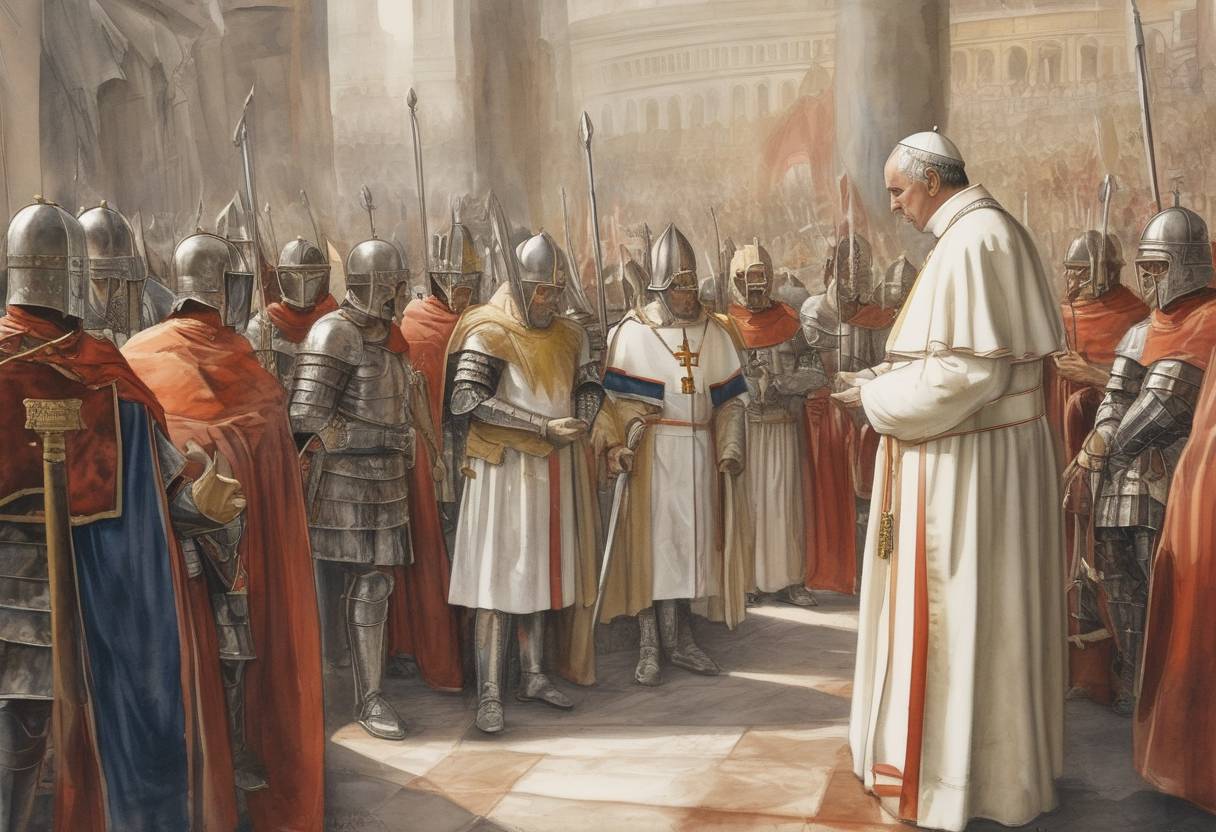
On January 13, 1128, Pope Honorius II granted a papal sanction to the military order known as the Knights Templar, officially recognizing them as an “army of God.” This significant event marked a pivotal moment in the history of the Crusades and the medieval Christian military orders.
The Knights Templar were founded in 1119 by a group of French knights led by Hugues de Payens. Their initial mission was to protect Christian pilgrims traveling to the Holy Land following the First Crusade’s success in capturing Jerusalem in 1099. The order quickly gained a reputation for their dedication and martial prowess.
The formal recognition of the Knights Templar took place during the Council of Troyes, convened in January 1128. This council was a gathering of church leaders and influential figures, including Bernard of Clairvaux, a prominent Cistercian monk and theologian who played a crucial role in drafting the Templar Rule. Bernard’s support was instrumental in gaining papal approval.
Pope Honorius II’s sanction provided the Knights Templar with official ecclesiastical endorsement, granting them legitimacy and authority within Christendom. This recognition allowed the Templars to operate with the Church’s blessing, recruit members, and receive donations and support from Christian nobility across Europe.
The papal sanction transformed the Knights Templar into one of the most powerful and influential military orders of the medieval period. They became key players in the Crusades, participating in battles and fortifying key positions in the Holy Land. The Templars also developed a sophisticated financial network, which contributed to their wealth and influence.
The recognition by Pope Honorius II set the stage for the Templars’ rapid expansion and prominence. Over the next two centuries, they would become a formidable force, both militarily and economically. However, their power eventually led to suspicion and envy, culminating in their dramatic downfall in the early 14th century.
In summary, the papal sanction on January 13, 1128, was a defining moment for the Knights Templar, establishing them as a legitimate and powerful entity within the medieval Christian world. Their legacy continues to capture the imagination and interest of historians and the public alike.
Source: en.wikipedia.org