Hernando de Soto Claims Florida for Spain on June 3, 1539
1539 · Tampa Bay, modern-day United States
Hernando de Soto claims Florida for Spain during his exploration of the southeastern United States.
March 27, 1513
Spanish explorer Juan Ponce de León sighted Florida, claiming it for Spain.
Florida, United States | Spanish Empire
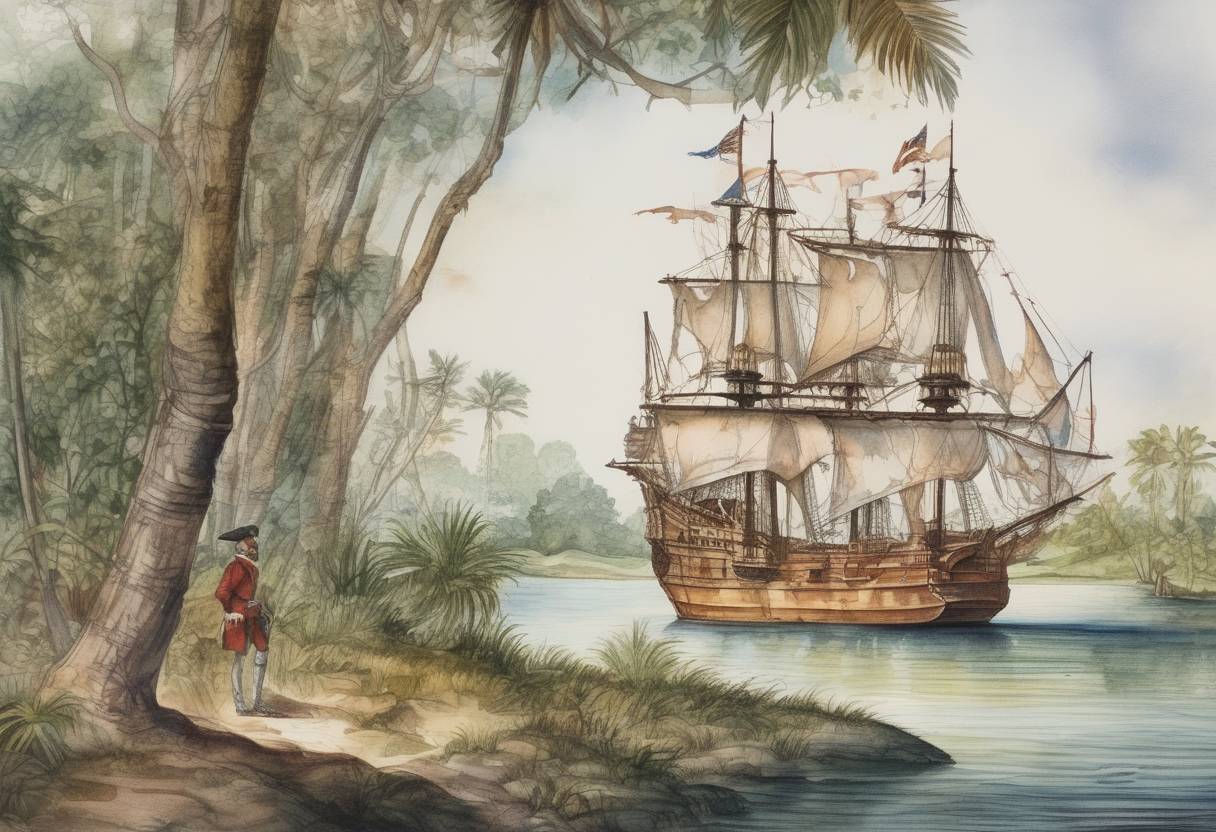
On March 27, 1513, Spanish explorer Juan Ponce de León made a significant mark in the annals of exploration by sighting the land that would later be known as Florida. This event marked the beginning of European exploration and colonization in what is now the southeastern United States.
Juan Ponce de León was a seasoned explorer and conquistador, having been part of Christopher Columbus’s second voyage to the New World in 1493. He later became the first Governor of Puerto Rico, where he heard tales of a legendary island called Bimini, rumored to have the Fountain of Youth—a spring that supposedly restored the youth of anyone who drank from it.
In pursuit of both new lands and the mythical Fountain of Youth, Ponce de León set sail from Puerto Rico in early 1513 with three ships. His expedition was sanctioned by the Spanish Crown, which granted him the right to explore and claim new territories.
On March 27, 1513, Ponce de León’s expedition sighted the east coast of what he initially believed to be another island. He named the land “La Florida” in honor of Spain’s Easter celebration, Pascua Florida, which means “Festival of Flowers.” The lush, verdant landscape he observed further inspired the name.
Ponce de León formally claimed the land for Spain, marking the beginning of Spanish influence in the region. This claim was part of Spain’s broader strategy to expand its empire in the Americas, following the successes of explorers like Columbus and Hernán Cortés.
The sighting of Florida by Juan Ponce de León is a pivotal moment in history, representing the expansion of European exploration and the beginning of a complex history of interaction between European settlers and Native American populations in the region.
Source: www.history.com