René-Robert Cavelier, Sieur de La Salle, and the Claiming of La Louisiane
1682 · Mississippi River Basin, United States
René-Robert Cavelier, Sieur de La Salle, claimed the Mississippi River basin for France, naming it La Louisiane.
March 19, 1687
Explorer Robert Cavelier de La Salle was murdered by his own men while searching for the mouth of the Mississippi River.
Navasota, United States | La Salle expedition
On March 19, 1687, the French explorer Robert Cavelier de La Salle was murdered by his own men in what is now Texas. This event marked a tragic end to the ambitious explorer’s quest to establish a French colony at the mouth of the Mississippi River.
Robert Cavelier de La Salle was a prominent French explorer in the late 17th century, known for his expeditions in North America. He is credited with exploring the Great Lakes region, the Mississippi River, and the Gulf of Mexico. In 1682, La Salle claimed the entire Mississippi River basin for France, naming it “La Louisiane” in honor of King Louis XIV.
In 1684, La Salle embarked on an expedition to establish a French colony at the mouth of the Mississippi River. He believed this would secure French control over the interior of North America and provide a strategic base for trade and military operations. However, the expedition faced numerous challenges from the outset, including navigational errors, hostile encounters with indigenous peoples, and internal dissent among his men.
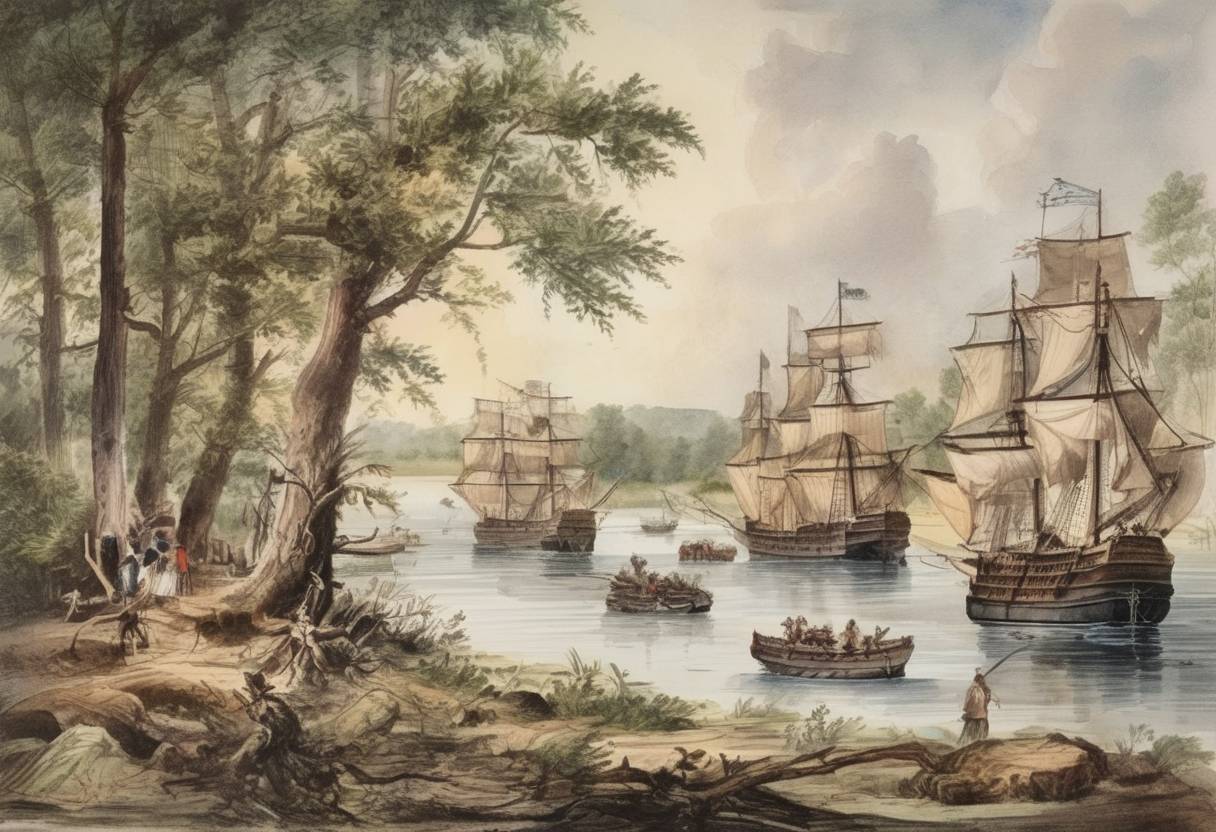
La Salle’s expedition was plagued by misfortune. The fleet, consisting of four ships, was beset by storms and navigational errors, leading them far off course. Instead of reaching the Mississippi River, they landed on the coast of present-day Texas, near Matagorda Bay. The expedition’s flagship, the “La Belle,” was wrecked, and supplies dwindled as tensions rose among the crew and settlers.
By early 1687, La Salle’s situation had become desperate. With dwindling supplies and increasing discontent among his men, he decided to lead a small party overland to seek help from French settlements in the Illinois Country. However, the journey was fraught with hardship, and the group became increasingly fractious.
On March 19, 1687, near the site of present-day Navasota, Texas, La Salle was ambushed and killed by several of his own men. The murder was the culmination of growing mutiny and resentment among his followers, who blamed him for the expedition’s failures and their dire circumstances.
La Salle’s death marked the collapse of his ambitious plans for a French colony at the mouth of the Mississippi River. The remaining members of the expedition faced a perilous journey, with only a few eventually reaching safety.
Despite the tragic end to his final expedition, La Salle’s earlier explorations had a lasting impact on the history of North America. His claims laid the groundwork for future French territorial ambitions in the region, and his expeditions contributed to the European understanding of the continent’s geography.
La Salle’s legacy is a complex one, marked by both his visionary ambitions and the tragic failures of his final expedition. His life and death underscore the challenges and perils faced by explorers during the Age of Discovery.
Source: en.wikipedia.org