The Treaty of Zaragoza: April 22, 1529
1529 · Zaragoza, Spain
The Treaty of Zaragoza is signed, dividing the eastern hemisphere between Spain and Portugal along a meridian 297.5 leagues east of the Moluccas.
June 7, 1494
The Treaty of Tordesillas was signed, dividing the newly discovered lands outside Europe between Portugal and Spain along a meridian 370 leagues west of the Cape Verde islands.
Tordesillas, Spain | Kingdom of Spain and Kingdom of Portugal
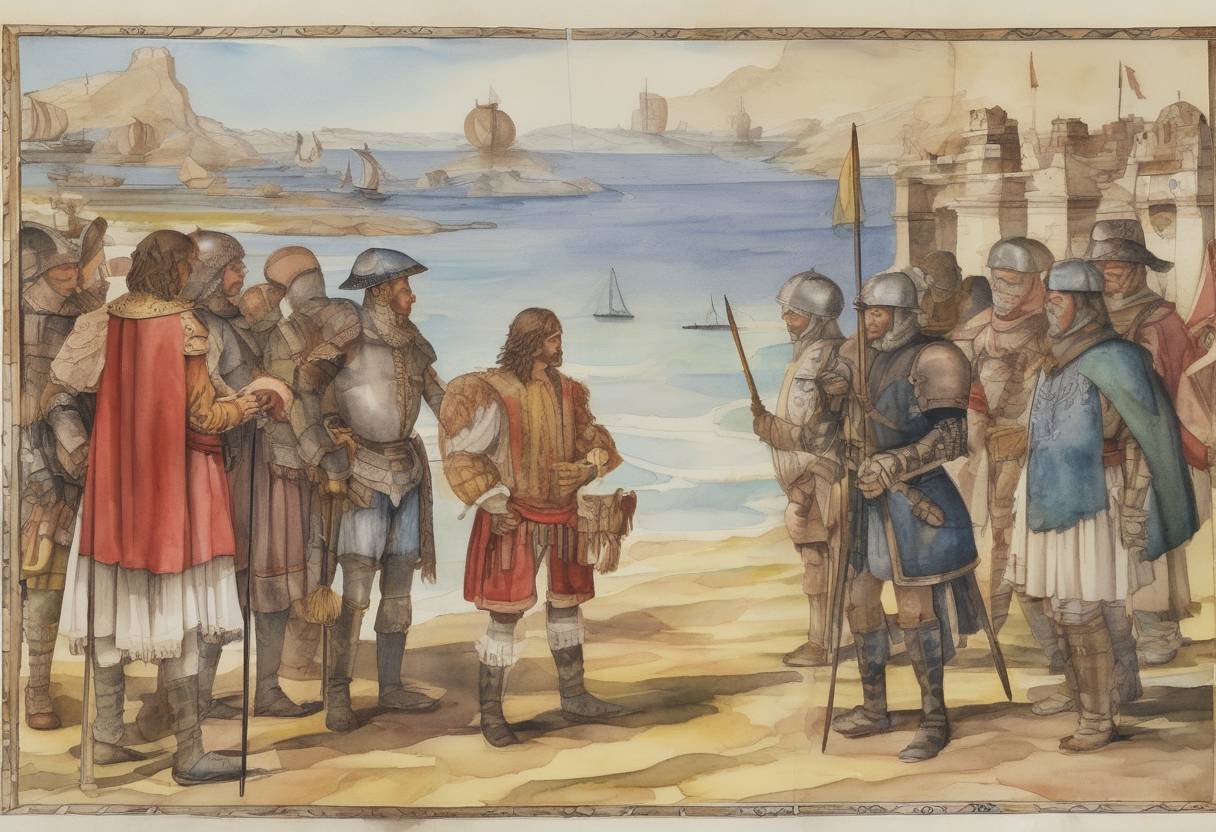
The Treaty of Tordesillas, signed on June 7, 1494, was a pivotal agreement between the two major seafaring nations of the time, Portugal and Spain. This treaty aimed to resolve conflicts over newly discovered lands by the late 15th century explorers, following the voyages of Christopher Columbus and other navigators.
Age of Exploration: By the late 15th century, European nations were fervently exploring new territories. Spain and Portugal, in particular, were at the forefront of these expeditions, driven by the quest for new trade routes and territories.
Papal Intervention: Prior to the treaty, Pope Alexander VI issued the papal bull Inter caetera in 1493, which granted Spain the rights to any lands west of a meridian 100 leagues west of the Azores and Cape Verde islands. This was intended to resolve disputes but was seen as favoring Spain.
Division Line: The Treaty of Tordesillas established a new demarcation line, 370 leagues west of the Cape Verde islands. This line was intended to divide the non-European world into two zones of influence: lands to the west for Spain and lands to the east for Portugal.
Mutual Agreement: Both nations agreed to the terms to avoid conflict and ensure peaceful exploration and colonization. The treaty was ratified by Spain on July 2, 1494, and by Portugal on September 5, 1494.
Portuguese Expansion: The treaty allowed Portugal to claim territories in Africa, Asia, and eventually Brazil, which fell east of the line. This facilitated the establishment of a vast Portuguese empire.
Spanish Dominance in the Americas: Spain gained rights to most of the Americas, leading to extensive Spanish colonization and influence in the New World.
Long-term Impact: The Treaty of Tordesillas had a lasting impact on global geopolitics, shaping the colonial boundaries and cultural landscapes of the Americas, Africa, and Asia.
Legacy: While the treaty was initially respected by Spain and Portugal, it was largely ignored by other European powers, who did not recognize the papal authority to divide the world.
The Treaty of Tordesillas stands as a testament to the early attempts at international diplomacy and the division of the world during the Age of Exploration. Its influence can still be seen in the linguistic, cultural, and political divisions in the modern world.
Source: en.wikipedia.org