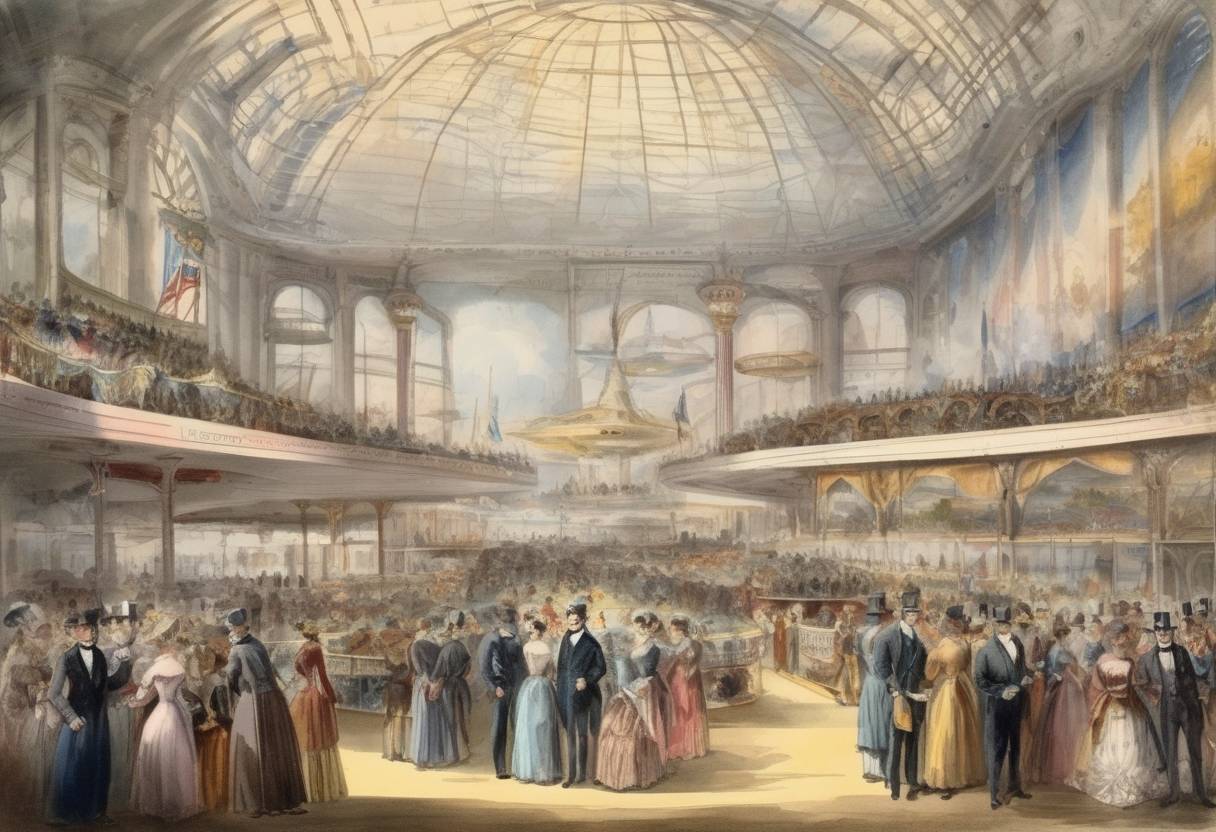
The Exhibition of the Industry of All Nations: July 14, 1853
On July 14, 1853, New York City witnessed the grand opening of the Exhibition of the Industry of All Nations, marking the first major world’s fair in the United States. This event was inspired by the success of the Great Exhibition held in London in 1851, which was the first international exposition of its kind. The New York exhibition aimed to showcase technological advancements and cultural achievements from around the world, reflecting the burgeoning industrial era.
Context and Planning
- Inspiration: The idea for the exhibition was largely inspired by the Great Exhibition of 1851, held at the Crystal Palace in London. This event had set a precedent for international exhibitions, highlighting industrial achievements and fostering global trade and cultural exchange.
- Organization: The exhibition was organized by a group of New York businessmen and civic leaders who saw the potential for such an event to boost the city’s economy and international standing. They formed the “Association for the Exhibition of the Industry of All Nations” to oversee the planning and execution of the fair.
The Crystal Palace
- Location: The exhibition was held in a specially constructed building known as the New York Crystal Palace, located in what is now Bryant Park in Manhattan.
- Design: The Crystal Palace was an architectural marvel of its time, designed by architects Georg Carstensen and Charles Gildemeister. It featured a cast-iron and glass structure, similar to its London counterpart, and was renowned for its innovative design and engineering.
Highlights of the Exhibition
- Exhibits: The fair featured a wide array of exhibits from various countries, showcasing advancements in industry, agriculture, and the arts. It included displays of machinery, textiles, fine arts, and scientific instruments.
- Cultural Exchange: The exhibition served as a platform for cultural exchange, allowing visitors to experience the diversity of global cultures and innovations.
- Notable Inventions: Among the notable inventions displayed was Elisha Otis’s safety elevator, which would later revolutionize urban architecture by making skyscrapers feasible.
Impact and Legacy
- Economic Boost: The exhibition attracted visitors from across the United States and abroad, providing a significant economic boost to New York City.
- Cultural Influence: It played a crucial role in promoting cultural and technological exchange, influencing future world’s fairs and expositions.
- Urban Development: The success of the exhibition contributed to New York City’s development as a major cultural and economic hub.
The Exhibition of the Industry of All Nations was a landmark event in the history of international expositions, setting the stage for future world’s fairs and highlighting the importance of global collaboration and innovation.