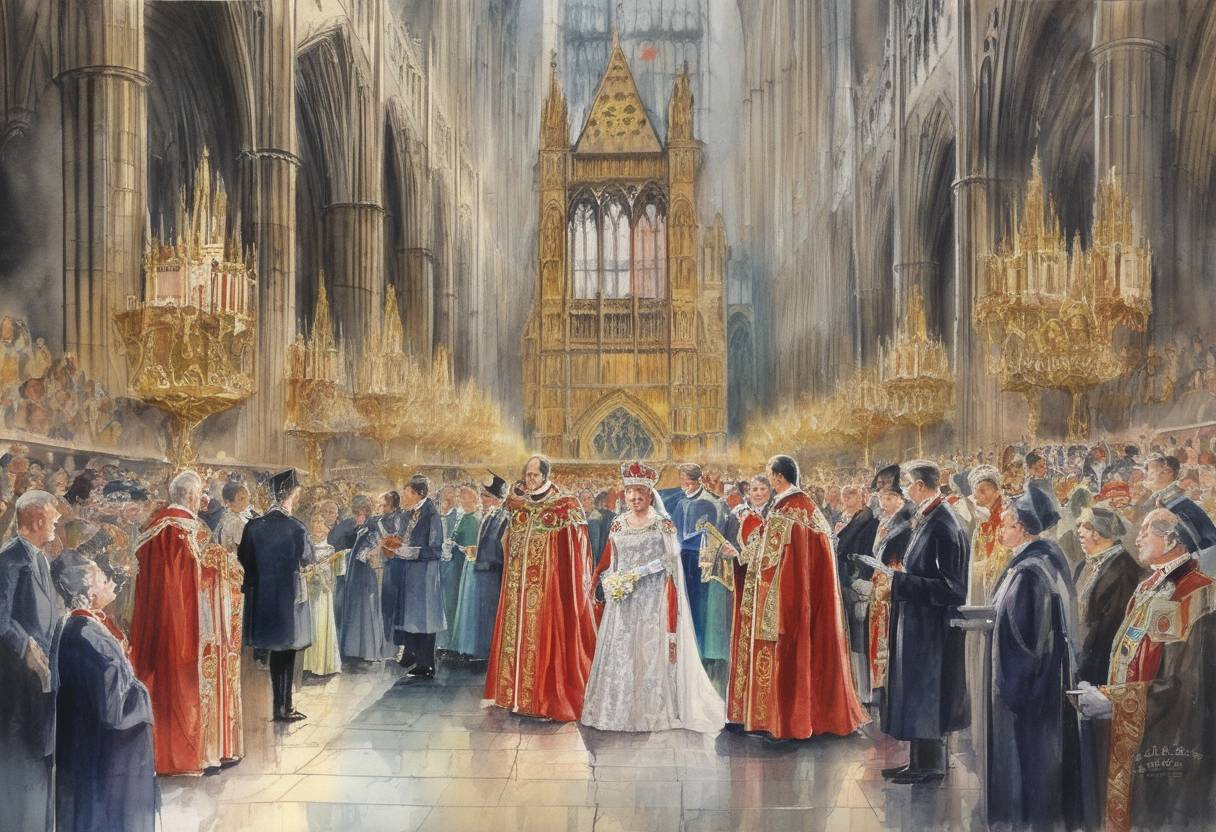
The Coronation of Queen Elizabeth II
On June 2, 1953, Queen Elizabeth II was crowned in a grand ceremony at Westminster Abbey, London, marking the official beginning of her reign as the monarch of the United Kingdom and other Commonwealth realms. This historic event was not only a significant moment in British history but also a major global spectacle, as it was the first coronation to be televised, reaching an audience of millions worldwide.
Context Leading Up to the Coronation
Accession to the Throne: Elizabeth became queen on February 6, 1952, following the death of her father, King George VI. Her accession to the throne was a period of mourning, and the coronation was delayed to allow for an appropriate time of respect and preparation.
Post-War Britain: The coronation took place in a Britain that was still recovering from the effects of World War II. It was seen as a symbol of renewal and hope for the future, reflecting the country’s aspirations for a new era.
The Coronation Ceremony
Location and Participants: The ceremony was held at Westminster Abbey, a site with a rich history of royal coronations dating back to 1066. Over 8,000 guests attended, including heads of state, dignitaries, and representatives from the Commonwealth.
Television Broadcast: For the first time, the coronation was broadcast on television, allowing an estimated 27 million people in the UK alone to witness the event. This decision was initially controversial but ultimately showcased the power of television as a medium for bringing people together.
Ceremonial Elements: The coronation followed traditional rites, including the anointing with holy oil, the presentation of regalia such as the crown, orb, and scepter, and the taking of the coronation oath. These elements underscored the continuity and historical significance of the British monarchy.
Aftermath and Significance
Cultural Impact: The coronation had a profound cultural impact, reinforcing the monarchy’s role in British society and its connection to the Commonwealth. It also highlighted the evolving role of media in public life.
Monarchical Reign: Queen Elizabeth II’s reign would become one of the longest in British history, characterized by significant social, political, and technological changes. Her leadership and dedication to public service have been pivotal in maintaining the monarchy’s relevance in the modern era.
Global Influence: The event strengthened ties within the Commonwealth and showcased Britain’s cultural heritage on a global stage, emphasizing the monarchy’s symbolic role in international diplomacy and unity.
The coronation of Queen Elizabeth II remains a defining moment in 20th-century history, symbolizing both tradition and transformation within the British monarchy and beyond.