Founding of Baltimore, Maryland - July 30, 1729
1729 · Baltimore, United States
Baltimore, Maryland, is founded.
March 25, 1634
The first settlers arrived in Maryland, led by Leonard Calvert, establishing the colony of Maryland.
St. Mary's City, United States | Maryland Colony
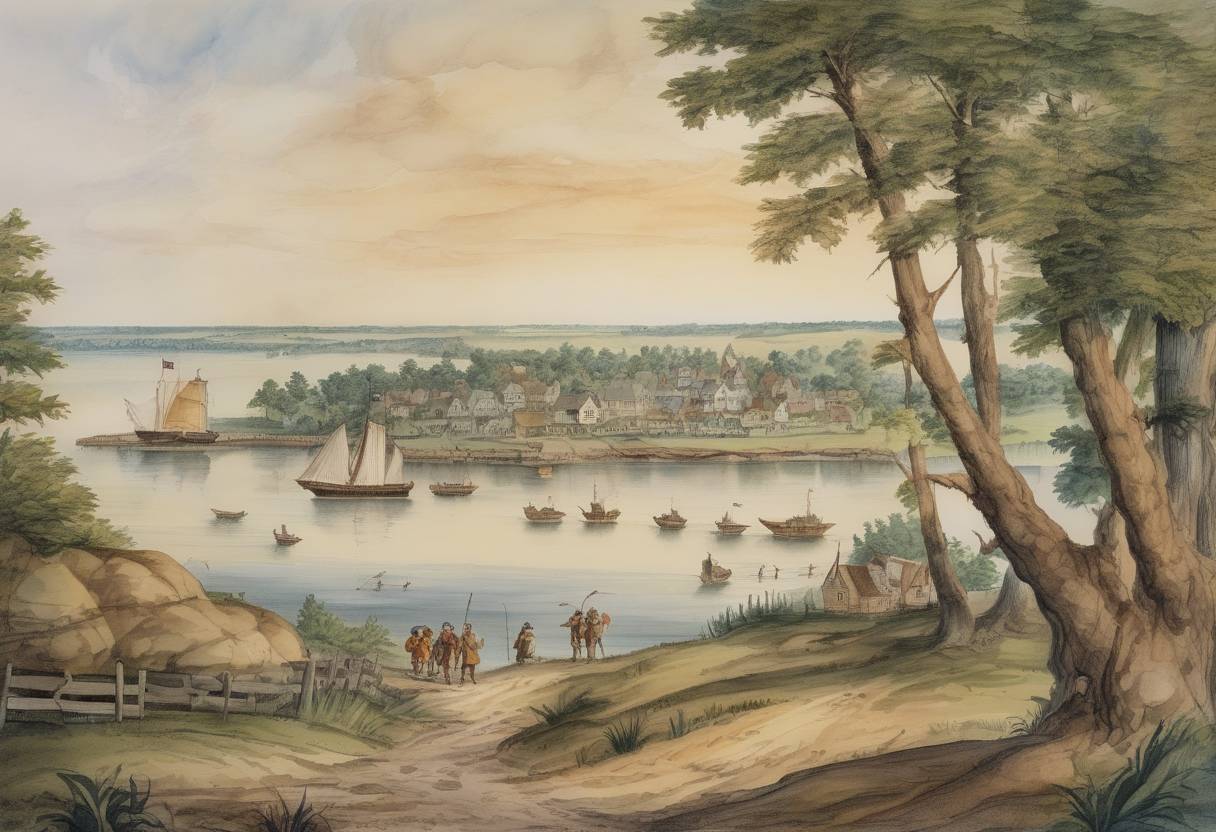
On March 25, 1634, a significant event in American colonial history took place: the arrival of the first settlers in Maryland, led by Leonard Calvert. This marked the establishment of the Maryland colony, which would become a notable example of religious tolerance in the New World.
The Maryland colony was founded under a charter granted by King Charles I of England to Cecilius Calvert, the 2nd Baron Baltimore, in 1632. The Calvert family, who were Catholic, sought to create a haven for English Catholics facing persecution in Protestant England. The charter granted them significant autonomy, allowing them to govern the colony with considerable freedom.
The settlers embarked on their journey aboard two ships, the Ark and the Dove, departing from Cowes on the Isle of Wight in late 1633. The expedition included approximately 140 colonists, a mix of Catholic and Protestant settlers, reflecting the Calverts’ vision of a colony where religious tolerance would be practiced.
Upon their arrival on March 25, 1634, the settlers landed on St. Clement’s Island in the Potomac River. Leonard Calvert, the younger brother of Cecilius Calvert, served as the colony’s first governor. The settlers quickly established a settlement they named St. Mary’s City, located near the mouth of the Potomac River.
The founding of Maryland was significant for several reasons:
Religious Tolerance: Maryland became one of the first colonies to promote religious freedom. The Maryland Toleration Act of 1649, also known as the Act Concerning Religion, was one of the first laws mandating religious tolerance for Trinitarian Christians.
Economic Development: The colony’s economy was initially based on tobacco cultivation, which became a major cash crop and contributed to Maryland’s prosperity.
Political Structure: The Maryland Charter allowed for a proprietary colony, giving the Calverts significant control over its governance. This autonomy set a precedent for other proprietary colonies.
Maryland’s early years were marked by challenges, including conflicts with Native American tribes and internal religious tensions. However, the colony managed to grow and attract more settlers, eventually becoming a key player in the economic and political landscape of colonial America.
The legacy of Maryland’s founding is evident in its early embrace of religious tolerance and its role in shaping the cultural and religious diversity of the United States. The arrival of the first settlers on March 25, 1634, remains a pivotal moment in the history of American colonization.
Source: en.wikipedia.org