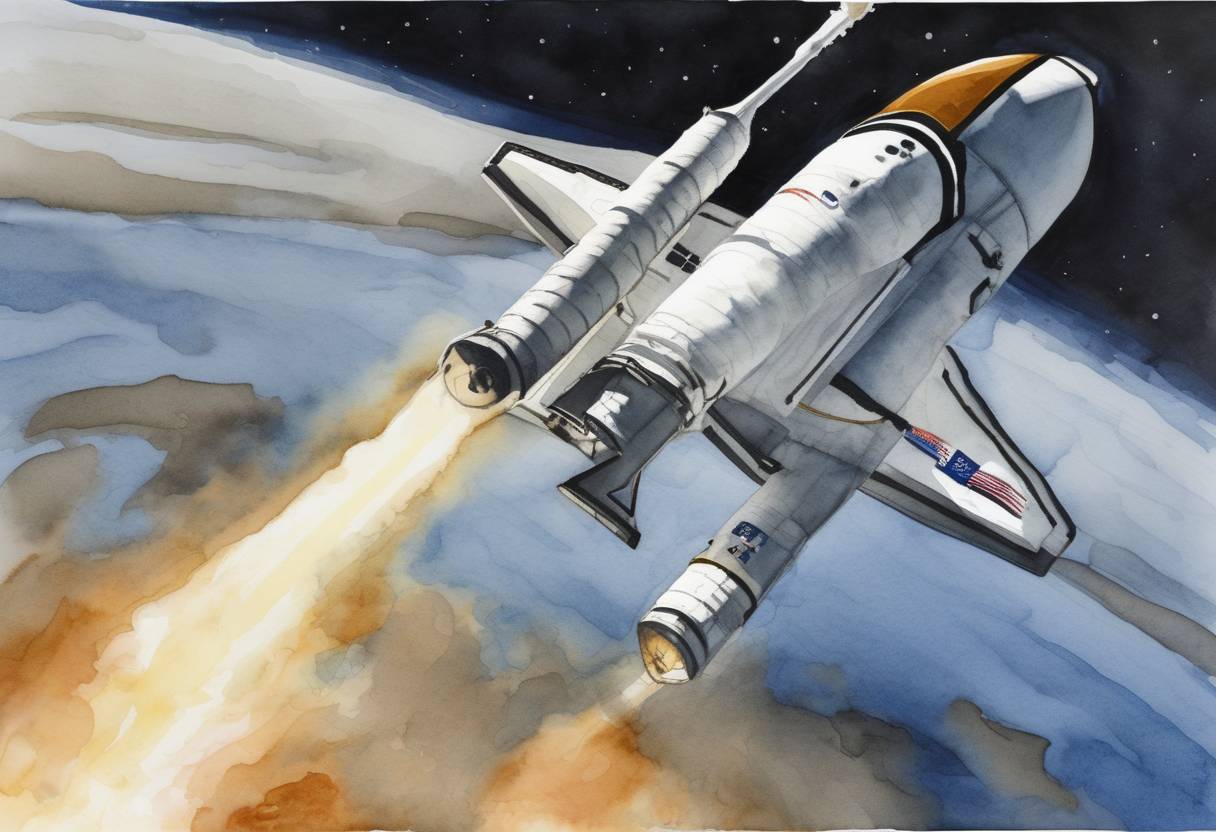
STS-97 Space Shuttle Mission
On November 30, 2000, NASA launched the STS-97 mission using the Space Shuttle Endeavour. This mission marked the 101st flight in the Space Shuttle program and played a critical role in the ongoing construction of the International Space Station (ISS).
Mission Objectives
The primary goal of STS-97 was to deliver and install the first set of solar arrays on the ISS, a significant step in providing electrical power to the station. These arrays are crucial for supporting future activities and expanding the operational capabilities of the ISS.
Key Events
Launch: Endeavour lifted off from Kennedy Space Center in Florida at 10:06 p.m. EST on November 30, 2000. The nighttime launch added visual spectacle to the significance of the mission.
Flight Plan: Over the course of its mission, the crew, consisting of Commander Brent Jett, Pilot Mike Bloomfield, and Mission Specialists Carlos Noriega, Joe Tanner, and Marc Garneau, performed several extravehicular activities (EVAs). These spacewalks were essential for the installation and deployment of the solar arrays.
Installation of Solar Arrays: The P6 solar arrays onboard Endeavour were the largest ever deployed at that time, extending to 240 feet (73 meters) once fully unfurled. These arrays became a pivotal power source for the ISS.
Significance
The success of the STS-97 mission was a milestone in the assembly and operational enhancement of the ISS. By bringing renewable energy capabilities to the station, it allowed for expanded scientific research, longer duration missions, and an increase from the current three-member crew to a permanent six-member fixture.
Aftermath
Following its successful mission, Endeavour returned to Earth on December 11, 2000, landing at Kennedy Space Center. The advancements made during STS-97 laid a foundation for the continued assembly and functionality of the ISS, contributing substantially to international collaboration in space exploration. The solar arrays installed during this mission continue to be an essential component of the ISS infrastructure.