Battle of Princeton: January 3, 1777
1777 · Princeton, United States
American Revolutionary War: American forces under General George Washington defeated British forces at the Battle of Princeton.
September 22, 1776
Nathan Hale, an American Revolutionary War soldier, was executed by the British for espionage.
New York City, United States | Continental Army
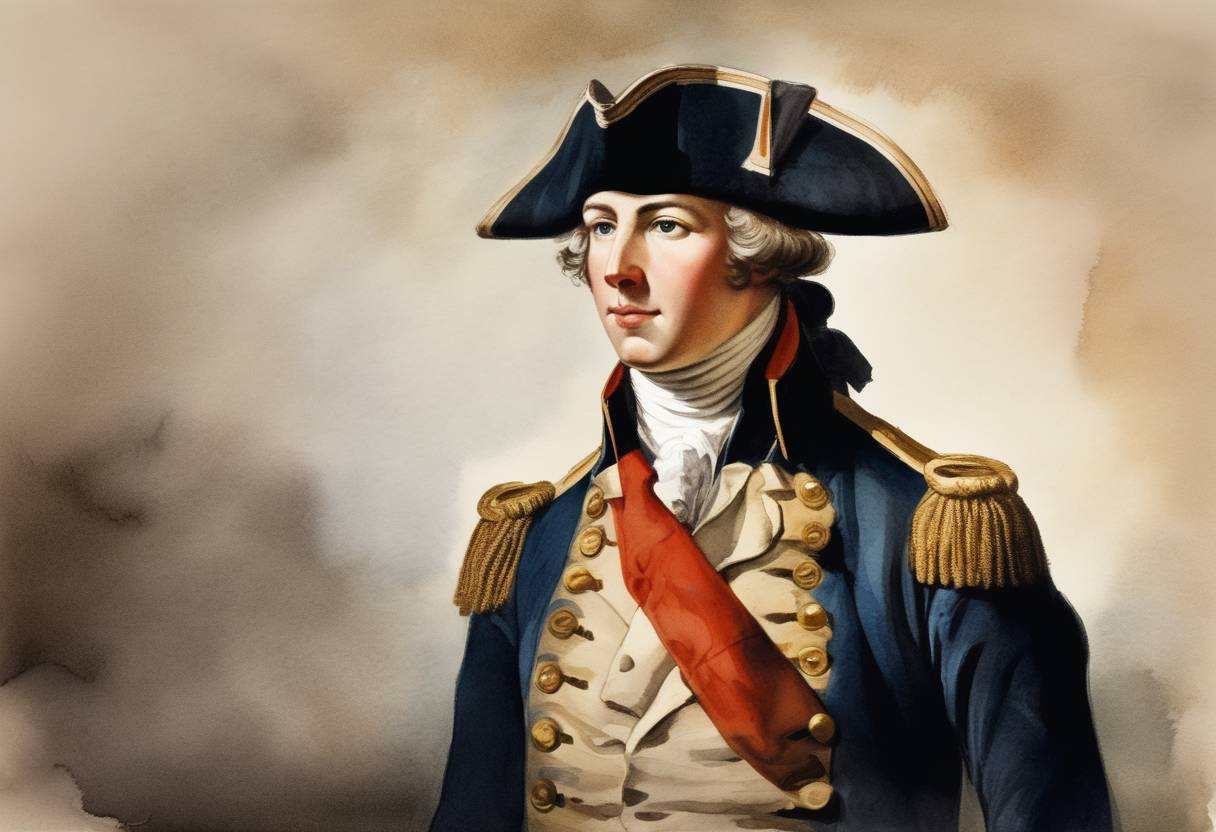
Nathan Hale was a soldier for the Continental Army during the American Revolutionary War. Born on June 6, 1755, in Coventry, Connecticut, he became an educator before heeding the call to join the rebellion against British rule. After graduating from Yale College in 1773, Hale became a teacher but soon found his duty with the revolutionary cause.
Following the pivotal loss of New York City to British forces in the summer of 1776, George Washington faced urgent military intelligence needs to counter British advances. At this critical juncture, the newly formed Committee of Safety sought volunteers for a covert mission to gather intelligence on British troop movements. Nathan Hale stepped forward.
Hale’s mission was to infiltrate enemy lines and gather crucial data. He disguised himself as a Dutch schoolteacher to enter British-occupied territory. This task was fraught with danger; spies captured by the British were summarily executed, not granted the status of prisoners of war.
Hale’s espionage efforts were short-lived. On September 21, 1776, he was captured in Queens, New York, reportedly betrayed by his cousin Samuel Hale, who was a Loyalist, or possibly by British Major Robert Rogers after being tricked into revealing his mission.
On September 22, 1776, Hale was brought before the British authorities for a swift trial and was sentenced to death. His execution took place at an artillery park near present-day 66th Street and Third Avenue in Manhattan.
Nathan Hale’s alleged last words, “I only regret that I have but one life to lose for my country,” became a symbol of American patriotism and sacrifice. While the accuracy of the quotation is debated, his commitment to the revolutionary cause remains unquestionable.
Hale’s death inspired a deeper resolve within the Continental Army and contributed to the mythology of the American struggle for independence. Statues and memorials in his honor have been erected in several locations, including his native Connecticut and at Yale University, underscoring his enduring legacy as an American hero.
Source: www.history.com