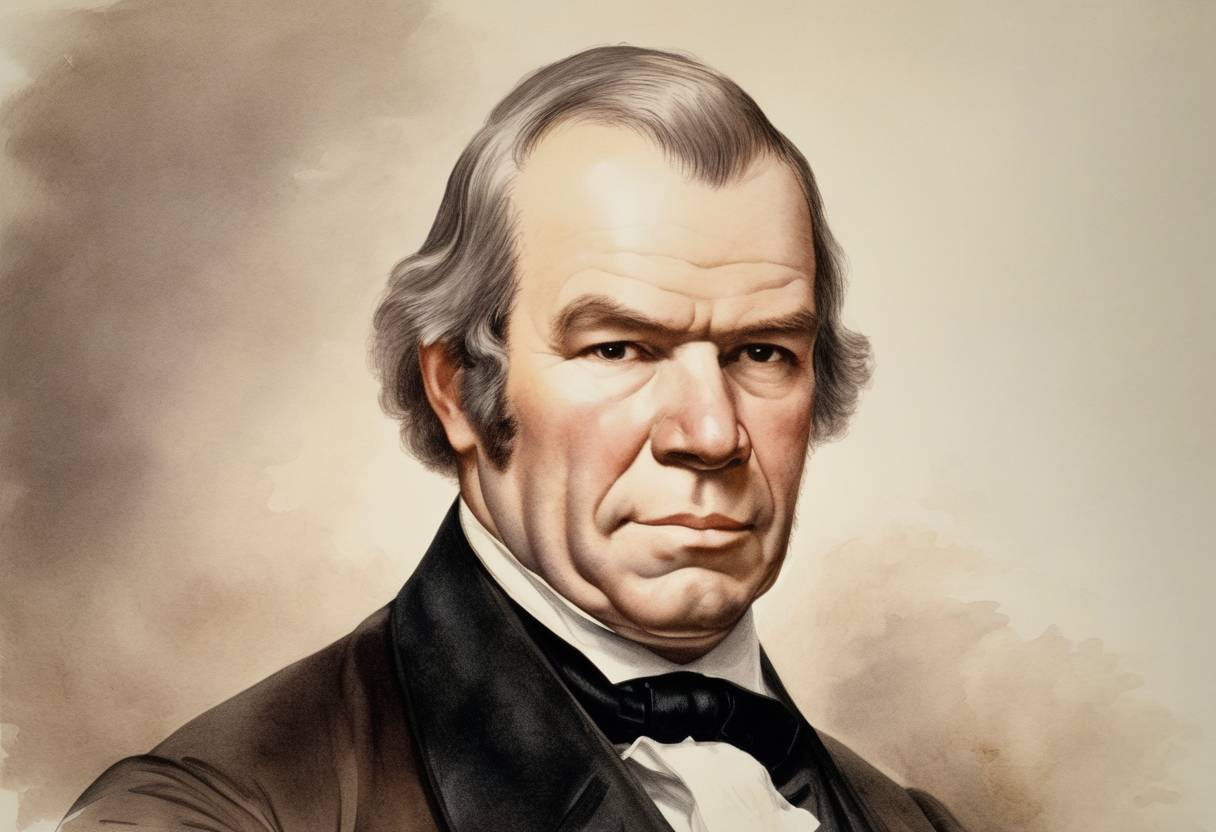
Andrew Johnson: Born December 29, 1808
Andrew Johnson, the 17th President of the United States, was born on December 29, 1808, in Raleigh, North Carolina. His early life was marked by humble beginnings and hardship, shaping his future political career and viewpoints.
Early Life and Background
- Family: Andrew Johnson was born to Jacob Johnson and Mary “Polly” McDonough. His father worked as a laborer and died when Andrew was just three years old, leaving the family in poverty.
- Apprenticeship: At the age of ten, Johnson was apprenticed to a tailor. This experience was critical in developing his strong work ethic and provided him with an education through listening to reading materials delivered in the shop.
- Move to Tennessee: In his late teens, Johnson moved to Greeneville, Tennessee. There, he established his own successful tailoring business and began to engage in local politics.
Political Career
- Local Politics: Johnson’s political career commenced with his election as an alderman in Greeneville. His involvement in politics was driven by a commitment to representing the interests of working-class citizens.
- State and National Office: He served as a mayor, a member of the Tennessee House of Representatives, and later as a state senator. His political ascent continued with his election to the U.S. House of Representatives and eventually, the U.S. Senate.
Presidency
- Vice Presidency and Assumption of Office: Johnson was elected as Vice President in 1864 under Abraham Lincoln. Following Lincoln’s assassination in April 1865, Andrew Johnson ascended to the presidency during an exceptionally turbulent time in American history.
- Reconstruction Era: His tenure was defined by his approach to Reconstruction after the Civil War. His lenient policies towards the Southern states were unpopular with the Radical Republicans, leading to a significant political clash.
- Impeachment: Johnson was the first U.S. president to be impeached by the House of Representatives in 1868, largely due to his violation of the Tenure of Office Act and his frequent clashes with Congress over Reconstruction. He narrowly avoided removal from office when the Senate acquitted him by one vote.
Legacy
Andrew Johnson’s presidency is often characterized by his contentious relationship with Congress and his determination to reconcile the Union quickly, which affected his popularity both during and after his tenure. Despite the controversies of his presidency, his life embodies a classic story of personal perseverance and resilience, rising from modest beginnings to become President of the United States.