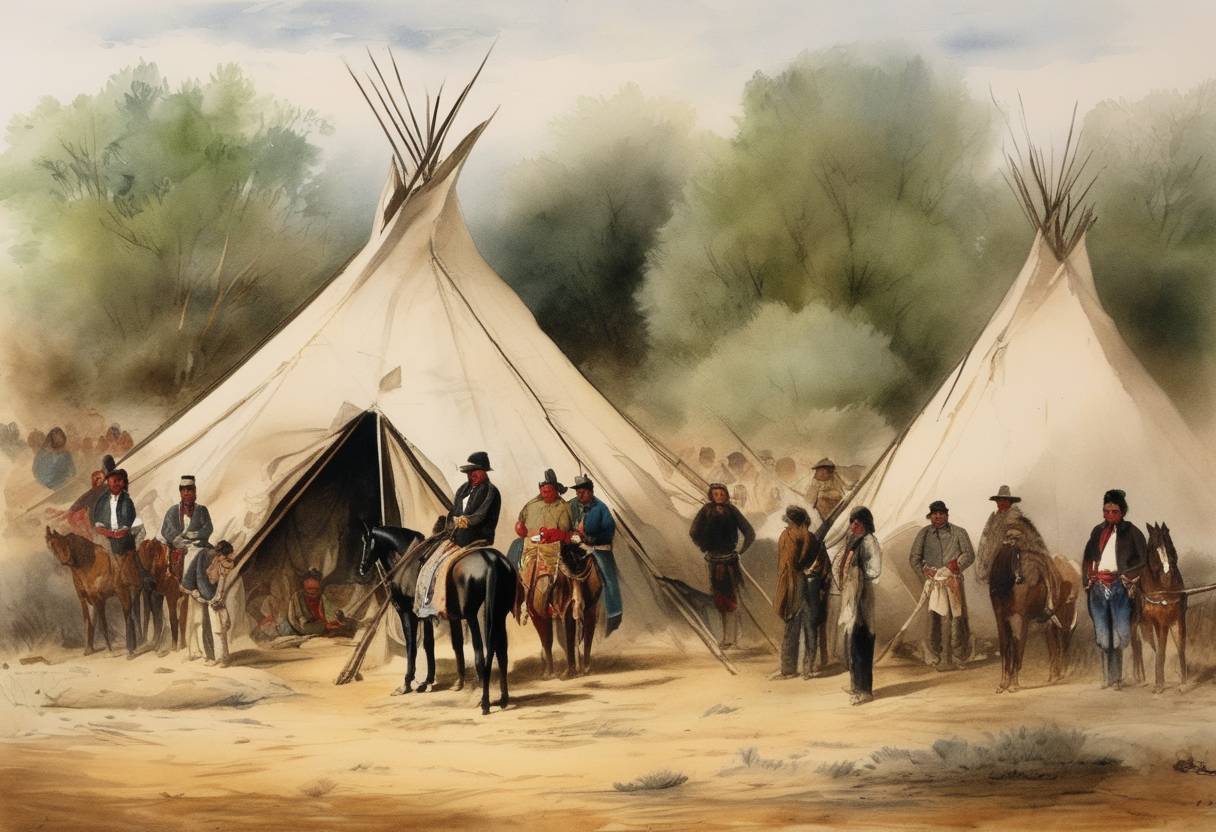
The Treaty of Bosque Redondo was signed on June 1, 1868, not October 10, 1868. Below is an account of the event as it occurred on June 1st:
Treaty of Bosque Redondo (1868)
The Treaty of Bosque Redondo, also known as the Navajo Treaty of 1868, marked a monumental turning point for the Navajo people. Having endured forced relocation and harsh conditions at Bosque Redondo in Fort Sumner, New Mexico, this treaty allowed the Navajo to return to their traditional homelands.
Background
Long Walk of the Navajo: Beginning in 1864, the U.S. government, under the command of Colonel Kit Carson, implemented a scorched-earth campaign that forced the Navajo off their ancestral lands in present-day Arizona and New Mexico. Thousands were coerced to walk around 300 miles to the Bosque Redondo Reservation, enduring severe hardship.
Bosque Redondo: At the reservation, the Navajo faced inadequate supplies, poor living conditions, and disease. The site proved unsustainable for supporting the population, highlighting the failure of the U.S. policy.
Key Provisions of the Treaty
Return to Homelands: The treaty permitted the Navajo to leave Bosque Redondo and return to their homeland of roughly 3.5 million acres in present-day northeastern Arizona and northwestern New Mexico.
Livestock and Supplies: The U.S. government agreed to supply sheep, cattle, and equipment to restart Navajo agriculture.
Education and Infrastructure: The treaty provided for the establishment of schools, chapels, and other infrastructure to integrate Navajo society into American culture.
Peaceful Relations: It reaffirmed a commitment to peaceful coexistence between the Navajo and the U.S. government.
Significance and Impact
The signing represented a significant victory for the Navajo, restoring a measure of autonomy and control over their ancestral lands.
It became a seminal moment in Native American history, illustrating resilience against U.S. policies of assimilation and forced removal.
The treaty laid the foundation for the modern Navajo Nation, now recognized as one of the largest Native American tribes in the United States.
The Treaty of Bosque Redondo served as a landmark document, underscoring the importance of negotiation and diplomacy in addressing the rights and sovereignty of Native American peoples.