Election of Pelagius I as Pope
556 · Rome, Italy
Pelagius I is elected as the Pope of the Catholic Church, succeeding Pope Vigilius.
October 1, 0366
Pope Damasus I was elected as the 37th pope of the Catholic Church, marking the beginning of his papacy.
Rome, Roman Empire | Catholic Church
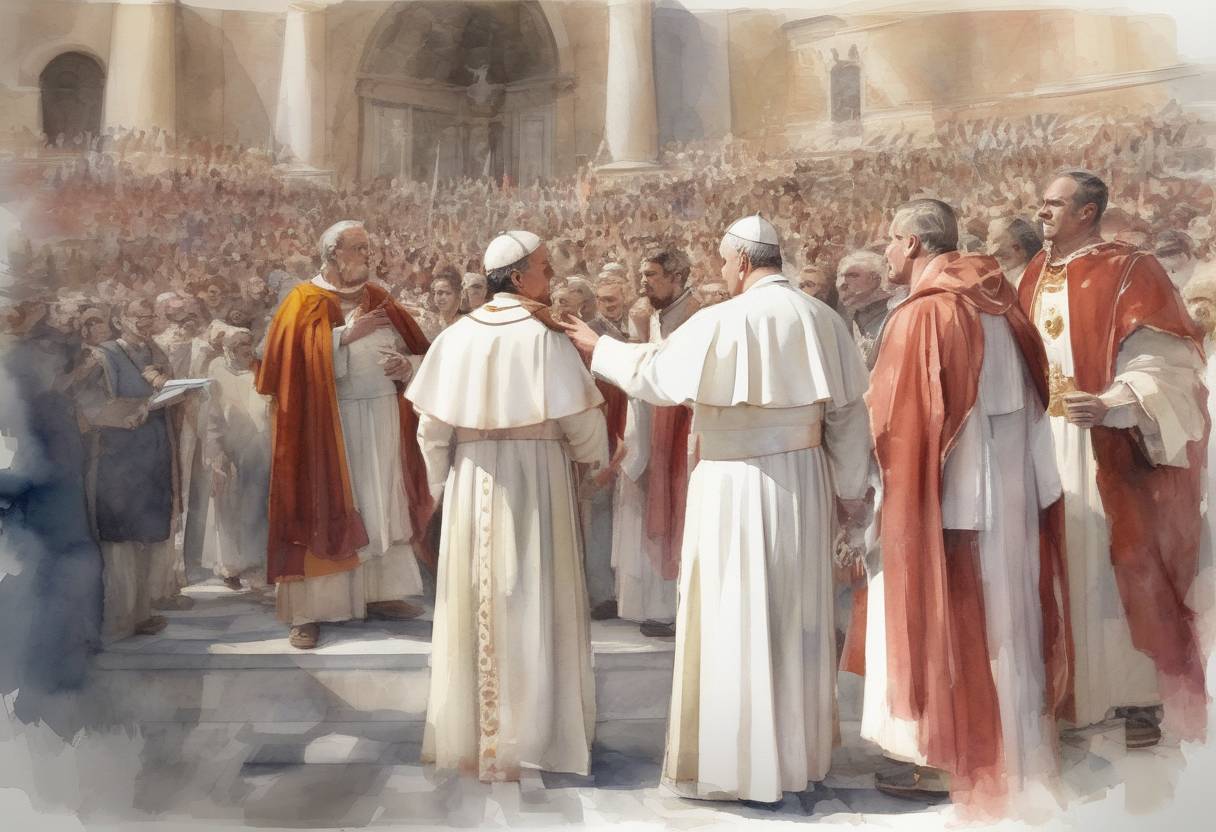
On October 1, 366, Damasus I was elected as the 37th pope of the Catholic Church, marking the beginning of a significant and tumultuous papacy. His election came at a time of considerable strife within the Church, characterized by factionalism and doctrinal disputes.
The mid-4th century was a period of intense theological debate and political maneuvering within the Christian community. The Church was still grappling with the aftermath of the Arian controversy, which questioned the nature of Christ’s divinity. This period also saw the rise of various sects and schisms, challenging the unity of the Church.
Upon the death of Pope Liberius in 366, the election of his successor was fiercely contested. Damasus, a deacon of the Roman Church, was one of the leading candidates. His election was opposed by supporters of another candidate, Ursinus, leading to violent clashes between the two factions.
Consolidation of Papal Authority: Damasus I worked diligently to strengthen the authority of the papacy. He was a staunch defender of orthodoxy and took measures to suppress heretical movements, particularly Arianism.
Promotion of Latin in the Liturgy: Damasus is credited with promoting the use of Latin in the liturgy, which helped standardize Church practices across the Western Roman Empire.
Commissioning of the Vulgate: One of his most enduring legacies was commissioning St. Jerome to produce a Latin translation of the Bible, known as the Vulgate. This translation became the standard text for the Catholic Church for centuries.
Architectural Contributions: Damasus was also known for his contributions to the physical infrastructure of the Church. He commissioned the construction and restoration of several basilicas and catacombs in Rome, enhancing the city’s religious significance.
Pope Damasus I’s papacy lasted until his death on December 11, 384. His efforts to consolidate papal authority and promote orthodoxy had a lasting impact on the Church’s structure and doctrine. The Vulgate, in particular, played a crucial role in shaping Christian theology and liturgical practices.
Damasus was later canonized as a saint, and his feast day is celebrated on December 11. His papacy is remembered for its decisive actions in a time of division and for laying the groundwork for the medieval papacy’s increased influence in both religious and secular affairs.
Source: en.wikipedia.org