The First Launch of Space Shuttle Columbia: April 12, 1981
1981 · Cape Canaveral, United States
The first launch of a Space Shuttle, Columbia, occurred, marking the beginning of the Space Shuttle program by NASA.
March 24, 1979
The first fully functional space shuttle, Columbia, was delivered to the Kennedy Space Center for launch preparation.
Cape Canaveral, United States | NASA
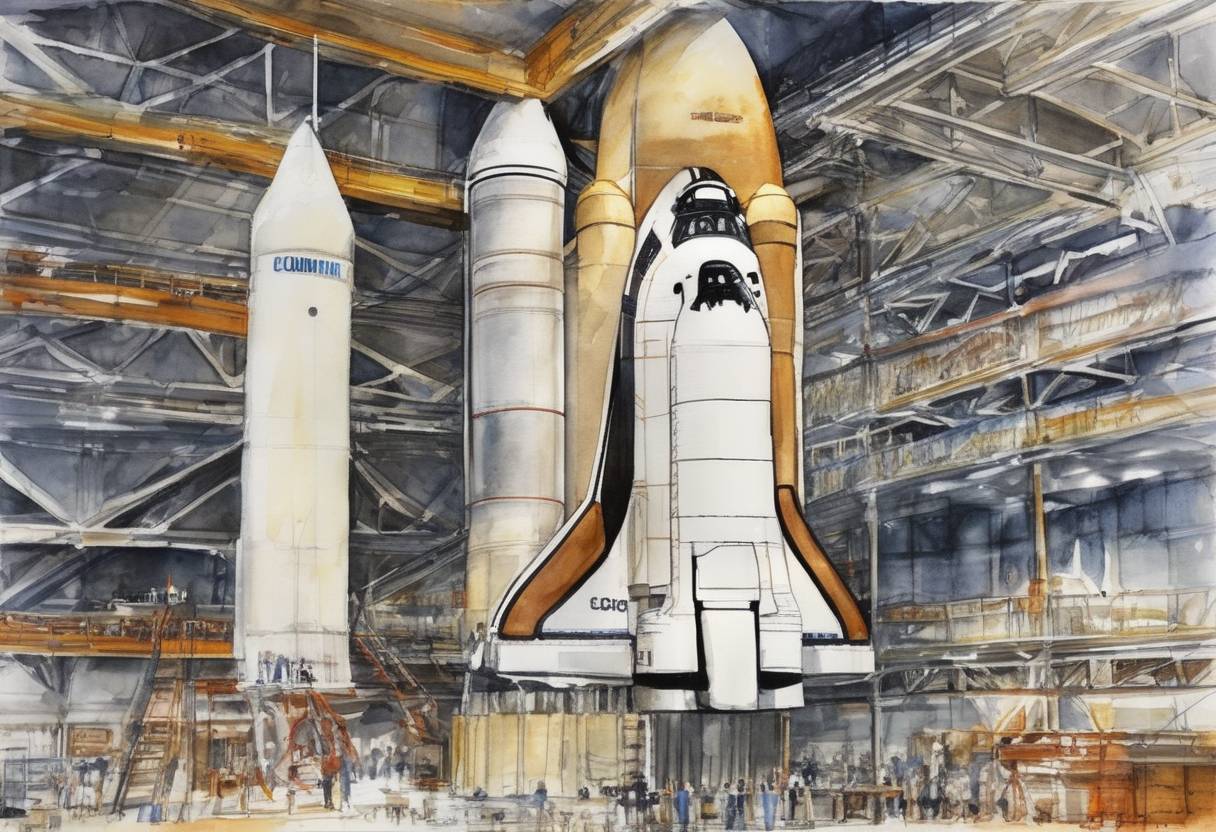
On March 25, 1979, the first fully functional space shuttle, Columbia, was delivered to the Kennedy Space Center in Florida for launch preparation. This event marked a significant milestone in NASA’s Space Shuttle program, which aimed to develop a reusable spacecraft capable of carrying astronauts and cargo to and from Earth’s orbit.
The Space Shuttle program was initiated in the early 1970s, following the success of the Apollo missions. The goal was to create a more cost-effective and versatile spacecraft that could support a variety of missions, including satellite deployment, scientific research, and construction and servicing of space stations.
Columbia, designated as OV-102, was the first space-rated orbiter in the shuttle fleet. Its construction began in 1975 by Rockwell International in Palmdale, California. Columbia was named after the historical American sailing vessel Columbia Rediviva, which explored the Pacific Northwest in the late 18th century, and also after the command module of Apollo 11.
Columbia was equipped with several innovative features that distinguished it from previous spacecraft:
Upon its delivery to the Kennedy Space Center, Columbia underwent extensive preparations for its maiden flight. This included rigorous testing of its systems, integration of its payload, and training of the crew who would operate it.
The delivery of Columbia was a crucial step towards the first shuttle launch, as it allowed NASA engineers and technicians to conduct final checks and ensure the orbiter was ready for its historic mission.
Columbia’s delivery set the stage for its first mission, STS-1, which launched on April 12, 1981. This mission marked the beginning of a new era in space exploration, demonstrating the feasibility of reusable spacecraft and paving the way for future shuttle missions.
The Space Shuttle program continued for three decades, contributing significantly to scientific research, international cooperation in space, and the construction of the International Space Station.
The delivery of Columbia to the Kennedy Space Center on March 25, 1979, was a pivotal moment in the history of space exploration. It represented the culmination of years of research and development and set the foundation for the successes and challenges of the Space Shuttle program.
Source: en.wikipedia.org