The Battle of Hastings - October 14, 1066
1066 · Hastings, England
The Battle of Hastings took place, where William the Conqueror defeated King Harold II of England, leading to the Norman conquest of England.
September 28, 1066
William the Conqueror lands in England at Pevensey Bay, marking the beginning of the Norman Conquest.
Pevensey, England | Norman forces
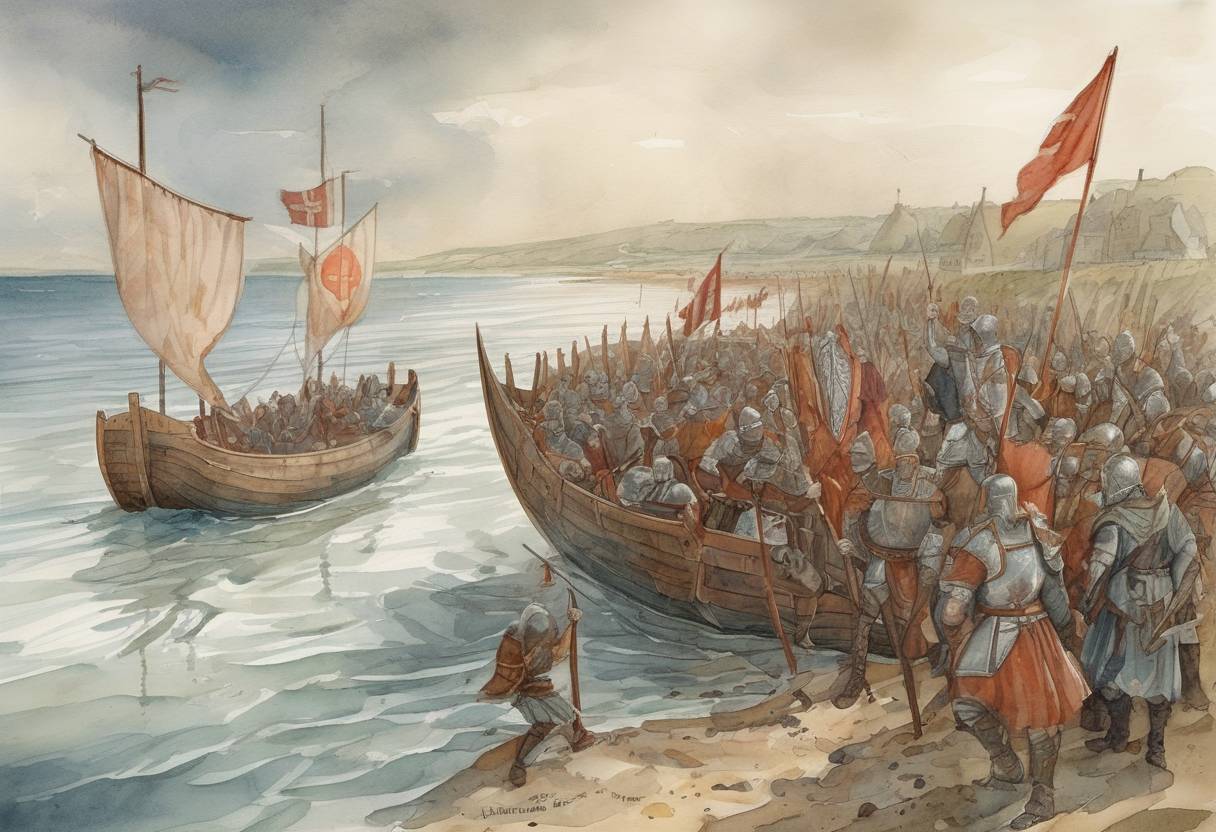
On September 28, 1066, William the Conqueror, Duke of Normandy, landed at Pevensey Bay on the southern coast of England, marking the commencement of the Norman Conquest. This pivotal event set the stage for a transformative period in English history.
Claim to the Throne: The death of the English king, Edward the Confessor, in January 1066, left a power vacuum. Harold Godwinson was crowned king, but William of Normandy claimed that Edward had promised him the throne. Additionally, Harold had allegedly sworn an oath supporting William’s claim.
Preparation for Invasion: William spent months preparing for the invasion, assembling a fleet and an army composed of Normans, Bretons, Flemings, and other allies. He secured papal support, which lent religious legitimacy to his cause.
Strategic Choice: Pevensey Bay was chosen for its strategic location. It provided a sheltered landing spot and was close to Hastings, where William could establish a base of operations.
Initial Actions: Upon landing, William’s forces quickly constructed a wooden fortification at Pevensey and then moved to Hastings, where they built another castle. These fortifications served as defensive positions and bases for further operations.
Battle of Hastings: The most significant confrontation occurred on October 14, 1066, at the Battle of Hastings. William’s forces defeated King Harold’s army, leading to Harold’s death and the collapse of English resistance.
Aftermath: Following his victory at Hastings, William advanced towards London, facing sporadic resistance. On December 25, 1066, he was crowned King of England at Westminster Abbey.
Cultural and Political Changes: The Norman Conquest brought profound changes to England. It introduced Norman culture, language, and governance, reshaping the English aristocracy and legal system.
Feudal System: William established a feudal system, redistributing land to his Norman followers and consolidating his control over England.
Architectural Legacy: The Normans initiated a wave of castle-building, including the Tower of London, which symbolized their dominance and provided military strongholds.
The landing at Pevensey Bay was not just a military maneuver but a turning point that altered the course of English history, laying the foundations for the modern British state.
Source: en.wikipedia.org