Wyoming's Admission as the 44th State and Women's Suffrage
1890 · Cheyenne, United States
Wyoming was admitted as the 44th state of the United States, becoming the first state to grant women the right to vote.
November 2, 1889
North Dakota and South Dakota were admitted as the 39th and 40th U.S. states.
Bismarck, United States | United States Congress
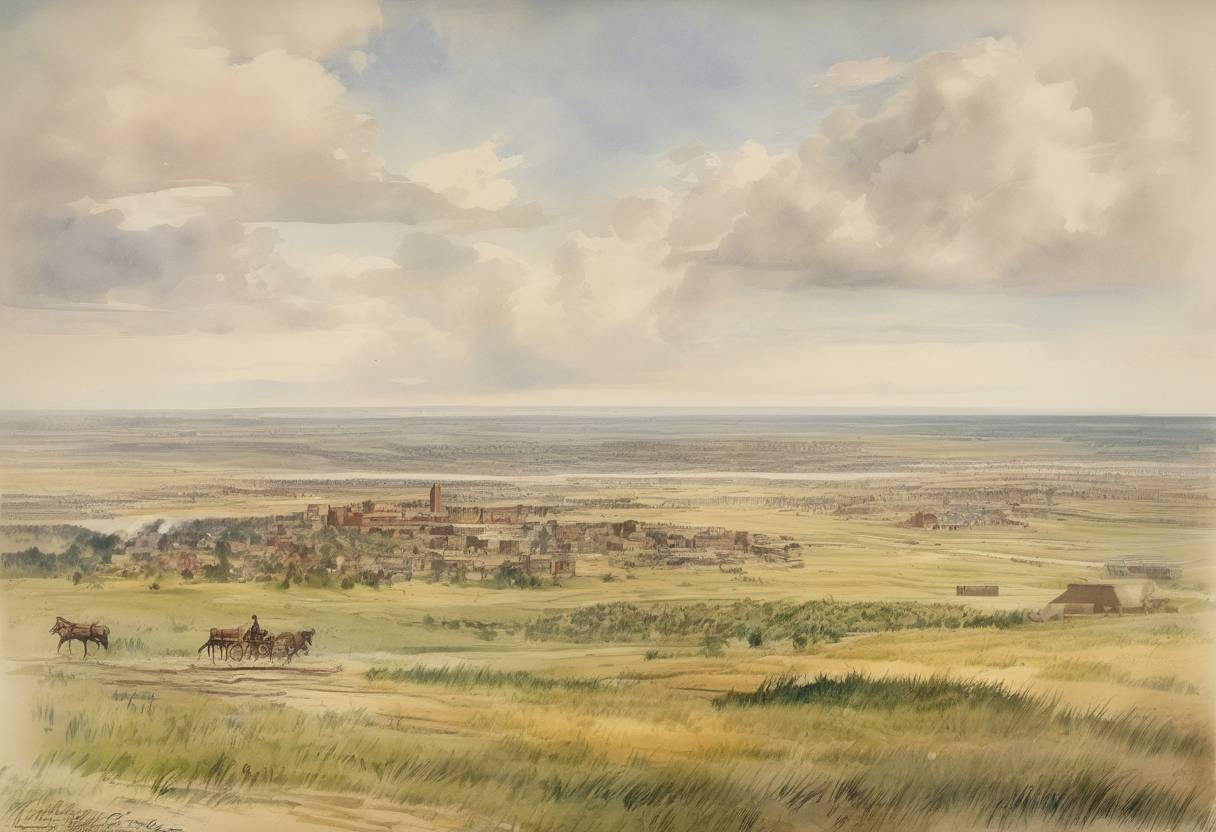
On November 2, 1889, North Dakota and South Dakota were admitted to the United States as the 39th and 40th states, respectively. This event marked a significant expansion of the United States into the northern Great Plains region.
Territorial Background: The Dakota Territory was established in 1861, encompassing the present-day states of North Dakota, South Dakota, and parts of Montana and Wyoming. Over time, the population grew, driven by the promise of fertile land and the expansion of the railroad.
Push for Statehood: By the 1880s, the Dakota Territory had a sufficiently large population to warrant statehood. However, political disagreements, particularly over the division of the territory into two separate states, delayed the process.
Division of the Territory: The division was partly influenced by political considerations. The Republican Party, which dominated the region, saw an advantage in creating two states, thereby increasing their representation in Congress.
Enabling Act of 1889: On February 22, 1889, President Grover Cleveland signed the Enabling Act, which allowed the people of the Dakota Territory to draft constitutions for two separate states. This act also included provisions for the admission of Montana and Washington as states.
Constitutional Conventions: Both North Dakota and South Dakota held constitutional conventions in 1889. The conventions were tasked with drafting state constitutions that would be acceptable to Congress and the President.
Presidential Proclamation: On November 2, 1889, President Benjamin Harrison signed the proclamations admitting North Dakota and South Dakota into the Union. To avoid showing favoritism, Harrison shuffled the papers and signed them without knowing which was first, thus making it unclear which state was technically admitted first.
Economic Development: Statehood facilitated economic growth in both North Dakota and South Dakota, as it encouraged investment and infrastructure development, particularly in agriculture and railroads.
Political Impact: The admission of two new states added four senators and two representatives to Congress, impacting the political balance of power.
Cultural and Social Changes: Statehood brought increased attention to the cultural and social development of the region, including the establishment of educational institutions and the promotion of settlement.
The admission of North Dakota and South Dakota was part of a broader pattern of westward expansion in the United States during the late 19th century. This period saw the transformation of the American frontier, driven by the Homestead Act, the expansion of the railroad, and the discovery of natural resources. The integration of these states into the Union reflected the ongoing process of nation-building and the complex dynamics of regional and national politics.
In summary, the admission of North Dakota and South Dakota as the 39th and 40th states was a pivotal moment in U.S. history, symbolizing the growth and development of the American West.
Source: en.wikipedia.org