Arab Leaders Agree to Form Joint Military Force
2015 · Sharm El-Sheikh, Egypt
Arab leaders agreed to form a joint military force at the Arab League summit in Sharm El-Sheikh, Egypt, in response to regional conflicts and threats.
May 29, 1964
The Arab League met in East Jerusalem to discuss the formation of a unified Arab military command.
East Jerusalem, Jordan (at the time) | Arab League
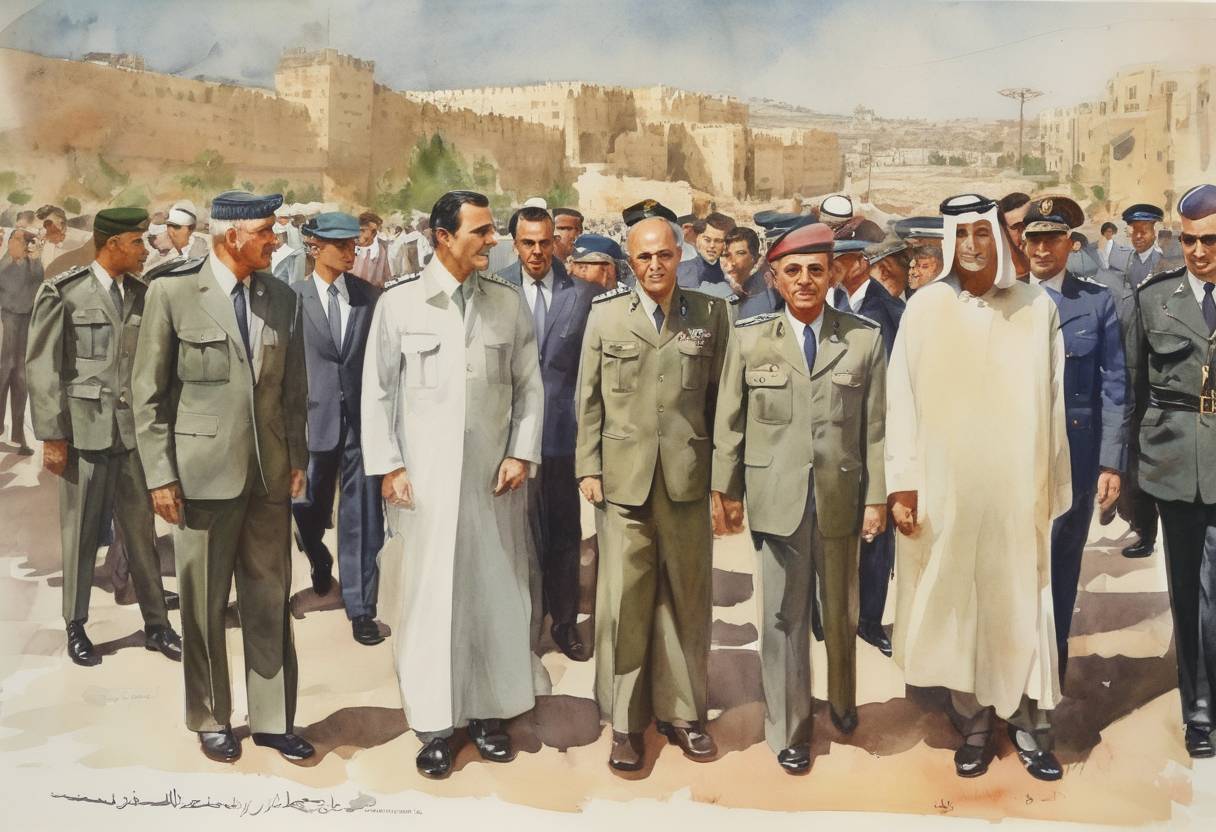
On May 29, 1964, a significant meeting of the Arab League took place in East Jerusalem, marking a pivotal moment in Middle Eastern geopolitics. This meeting was convened to discuss the formation of a unified Arab military command, a response to the growing tensions in the region, particularly concerning the Israeli-Palestinian conflict.
The early 1960s were characterized by heightened tensions in the Middle East. The Arab states were increasingly concerned about the territorial and political implications of Israel’s establishment and its subsequent actions. The Arab League, founded in 1945, aimed to foster economic, cultural, and political cooperation among its member states, but by the 1960s, security concerns had come to the forefront.
The call for a unified military command was driven by several factors:
The meeting in East Jerusalem was attended by representatives from various Arab states, including Egypt, Jordan, Syria, and Iraq. The discussions led to several key outcomes:
Unified Military Command: The Arab League agreed on the necessity of a coordinated military strategy to defend against perceived threats from Israel. This was seen as a step towards greater military cooperation among Arab states.
Support for the Palestine Liberation Organization (PLO): The meeting coincided with the establishment of the PLO, which was formed to represent the Palestinian people and their aspirations for statehood. The Arab League’s support was crucial in legitimizing the PLO’s role in the regional political landscape.
Commitment to Collective Security: The member states reaffirmed their commitment to collective security and mutual defense, emphasizing the importance of unity in addressing regional challenges.
The decisions made at the 1964 Arab League meeting had lasting implications for the Middle East:
In summary, the Arab League meeting in East Jerusalem on May 29, 1964, was a critical moment in the history of the Middle East, reflecting the complex interplay of regional politics, security concerns, and the quest for Arab unity.
Source: en.wikipedia.org