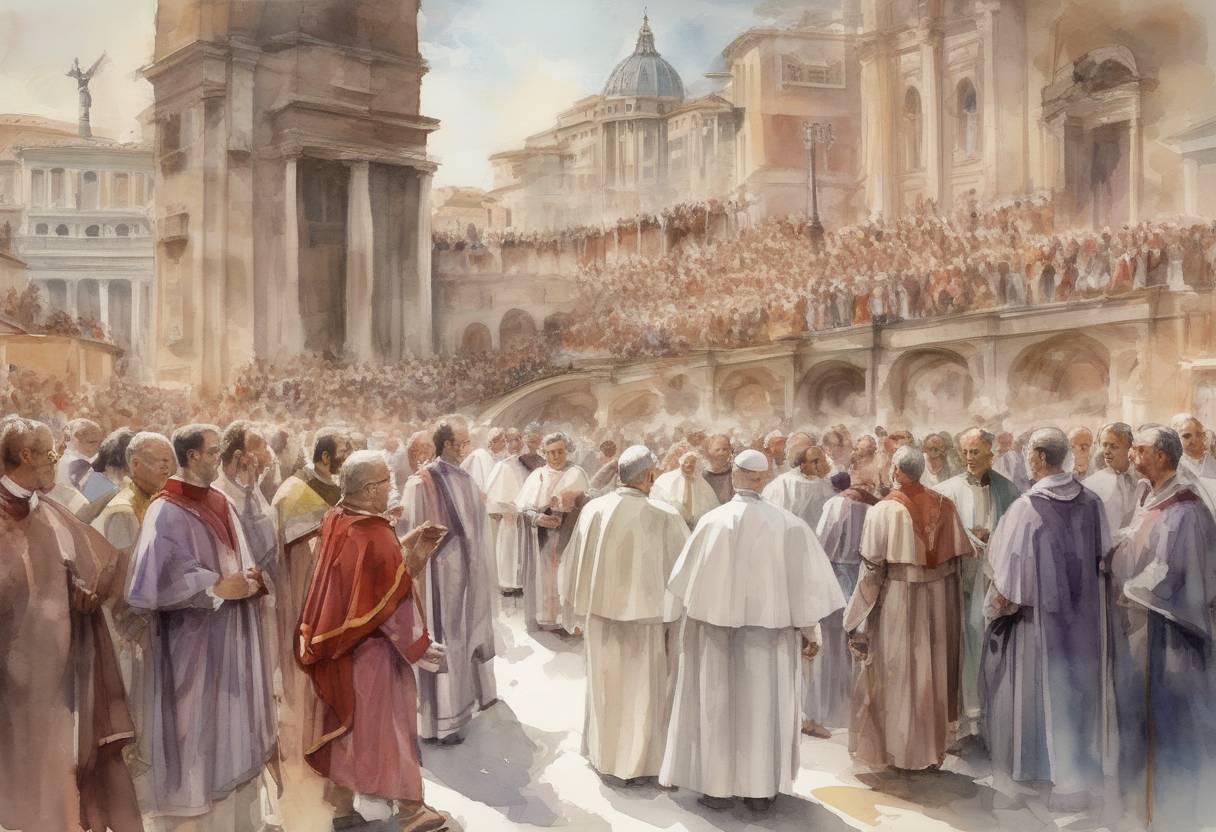
Election of Pope Zachary - December 3, 741
On December 3, 741, Pope Zachary was elected as the 91st pope of the Roman Catholic Church. His papacy, which lasted until his death in 752, was marked by significant involvement in the political affairs of the time, particularly in the Lombard and Frankish territories.
Context and Background
- Predecessor: Pope Gregory III, who had been involved in conflicts with the Lombards, passed away in November 741. His death left the papacy in a delicate position, requiring a leader who could navigate the complex political landscape of early medieval Europe.
- Political Climate: The Lombards, a Germanic people who had settled in Italy, were a constant threat to the Papal States. Meanwhile, the Frankish Kingdom was undergoing its own transformations, with the rise of the Carolingian dynasty.
Key Events During Pope Zachary’s Papacy
Diplomatic Relations with the Lombards: Pope Zachary successfully negotiated with the Lombard King Liutprand, securing a 20-year peace treaty. This agreement was crucial in stabilizing the region and protecting the Papal States from Lombard aggression.
Influence in Frankish Politics: Pope Zachary played a pivotal role in the transition of power within the Frankish Kingdom. He supported Pepin the Short, the Mayor of the Palace, in his quest to become king. In 751, Zachary sanctioned the deposition of the Merovingian king Childeric III, effectively endorsing Pepin’s coronation. This move laid the groundwork for the Carolingian dynasty, which would later produce Charlemagne, one of the most significant rulers in European history.
Broader Historical Significance
Church and State Relations: Pope Zachary’s actions exemplified the growing influence of the papacy in secular matters, setting a precedent for future popes to engage in political affairs.
Strengthening the Papal States: By securing peace with the Lombards and aligning with the Franks, Zachary strengthened the position of the Papal States, ensuring their survival and autonomy in a turbulent period.
Foundation for the Carolingian Empire: His support for Pepin the Short was instrumental in the establishment of the Carolingian Empire, which would become a dominant force in medieval Europe and play a crucial role in the Carolingian Renaissance.
Pope Zachary’s papacy was characterized by his adept handling of political challenges, which not only secured the safety and influence of the Papal States but also shaped the future of European political dynamics. His legacy is a testament to the strategic role the papacy could play in the broader geopolitical landscape of the time.