USS Triton's Submerged Circumnavigation: May 10, 1960
1960 · New London, United States
The nuclear submarine USS Triton completes the first submerged circumnavigation of the globe.
September 8, 1923
Honda Point disaster: Seven U.S. Navy destroyers run aground off the California coast.
Honda Point, United States | United States Navy
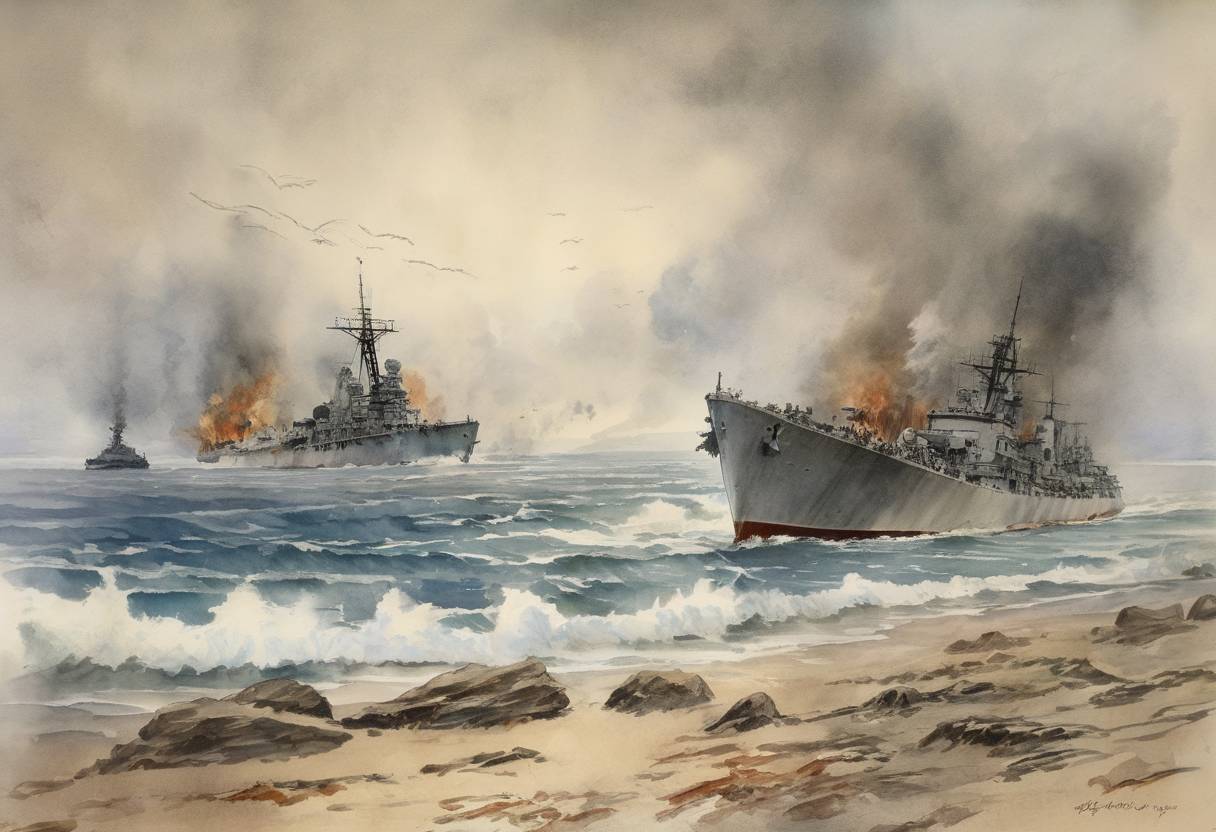
The Honda Point Disaster, also known as the Point Pedernales Disaster, is one of the most significant peacetime losses in U.S. Navy history. On the evening of September 8, 1923, seven U.S. Navy destroyers ran aground off the California coast near Honda Point, resulting in the loss of 23 sailors and the destruction of several ships.
The disaster occurred during a routine naval exercise known as the “Pacific Fleet Destroyer Flotilla 11” cruise. The flotilla, consisting of 14 Clemson-class destroyers, was en route from San Francisco to San Diego. The ships were commanded by Captain Edward H. Watson, who was leading the formation aboard the USS Delphy.
Navigation Challenges: The flotilla was navigating through the Santa Barbara Channel, a notoriously tricky area due to its strong currents and dense fog. The navigational techniques of the time relied heavily on dead reckoning, which was susceptible to cumulative errors.
Environmental Conditions: On the night of the disaster, the weather was foggy, and visibility was poor. The strong currents in the area further complicated navigation.
Radio Direction Finding: Although radio direction finding was available, it was a relatively new technology, and Captain Watson chose to rely on traditional navigation methods.
Misjudgment of Position: Captain Watson believed the flotilla was further south than it actually was. As a result, he ordered a turn eastward, expecting to enter the Santa Barbara Channel safely.
Grounding: At approximately 9:00 PM, the USS Delphy, leading the formation, struck the rocky shore at Honda Point. Following closely in formation, six other destroyers—USS S.P. Lee, USS Young, USS Woodbury, USS Nicholas, USS Fuller, and USS Chauncey—also ran aground.
Rescue Efforts: The crews of the grounded ships faced immediate danger from the pounding surf. Despite the chaos, rescue efforts were launched, and many sailors were saved by nearby ships and local residents.
Casualties and Losses: The disaster resulted in the deaths of 23 sailors. The USS Delphy, USS S.P. Lee, USS Young, USS Woodbury, USS Nicholas, USS Fuller, and USS Chauncey were all lost.
Court of Inquiry: A naval court of inquiry was convened to investigate the disaster. The court found that the primary cause was navigational errors compounded by poor visibility and reliance on dead reckoning. Captain Watson and several other officers were held accountable for the incident.
Impact on Naval Practices: The disaster highlighted the need for improved navigational practices and the adoption of new technologies, such as radio direction finding, in naval operations.
The Honda Point Disaster serves as a poignant reminder of the challenges of maritime navigation and the importance of technological adaptation. It prompted significant changes in naval procedures and training, ultimately contributing to safer and more reliable naval operations in the future.
Source: en.wikipedia.org