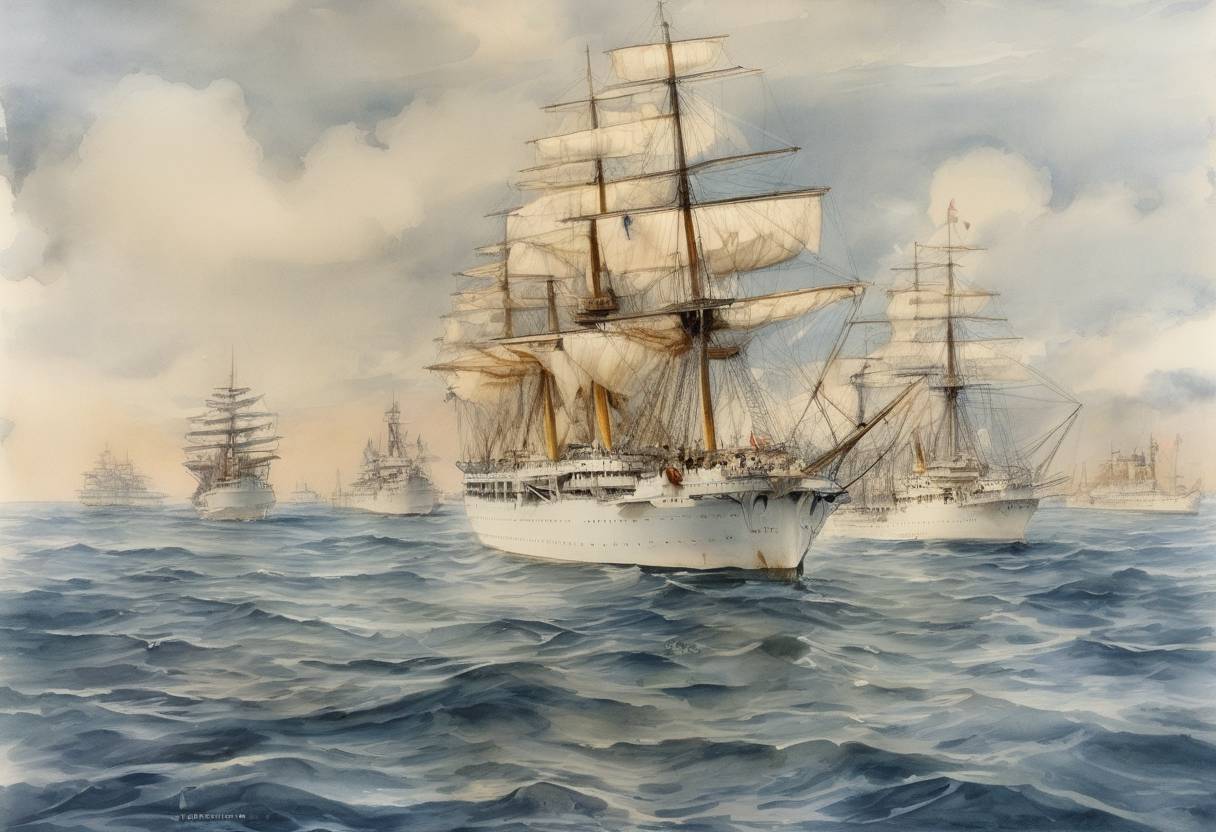
The Great White Fleet: Circumnavigation Begins on December 16, 1907
On December 16, 1907, the United States Navy’s Great White Fleet embarked on a historic circumnavigation of the globe, marking a significant moment in naval history and American diplomacy. This fleet, consisting of 16 battleships divided into four squadrons, was ordered by President Theodore Roosevelt to demonstrate the United States’ growing naval power and to foster goodwill with other nations.
Context and Background
Theodore Roosevelt’s Vision: President Roosevelt was a strong advocate for naval power, believing that a formidable navy was essential for national security and international influence. The voyage of the Great White Fleet was intended to showcase the United States’ naval capabilities and to assert its presence on the world stage.
Naval Expansion: The early 20th century was a period of significant naval expansion for the United States. The fleet’s journey was part of a broader strategy to modernize and expand the U.S. Navy, aligning with Roosevelt’s belief in the importance of a “big stick” approach to foreign policy.
The Fleet
Composition: The Great White Fleet comprised 16 battleships, all painted white except for their gilded scrollwork, which gave the fleet its name. The ships were accompanied by various auxiliary vessels.
Command: The fleet was commanded by Rear Admiral Robley D. Evans, a seasoned naval officer known for his leadership and experience.
The Voyage
Departure: The fleet set sail from Hampton Roads, Virginia, on December 16, 1907. The departure was a grand event, attended by thousands of spectators and covered extensively by the media.
Route: The fleet’s journey covered approximately 43,000 nautical miles and included 20 port calls on six continents. Key stops included Trinidad, Brazil, Chile, New Zealand, Australia, the Philippines, Japan, and Egypt.
Duration: The circumnavigation took 14 months, concluding on February 22, 1909, when the fleet returned to Hampton Roads.
Significance and Impact
Diplomatic Success: The voyage was a diplomatic success, strengthening ties with countries visited and demonstrating the United States’ commitment to international peace and cooperation.
Naval Strategy: The journey highlighted the importance of coaling stations and the need for a global naval presence, influencing future U.S. naval strategy and infrastructure development.
Technological and Tactical Lessons: The voyage provided valuable insights into ship performance, logistics, and crew endurance, contributing to future naval improvements.
Public Perception: The Great White Fleet captured the public’s imagination, bolstering national pride and support for naval expansion.
In summary, the Great White Fleet’s circumnavigation was a pivotal moment in U.S. naval history, reflecting the nation’s emergence as a global power and setting the stage for its 20th-century foreign policy.