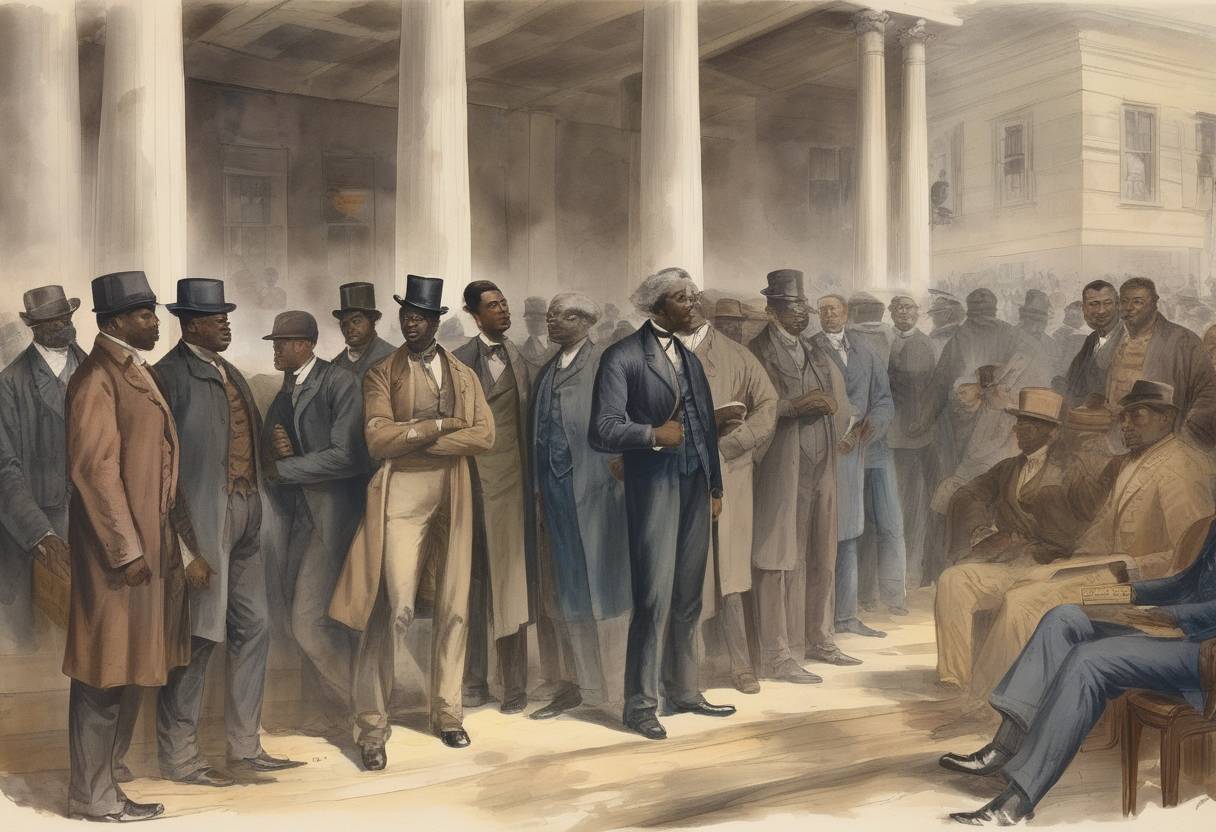
African American Men Granted the Right to Vote in Washington, D.C. - January 8, 1867
On January 8, 1867, a significant milestone in the struggle for civil rights in the United States was achieved when African American men were granted the right to vote in Washington, D.C. This event marked a crucial step in the broader movement toward racial equality and suffrage for African Americans during the Reconstruction era.
Context and Background
Following the end of the Civil War in 1865, the United States entered a period known as Reconstruction, aimed at rebuilding the nation and integrating formerly enslaved people into society as free citizens. The question of voting rights for African Americans became a central issue during this time.
Emancipation and Civil Rights: The Emancipation Proclamation in 1863 and the subsequent ratification of the 13th Amendment in 1865 abolished slavery. However, the rights of African Americans, particularly the right to vote, remained a contentious issue.
Reconstruction Acts: The Reconstruction Acts, passed by Congress in 1867, laid the groundwork for the reintegration of Southern states into the Union and set conditions for their readmission, including the extension of voting rights to African American men.
The Event
On January 8, 1867, Congress passed legislation granting African American men the right to vote in the nation’s capital. This decision was part of a broader effort by Radical Republicans in Congress to ensure civil rights for African Americans and to counteract the restrictive Black Codes enacted in Southern states.
Significance: The enfranchisement of African American men in Washington, D.C., was a symbolic and practical victory. As the capital of the United States, D.C. served as a model for the rest of the nation, demonstrating a commitment to equality and justice.
Political Implications: The decision was met with resistance from President Andrew Johnson, who vetoed the bill. However, Congress overrode his veto, showcasing the legislative power of the Radical Republicans and their determination to advance civil rights.
Aftermath and Consequences
The granting of voting rights to African American men in Washington, D.C., was a precursor to the broader national movement for suffrage:
14th and 15th Amendments: The 14th Amendment, ratified in 1868, granted citizenship to all persons born or naturalized in the United States, while the 15th Amendment, ratified in 1870, explicitly prohibited denying the right to vote based on race, color, or previous condition of servitude.
Long-term Impact: Although African American men gained the right to vote, the struggle for full voting rights continued, facing challenges such as Jim Crow laws and discriminatory practices that emerged in the late 19th and early 20th centuries.
This event on January 8, 1867, was a pivotal moment in the ongoing fight for civil rights and laid the foundation for future advancements in the quest for equality and justice in the United States.