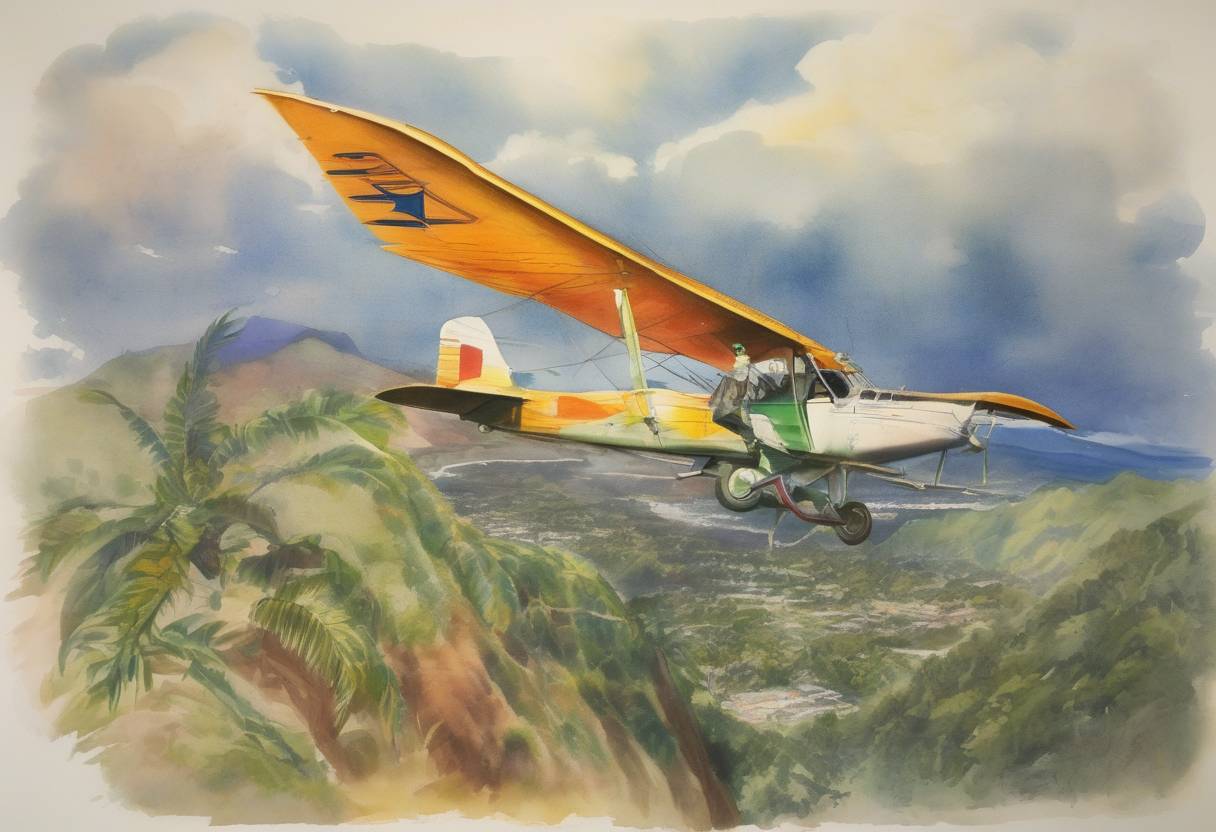
The Bird of Paradise: First Transpacific Flight from the Mainland U.S. to Hawaii
On June 29, 1927, the U.S. Army Air Corps aircraft known as the “Bird of Paradise” completed a groundbreaking flight, marking the first successful transpacific journey from the mainland United States to Hawaii. This significant achievement in aviation history demonstrated the potential for long-distance air travel and military aviation capabilities.
Background
- Aircraft: The Bird of Paradise was a modified Fokker C-2 trimotor monoplane. It was specifically adapted for long-distance flight, equipped with additional fuel tanks to extend its range.
- Crew: The flight was piloted by Lieutenants Lester J. Maitland and Albert F. Hegenberger, both experienced aviators in the U.S. Army Air Corps.
- Objective: The mission aimed to test and demonstrate the feasibility of long-distance air navigation over open ocean, a critical capability for both military and commercial aviation.
The Flight
- Departure: The Bird of Paradise took off from Oakland, California, on June 28, 1927.
- Distance: The journey covered approximately 2,400 miles (3,862 kilometers) across the Pacific Ocean.
- Duration: The flight lasted about 25 hours and 50 minutes, showcasing the endurance and reliability of both the aircraft and its crew.
- Navigation: The success of the flight heavily relied on advanced navigation techniques developed by Hegenberger, which included celestial navigation and radio direction finding.
Significance
- Aviation Milestone: This flight was a pivotal moment in aviation history, proving that long-distance flights over open water were possible and could be navigated with precision.
- Military Implications: The successful mission underscored the strategic importance of air power and the potential for rapid deployment of military resources across vast distances.
- Commercial Aviation: The flight paved the way for future commercial transpacific flights, eventually leading to the development of international air travel routes.
Aftermath
- Recognition: Maitland and Hegenberger were celebrated as pioneers in aviation, receiving numerous accolades for their achievement, including the Distinguished Flying Cross.
- Legacy: The Bird of Paradise’s successful flight inspired further advancements in aviation technology and navigation, contributing to the rapid evolution of both military and civilian aviation in the following decades.
The Bird of Paradise’s transpacific flight remains a testament to the ingenuity and determination of early aviators, marking a significant step forward in the history of flight.