The Third Council of Constantinople
Overview
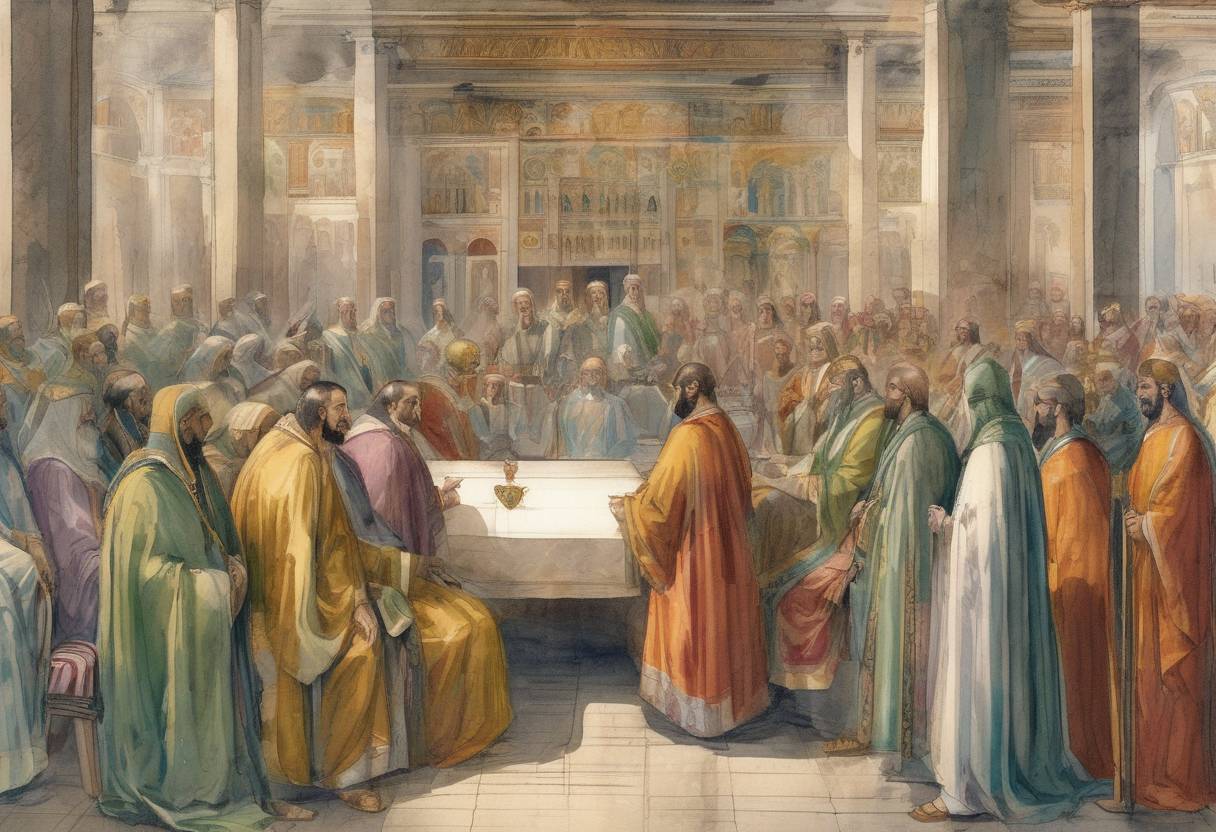
The Third Council of Constantinople, recognized as the sixth ecumenical council of the Christian Church, was convened on November 7, 680. This significant council was called by Emperor Constantine IV and primarily addressed the theological controversy of Monothelitism.
Historical Context
Background
- Monothelitism: This doctrine emerged in the early 7th century, proposing that Jesus Christ had two natures (divine and human) but only one will (divine). It was an attempt to reconcile the Chalcedonian definition of Christ’s dual nature with the Monophysite belief in a single nature.
- Previous Controversies: The debate over Christ’s nature and will was part of a broader theological struggle within the Church, following earlier controversies like Arianism and Nestorianism.
Political and Religious Climate
- Byzantine Empire: During this period, the Byzantine Empire was under constant threat from external forces, including the Islamic Caliphate. Emperor Constantine IV sought religious unity to strengthen the empire internally.
- Church Unity: The division caused by Monothelitism threatened the unity of the Church, particularly between the Eastern and Western branches.
The Council
Convening the Council
- Location: The council was held in Constantinople, the capital of the Byzantine Empire.
- Participants: It included representatives from both the Eastern and Western Churches, with significant participation from the Patriarch of Constantinople and legates from the Pope.
Proceedings
- Debates: The council engaged in extensive theological debates regarding the nature of Christ’s will.
- Papal Influence: Pope Agatho sent a letter affirming the doctrine of two wills in Christ, which played a crucial role in the council’s deliberations.
Decisions
- Condemnation of Monothelitism: The council ultimately condemned Monothelitism as heretical, affirming the doctrine of Dyothelitism, which holds that Christ possesses two wills, divine and human, in accordance with his two natures.
- Reaffirmation of Chalcedonian Christology: The council reinforced the Chalcedonian definition, emphasizing the full humanity and divinity of Christ.
Aftermath and Significance
- Church Unity: The council’s decisions helped restore unity within the Christian Church, particularly between the Eastern and Western branches.
- Theological Impact: It solidified the orthodox position on Christ’s nature and will, influencing subsequent theological developments.
- Political Stability: By resolving a major religious controversy, the council contributed to greater political stability within the Byzantine Empire.
Conclusion
The Third Council of Constantinople was a pivotal moment in the history of the Christian Church, addressing a critical theological issue and reinforcing the doctrine of Christ’s dual wills. Its decisions had lasting implications for both the Church and the Byzantine Empire, underscoring the intricate relationship between theology and politics during this era.