Deposition of Caliph al-Mustakfi on February 17, 946
946 · Baghdad, Abbasid Caliphate
Caliph al-Mustakfi, the Abbasid caliph, is deposed by emir Tuzun, marking a significant period of political instability in the Abbasid caliphate.
February 20, 0942
The death of Muhammad ibn Tughj al-Ikhshid, the founder of the Ikhshidid dynasty, which ruled over Egypt and parts of the Levant, marking a transition in the region's leadership.
Damascus, Ikhshidid Dynasty | Ikhshidid Dynasty
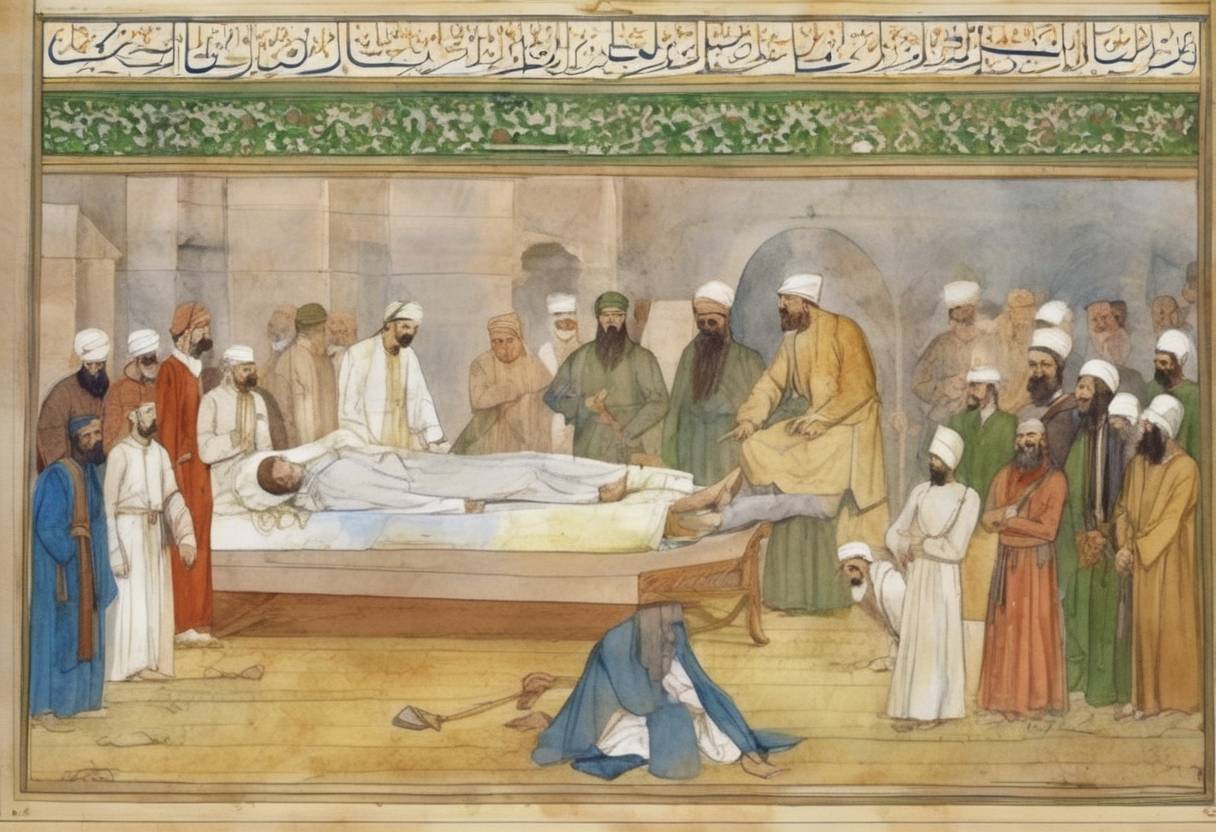
On February 20, 946, Muhammad ibn Tughj al-Ikhshid, the founder of the Ikhshidid dynasty, passed away. His death marked a significant transition in the leadership of Egypt and parts of the Levant, regions that he had successfully governed since 935.
Muhammad ibn Tughj al-Ikhshid was born in 882 into a family with a history of military service. He rose through the ranks of the Abbasid Caliphate’s military and administrative structures, eventually being appointed as the governor of Egypt in 935. His governance was marked by a combination of military prowess and diplomatic acumen, which allowed him to establish a semi-autonomous rule under the nominal authority of the Abbasid Caliphs.
Upon his appointment, al-Ikhshid quickly consolidated power, securing his position by gaining control over the lucrative trade routes and ensuring the loyalty of the local military forces. In 939, he was granted the hereditary title of “Ikhshid” by the Abbasid Caliph, a title traditionally used by the rulers of Farghana, his ancestral homeland. This marked the formal establishment of the Ikhshidid dynasty.
Under al-Ikhshid’s leadership, Egypt experienced relative stability and prosperity. He maintained a strong military presence to deter external threats, particularly from the Fatimids, who were expanding their influence in North Africa. Al-Ikhshid also focused on economic reforms, improving agricultural productivity, and enhancing the infrastructure of Egypt, which contributed to the region’s economic growth.
Muhammad ibn Tughj al-Ikhshid died on February 20, 946, in Damascus. His death led to a period of uncertainty as his sons, Abu’l-Qasim Unujur and Ali, were still young and inexperienced. The real power during this transitional period was held by the capable and influential eunuch Abu’l-Misk Kafur, who served as a regent and effectively managed the affairs of the state.
The death of al-Ikhshid marked the beginning of a new chapter for the Ikhshidid dynasty. Although his successors faced challenges, particularly from the Fatimid Caliphate, the foundations laid by al-Ikhshid allowed the dynasty to maintain control over Egypt and parts of the Levant for several more decades. His rule is often remembered for its administrative efficiency and the relative peace and prosperity it brought to the region.
In summary, Muhammad ibn Tughj al-Ikhshid’s leadership was pivotal in shaping the political landscape of Egypt and the Levant during the 10th century, and his legacy continued to influence the region long after his death.