The Founding of the Spanish Communist Workers' Party
1921 · Madrid, Spain
The Spanish Communist Workers' Party was founded.
November 14, 1921
The Spanish Communist Party was founded as a result of a split in the Spanish Socialist Workers' Party.
Madrid, Spain | Spanish Communist Party
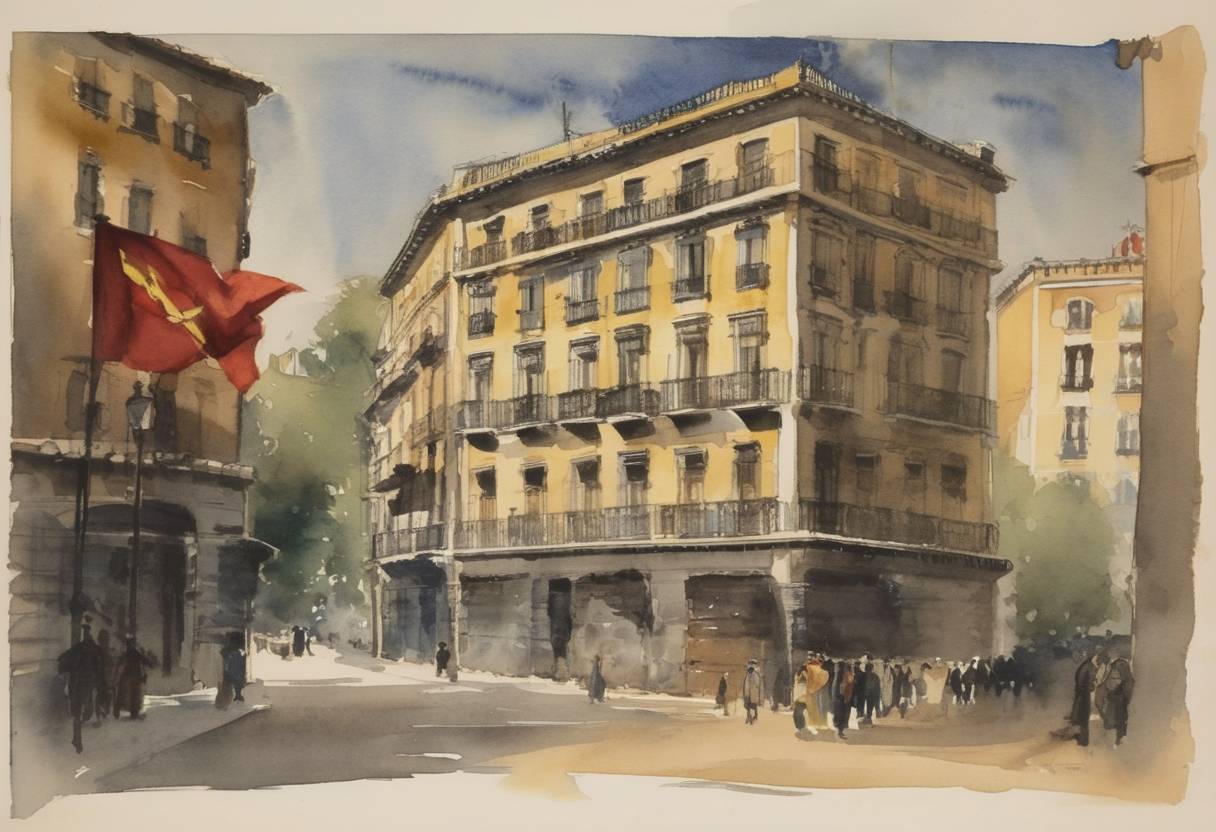
On November 14, 1921, the Communist Party of Spain (Partido Comunista de España, PCE) was founded. This event marked a significant development in Spanish political history, reflecting broader dynamics within the international workers’ movement of the early 20th century.
The formation of the PCE was the direct result of a schism within the Spanish Socialist Workers’ Party (Partido Socialista Obrero Español, PSOE). This split was influenced by the ideological rift following the Russian Revolution of 1917, where socialist movements globally were pressured to decide their alignment regarding the Bolshevik-led Communist International (Comintern).
Influences of the Russian Revolution: The successful establishment of a socialist state in Russia inspired sections of the PSOE’s youth, who were unsatisfied with the moderate stances of the older socialist leadership towards revolutionary activities.
Social and Economic Conditions in Spain: Post-WWI, Spain faced severe economic challenges, labor unrest, and political instability. Growing dissatisfaction with conventional socialist approaches prompted younger and more radical members to seek an alternative that mirrored Lenin’s approach.
Third International’s Influence: The lure of the Comintern, established by Lenin and the Bolsheviks, proposed a global revolution led by the working class, presenting an opportunity for radical transformation that resonated with many dissident socialists.
Unification of Radical Elements: The PCE served as a new home for those in the socialist movement who desired a more militant approach, unifying several smaller Marxist and communist factions under one banner.
Part of a Global Movement: The establishment of the PCE aligned with similar developments in other countries, where communist parties were emerging as prominent fixtures in the struggle for workers’ rights and socialist governance.
Immediate Impact: Initially, the PCE faced significant challenges such as suppression by the state and skepticism from larger socialist bodies. However, its formation signaled a shift towards distinct political narratives within Spain that would play crucial roles in the coming decades, notably during the Spanish Civil War and Francoist Spain.
The PCE, despite facing periods of repression and illegality, would persist through the 20th century as an influential player in Spanish politics. Its establishment on November 14, 1921, marked the beginning of a complex chapter in Spain’s political and social landscape, echoing wider global movements of ideological realignment and resistance.
Source: en.wikipedia.org