Discovery of Eris and the Reclassification of Pluto
2005 · Pasadena, United States
Astronomers announced the discovery of Eris, a dwarf planet in the scattered disc beyond Neptune, which led to the reclassification of Pluto as a dwarf planet.
August 12, 1990
The largest and most complete Tyrannosaurus rex skeleton, known as 'Sue,' was discovered in South Dakota by paleontologist Sue Hendrickson. It provided significant insights into the species.
Faith, United States | Field Museum of Natural History
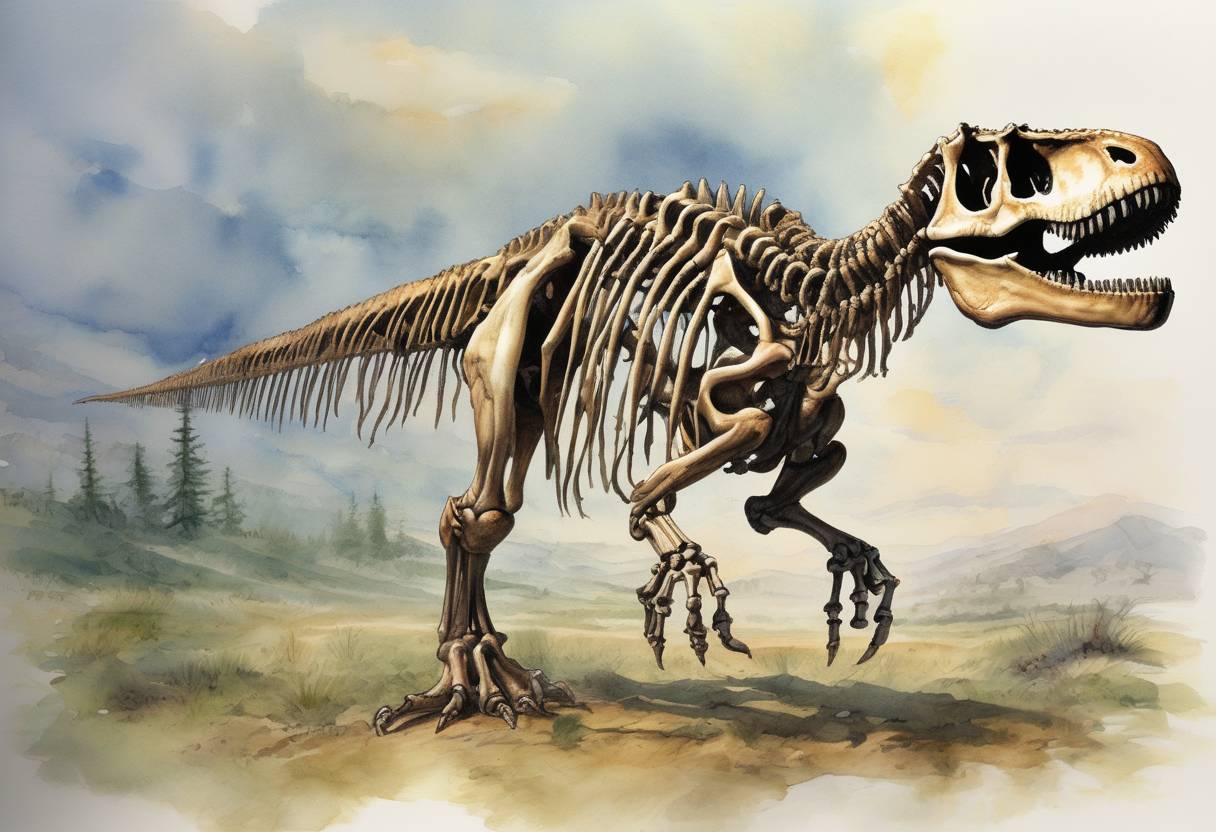
On August 12, 1990, a remarkable discovery was made in the badlands of South Dakota that would significantly impact the field of paleontology. Sue Hendrickson, an accomplished fossil hunter, unearthed the largest and most complete Tyrannosaurus rex skeleton ever found. This specimen was later named “Sue” in her honor.
Before this discovery, the understanding of the Tyrannosaurus rex, one of the most iconic dinosaurs, was based on incomplete and fragmented fossils. The discovery of a more complete skeleton promised to fill in many gaps in the scientific understanding of this species.
The discovery of Sue has led to numerous insights into the life and environment of the Tyrannosaurus rex:
Anatomical Details: The completeness of the skeleton allowed scientists to study the T. rex’s structure in detail, including its skull, which was crucial for understanding its feeding habits and sensory capabilities.
Growth and Development: Analysis of Sue’s bones provided information about the growth patterns and life expectancy of T. rex, suggesting they grew rapidly and had a relatively short lifespan.
Pathology: Examination of Sue’s bones revealed signs of injuries and diseases, offering a glimpse into the challenges faced by these prehistoric creatures.
Legal Disputes: The discovery led to a prolonged legal battle over the ownership of the fossil, involving the Black Hills Institute, the landowner, and the federal government. The dispute was resolved in 1997 when the fossil was auctioned.
Auction and Display: Sue was sold at auction for $8.36 million to the Field Museum of Natural History in Chicago, where it remains on display, attracting millions of visitors and continuing to educate the public about paleontology.
Scientific Research: The fossil continues to be a subject of scientific research, contributing to ongoing studies in dinosaur biology and evolution.
Sue’s discovery not only enriched scientific knowledge but also sparked public interest in paleontology, highlighting the importance of fossil preservation and the complexities of fossil ownership.
Source: en.wikipedia.org