Djibouti's Independence from France: June 27, 1977
1977 · Djibouti City, Djibouti
Djibouti gained independence from France, becoming a sovereign nation.
August 15, 1960
Congo formally declares its independence from France, marking the creation of the Republic of the Congo.
Brazzaville, Republic of the Congo | none
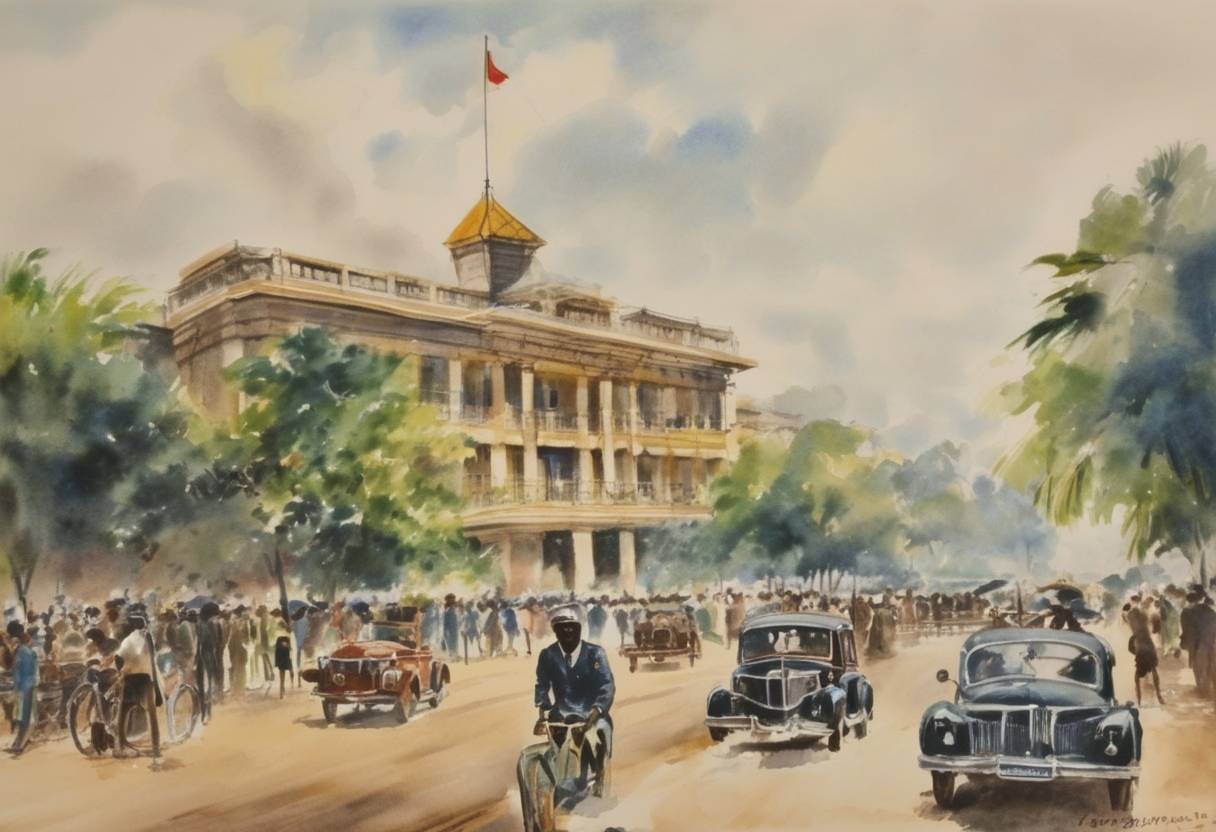
On August 15, 1960, the Republic of the Congo formally declared its independence from France, marking a significant milestone in the wave of decolonization that swept across Africa during the mid-20th century. This historic event not only signaled the end of French colonial rule in the region but also initiated a new chapter in the nation’s history.
Part of French Equatorial Africa, the territory of the Congo had been under French colonial rule since the late 19th century. The push for independence was influenced by a broader trend of African nationalism and the desire for self-governance which accelerated after World War II. Political awareness among the Congolese elite and increased activism by political parties and movements laid the foundation for independence.
On August 15, 1960, amidst celebrations, the Republic of the Congo officially obtained its sovereignty. The transfer of power was highlighted by the lowering of the French flag and the hoisting of the Congolese flag. Fulbert Youlou became the first President of the newly independent nation, steering the Republic into its nascent phase of self-rule.
The independence of the Republic of the Congo was part of a broader continental trend during 1960, which became known as the “Year of Africa,” during which 17 African nations declared independence. Congo’s autonomy underscored the irreversible momentum towards decolonization and the reshaping of the African political landscape.
Source: www.britannica.com