End of Combat Operations in Iraq: Operation New Dawn
2010 · Washington D.C., United States
U.S. President Barack Obama announced the end of combat operations in Iraq, marking a shift to Operation New Dawn, which focused on stability operations.
February 28, 1991
The Gulf War officially ends as the President of the United States, George H. W. Bush, declares a ceasefire.
Washington, D.C., United States | United States Government
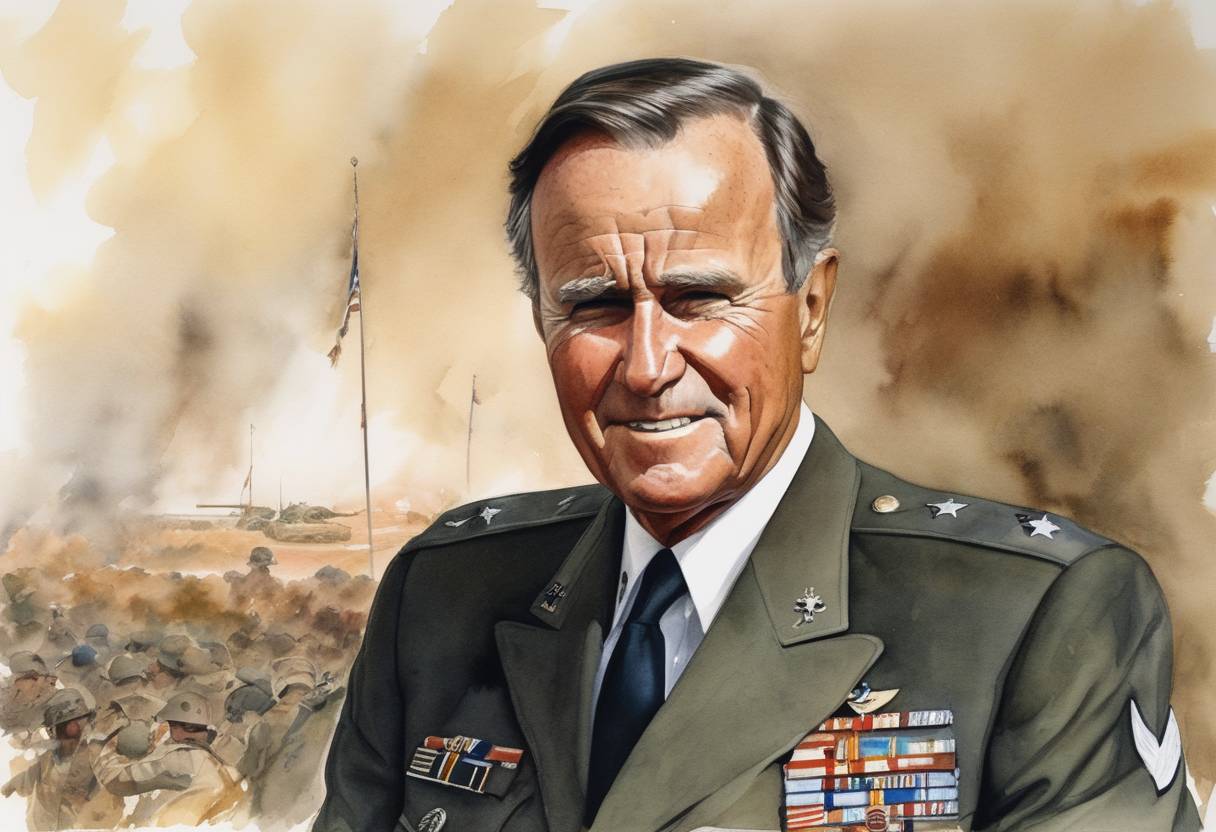
On February 28, 1991, President George H. W. Bush announced a ceasefire that marked the official end of the Gulf War. This conflict, also known as Operation Desert Storm, had begun in response to Iraq’s invasion of Kuwait on August 2, 1990. The United Nations, led by the United States, formed a coalition to liberate Kuwait and ensure regional stability.
Iraq’s Invasion of Kuwait: The Gulf War was precipitated by Iraq’s invasion and annexation of Kuwait. Saddam Hussein, the Iraqi president, aimed to control Kuwait’s oil reserves. The United Nations immediately condemned the invasion and imposed economic sanctions on Iraq.
Operation Desert Shield: Following the invasion, Operation Desert Shield was initiated to protect Saudi Arabia from potential Iraqi aggression and to build coalition forces in the region.
Operation Desert Storm: On January 17, 1991, the coalition launched Operation Desert Storm, a massive air and missile campaign targeting Iraqi military infrastructure and forces.
Ground Offensive: On February 24, a ground assault commenced, swiftly liberating Kuwait and pushing Iraqi forces back into Iraq. The coalition’s military superiority led to rapid victories.
With the Iraqi military largely defeated and Kuwait liberated, President Bush declared a ceasefire on February 28, 1991. This decision concluded active military operations against Iraq.
The ceasefire was declared after just 100 hours of the ground offensive, highlighting the overwhelming success and speed of the coalition’s military efforts.
UN resolutions continued to enforce sanctions while setting terms for Iraq to comply with disarmament and reparations.
Kuwait’s Liberation: Kuwait was successfully liberated, and its government was restored. The war significantly reshaped Middle Eastern geopolitics.
Iraqi Regime: Saddam Hussein remained in power, leading to further international tensions and the later U.S.-led invasion of Iraq in 2003.
Military and Technological Advances: The Gulf War demonstrated new military technologies, such as precision-guided munitions, marking a change in modern warfare tactics.
Humanitarian and Environmental Impact: The conflict caused significant human displacement and environmental damage, notably from oil spills and fires set by retreating Iraqi forces.
The ceasefire of February 28, 1991, thus marked a pivotal moment in late 20th-century geopolitics, ending a brief but intense conflict and setting the stage for future regional and global political dynamics.
Source: www.history.com