July 19, 1843

Brunel's SS Great Britain is launched. It is the first ocean-going craft built of iron, and equipped with a screw propeller.


Bristol, United Kingdom | Great Western Steamship Company
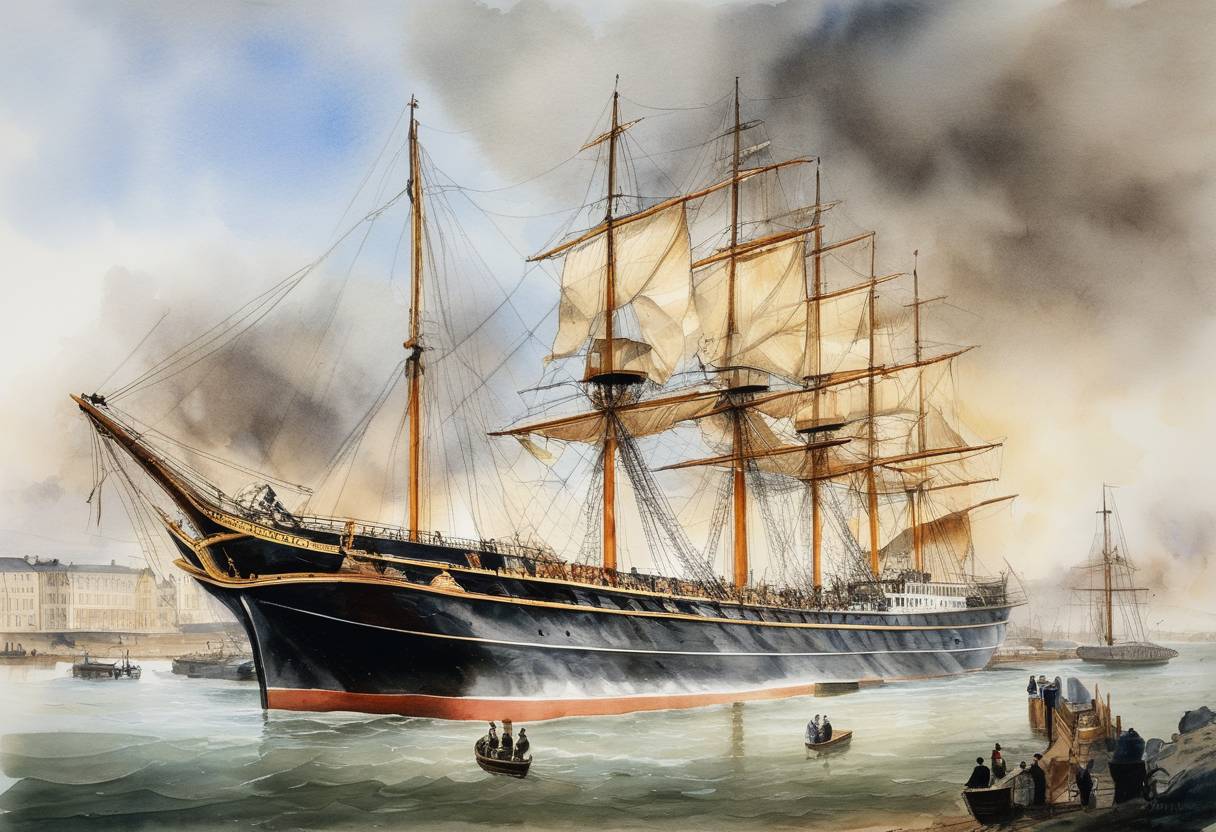
Watercolor painting based depiction of Brunel's SS Great Britain is launched. It is the first ocean-going craft built of iron, and equipped with a screw propeller. (1843)

Launch of SS Great Britain

On July 19, 1843, the SS Great Britain, an engineering marvel of its time, was launched from Bristol, England. Designed by the illustrious engineer Isambard Kingdom Brunel, the vessel represented a significant milestone in maritime engineering as the world’s first ocean-going ship constructed with an iron hull and propelled by a screw propeller.

Design and Construction

  • Innovator: Isambard Kingdom Brunel, known for pioneering work in the field of engineering, particularly transportation infrastructures.
  • Material: The use of iron instead of traditional wood was groundbreaking, offering increased durability and strength, capable of withstanding harsher ocean conditions.
  • Propulsion: The implementation of a screw propeller was revolutionary, replacing the less efficient paddle wheels and promising better fuel efficiency and greater speed.

Specifications

  • Dimensions: The SS Great Britain was 322 feet (approximately 98 meters) in length and displaced 3,400 tons.
  • Capacity: Designed to carry 360 passengers and 120 crew members.
  • Features: The ship was outfitted with a combination of steam power and sails, allowing flexibility in propulsion methods.

Significance

The launch of the SS Great Britain marked a pivotal moment in maritime history, signaling the dawn of a new era of shipbuilding and ocean travel:

  • Technological Leap: Her design influenced the construction of subsequent generations of ships, effectively altering the course of passenger and cargo transport over the seas.
  • Cultural Impact: The ship operated predominantly on the England-New York route, facilitating transatlantic travel and commerce.
  • Preservation: After a long and varied service life, the SS Great Britain was eventually returned to Bristol, where she has been preserved as a museum, offering insights into 19th-century engineering and maritime history.

Legacy

The SS Great Britain’s innovative design and success paved the way for future advancements in shipbuilding technology, reinforcing Brunel’s legacy as one of the most innovative engineers of the 19th century. As a preserved museum ship, she continues to educate and inspire, standing as a testament to human ingenuity and the industrial spirit of the era.