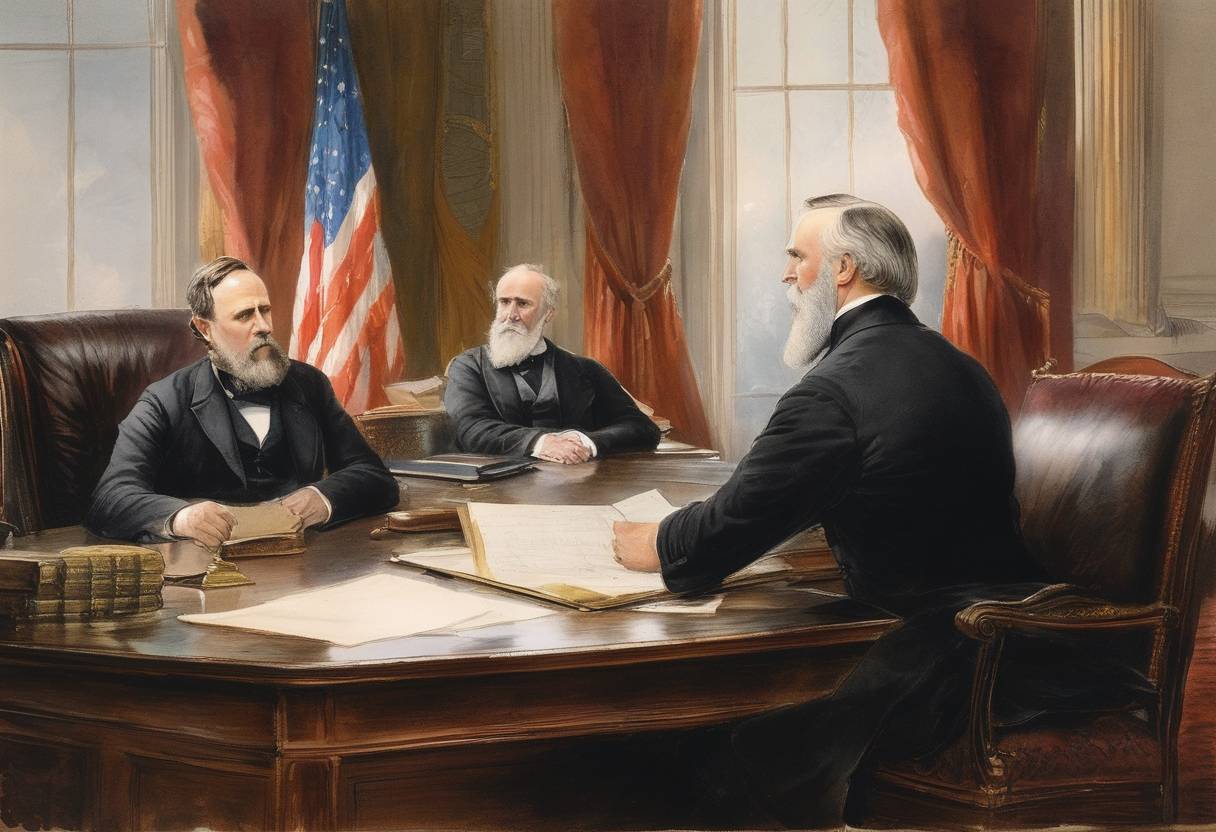
February 15, 1879: U.S. President Rutherford B. Hayes Signs Landmark Bill
On February 15, 1879, U.S. President Rutherford B. Hayes signed into law a pivotal piece of legislation that marked a significant step forward in women’s rights and the legal profession in the United States. This bill, formally known as an act to permit “any person of good moral character,” regardless of gender, to practice before the U.S. Supreme Court, was a milestone moment that explicitly allowed female attorneys to argue cases before the nation’s highest court.
Context and Background
Prior to this bill, the legal profession in the United States was predominantly male, with societal norms and legal restrictions often barring women from practicing law or participating fully in the judicial system. The push for female attorneys to gain the right to argue before the Supreme Court was a part of broader societal changes during the 19th century, which saw increasing advocacy for women’s rights, including the right to vote and equal educational opportunities.
Key Events Leading to the Legislative Change
The push for this legislative change was influenced by several early pioneers in the legal field. Among them was Belva Ann Lockwood, one of the first women admitted to the bar in Washington, D.C. She was heavily involved in advocating for women’s right to practice law and had faced numerous barriers due to her gender. Lockwood, alongside other female legal advocates, lobbied tirelessly for change, leading to the eventual introduction of the bill in Congress.
The Signing of the Bill
The signing of this bill by President Hayes was a progressive move that acknowledged the capabilities and rights of women in the legal profession. It reflected a growing recognition of gender equality in various professional fields during the late 19th century. The act did not legislate broader women’s suffrage but represented an empowering acknowledgment of women’s capacity in professional realms.
Aftermath and Historical Significance
Following the signing of the bill, Belva Ann Lockwood became one of the first women to be admitted to the bar of the U.S. Supreme Court later that year, in 1879. She would go on to argue several cases before the Court, setting a precedent and opening doors for future generations of female lawyers.
The legislation set an important precedent in the struggle for gender equality in the United States, which would continue to evolve through the 20th century with significant milestones such as women achieving the right to vote in 1920. The bill not only paved the way for future female attorneys but also signified a broader cultural shift towards gender inclusivity in professions traditionally dominated by men.
The policy, thus, had a lasting impact, serving both as a symbol and as a practical pathway for women striving for professional equality and client representation across the nation’s legal system.