Queen Elizabeth II Becomes Longest-Reigning Monarch
2015 · London, United Kingdom
Queen Elizabeth II became the longest-reigning monarch in British history, surpassing her great-great-grandmother, Queen Victoria.
June 20, 1887
Queen Victoria's Golden Jubilee, marking 50 years of her reign, is celebrated with a banquet hosting many European royalty.
London, United Kingdom | British Monarchy
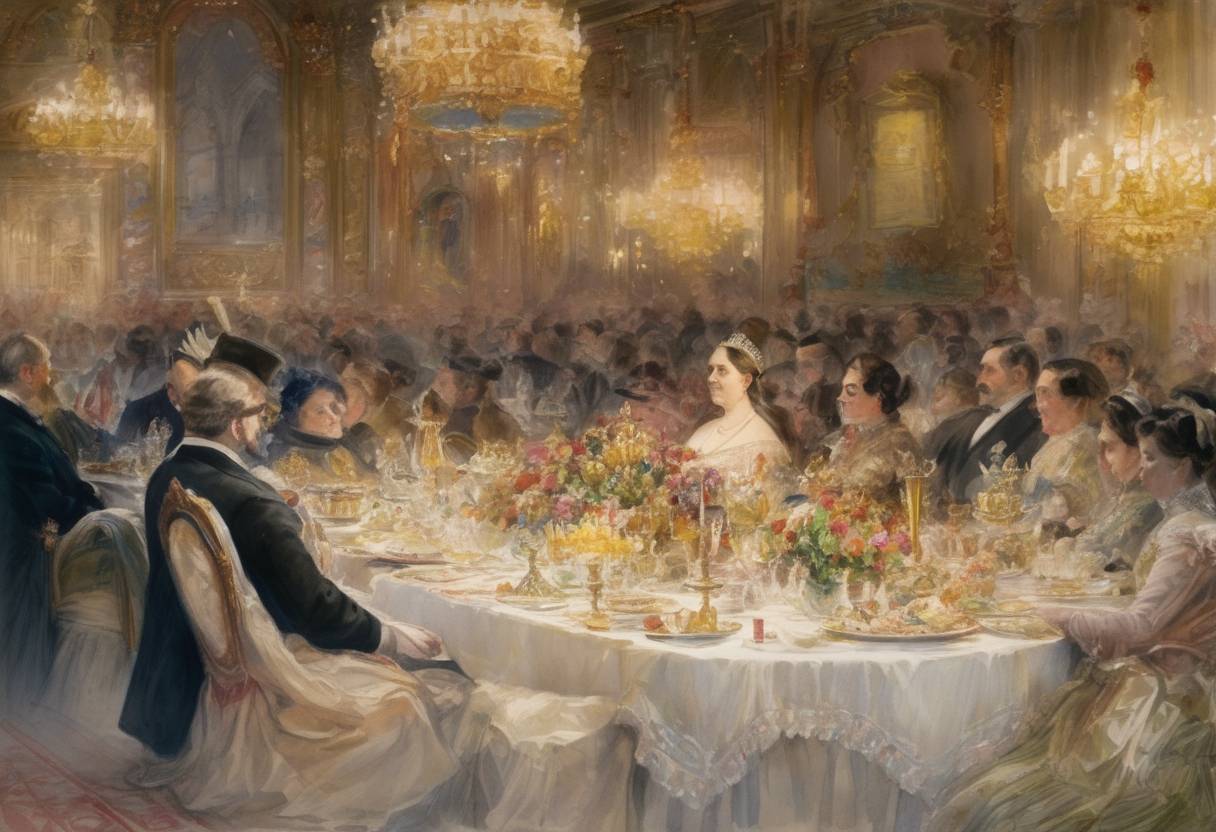
On June 20, 1887, Queen Victoria of the United Kingdom celebrated her Golden Jubilee, marking the 50th anniversary of her ascension to the throne. This event was a significant occasion not only within the United Kingdom but also internationally, as it attracted royalty and dignitaries from across Europe and the world.
Queen Victoria ascended to the British throne on June 20, 1837, following the death of her uncle, King William IV. Her reign presided over a period of profound change and expansion of the British Empire, characterized by industrial advancements and significant socio-economic transformations.
By 1887, Queen Victoria had become a symbolic figure of stability and continuity, and her Golden Jubilee presented an opportunity to celebrate her lengthy and influential rule. The preparations for the jubilee involved elaborate planning, aiming to emphasize the grandeur and the far-reaching dominions of the British Empire.
The celebrations on June 20, 1887, commenced with a grand procession through the streets of London, leading to a service of thanksgiving at Westminster Abbey. This ceremony was attended by European monarchs, many of whom were related to Queen Victoria through marriage or descent, earning her the nickname “Grandmother of Europe.” Among the royal attendees were Kaiser Wilhelm II of Germany, King Leopold II of Belgium, and King Umberto I of Italy, demonstrating her influence across the continent.
In the evening, one of the major highlights was a banquet hosted at Buckingham Palace. This magnificent event brought together the attending royal guests and high-ranking officials from across the Empire. The banquet featured an opulent array of dishes, and its setting showcased the wealth and power of the British monarchy at its zenith.
Queen Victoria’s Golden Jubilee was not only a personal celebration of her long reign but also served as a demonstration of the unity and strength of the British Empire under her leadership. It reaffirmed her popularity among her subjects and emphasized the interconnectedness of the European monarchies, which played significant roles in the political dynamics of the time.
The jubilee was a catalyst for numerous public works and charitable projects throughout the Empire, as communities organized events and collected funds to commemorate the occasion and enhance public welfare. In particular, the Jubilee contributed to the raising of funds for hospitals and public welfare initiatives, leaving a lasting legacy.
Following the Jubilee celebrations, Queen Victoria continued to reign until her death in 1901, eventually becoming the longest-serving British monarch at the time. The legacy of the Golden Jubilee lived on in the widespread admiration for her as a stabilizing figure in a rapidly changing world. The jubilee solidified Queen Victoria’s place in history and set a precedent for future royal celebrations.
Source: en.wikipedia.org