Expulsion of Asians from Uganda on August 4, 1972
1972 · Kampala, Uganda
Ugandan dictator Idi Amin orders the expulsion of 50,000 Asians with British passports from Uganda, leading to a mass migration crisis.
April 11, 1979
Ugandan dictator Idi Amin was deposed as Ugandan president by Tanzanian troops and Ugandan exiles, ending his eight-year regime.
Kampala, Uganda | Tanzanian army
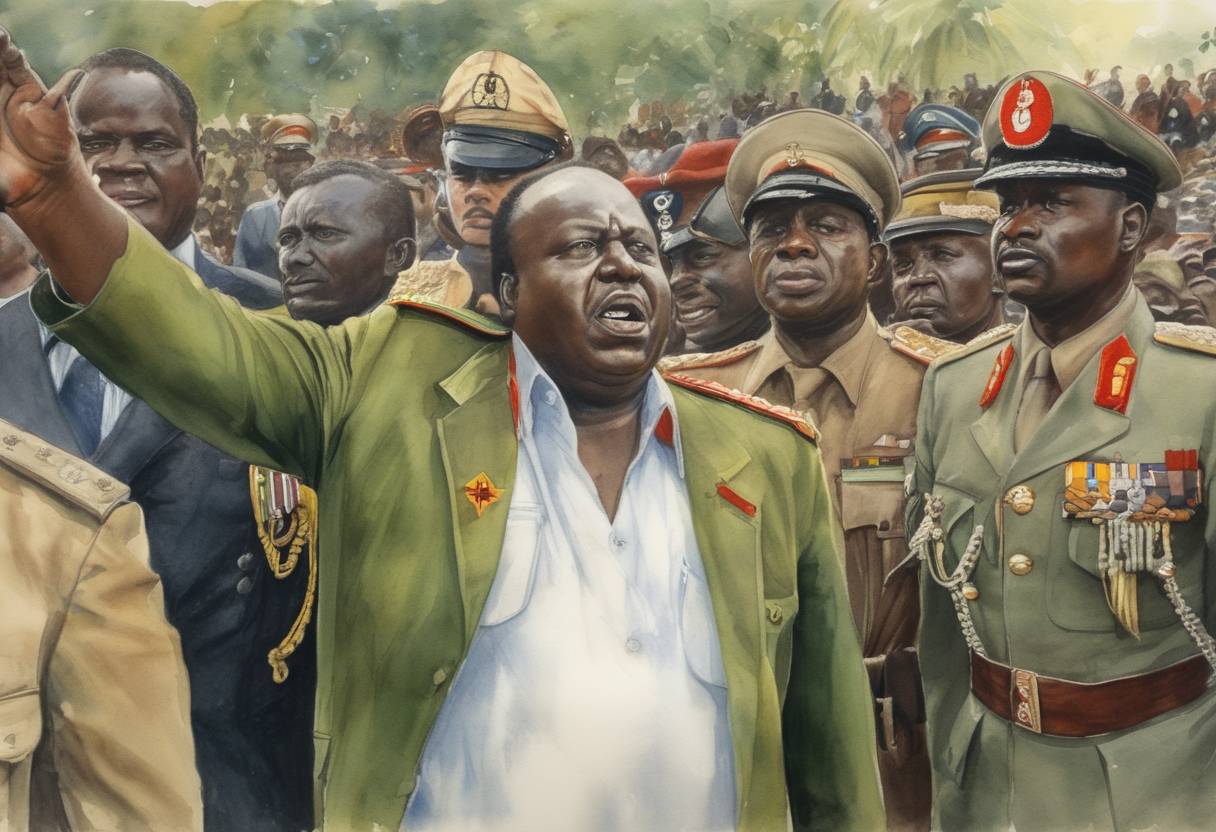
On April 11, 1979, the regime of Ugandan dictator Idi Amin came to an end when Tanzanian forces, combined with Ugandan exiles, successfully deposed him. This marked the culmination of a protracted conflict driven by Amin’s increasingly brutal and unpredictable rule.
Idi Amin came to power in Uganda in January 1971 after overthrowing President Milton Obote in a military coup. His regime quickly turned authoritarian, characterized by severe human rights abuses, including extrajudicial killings, political repression, and the expulsion of the Asian community from Uganda in 1972. His erratic policies and violent methods led to isolation from the international community.
Tensions between Uganda and Tanzania escalated following Amin’s territorial ambitions and his attempt to annex the Kagera region of Tanzania in October 1978. This incursion prompted Tanzania, led by President Julius Nyerere, to mobilize the Tanzania People’s Defence Force. Tanzania declared war on Uganda in response to these provocations, receiving support from Ugandan opposition groups eager to remove Amin from power.
After several months of fighting, Tanzanian troops, alongside Ugandan exiles organized as the Uganda National Liberation Army (UNLA), made significant advances into Ugandan territory. On April 11, 1979, these forces successfully entered Kampala, the Ugandan capital, overthrowing Idi Amin, who fled the city and eventually sought asylum in Libya before settling in Saudi Arabia.
Amin’s removal marked the end of an era of tyranny in Uganda. The new government under President Yusuf Lule, appointed by the Tanzanians, aimed to restore stability and initiate the long process of rebuilding the nation after years of devastating dictatorship. However, Uganda continued to grapple with political instability in the years following Amin’s ouster, with numerous changes in leadership before eventually reaching a more stable political climate in later decades.
The deposition of Idi Amin on April 11, 1979, was a pivotal moment in East African history. It not only highlighted the resilience and determination of the Tanzanian government under Nyerere but also underscored the role of regional cooperation in combating tyranny. Amin’s expulsion marked the beginning of Uganda’s journey toward regaining democratic governance and recovering from years of dictatorial rule.
Source: www.britannica.com