Geneva Accords and the Indochina Conflict
1954 · Geneva, Switzerland
The first part of the Geneva Accords is signed, aimed at resolving the ongoing conflict in Indochina.
July 20, 1954
Armistice negotiations to end the Vietnam War began in Geneva.
Geneva, Switzerland | International Control Commission
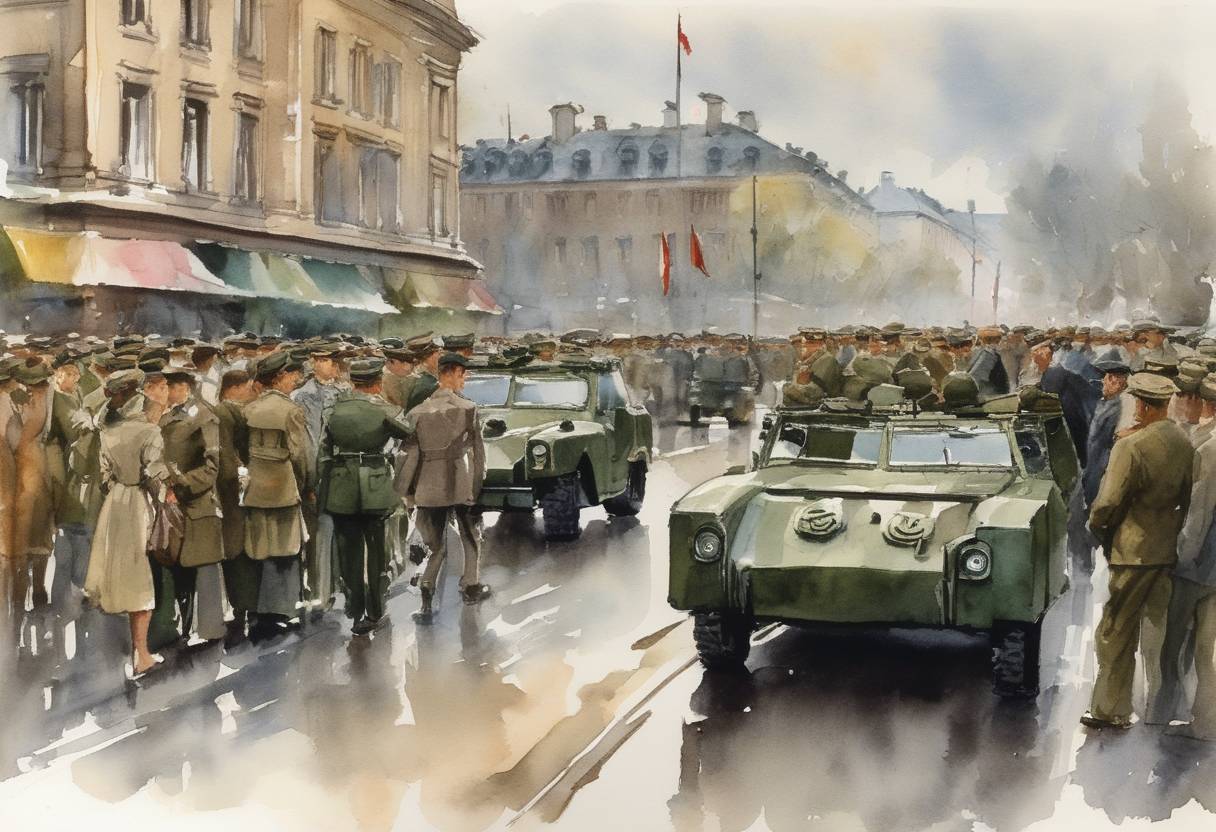
The armistice negotiations that sought to end the First Indochina War took a pivotal turn on July 20, 1954, in Geneva, Switzerland. These negotiations took place during the Geneva Conference, which had been ongoing since May 1954. The conference was primarily aimed at restoring peace in Indochina following nearly eight years of conflict between the French colonial forces and the Viet Minh, led by Ho Chi Minh.
The roots of the armistice negotiations are traced back to the complex geopolitical landscape that developed after World War II. Vietnam, previously a French colony, had declared independence under the communist leader Ho Chi Minh in September 1945. However, France sought to reassert control, leading to the outbreak of the First Indochina War in December 1946.
As the conflict progressed, it evolved into a Cold War battleground, with the United States beginning to support French efforts to counter communist expansion. The decisive battle of Dien Bien Phu in May 1954, resulting in a devastating defeat for the French, prompted the push for peace negotiations.
The Geneva Conference was attended by representatives from various countries, including the United States, the Soviet Union, China, the United Kingdom, France, and the involved parties from Indochina. The primary agenda was to discuss and negotiate a peaceful resolution to the conflicts in Korea and Indochina.
As discussions focused on Indochina, the primary objective was to halt the ongoing violence in Vietnam, Laos, and Cambodia. The intricacies of the negotiations were heavily influenced by the broader tensions of the Cold War, with major powers striving to find a balance that would prevent further escalation in the region.
On July 20, 1954, substantial progress was made when negotiations culminated in the drafting of the Geneva Accords. These accords resulted in a ceasefire and outlined several key agreements to relieve the conflict in Indochina:
Division of Vietnam: Vietnam was temporarily divided at the 17th parallel into two zones, with the North governed by the Viet Minh and the South under a French-backed government.
Ceasefire: Immediate ceasefire agreements were established across Vietnam, Laos, and Cambodia.
Military Withdrawal: A structured withdrawal of French troops from the northern zone was initiated.
Elections: The accords stipulated that general elections would be held in 1956 to unify Vietnam under a single government.
The Geneva Accords marked the official end of French colonial rule in Indochina and established a temporary peace in the region. However, the division of Vietnam into communist North and anti-communist South laid the groundwork for future conflict, which later escalated into the Vietnam War.
The Geneva Conference’s outcome illustrated the significant impact of Cold War dynamics on local conflicts, as global superpowers wielded influence over regional outcomes. Although the accords aimed to provide a peaceful resolution, the failure to unify Vietnam through elections contributed to the deepening divide and subsequent military engagements in the years to follow.
Source: en.wikipedia.org