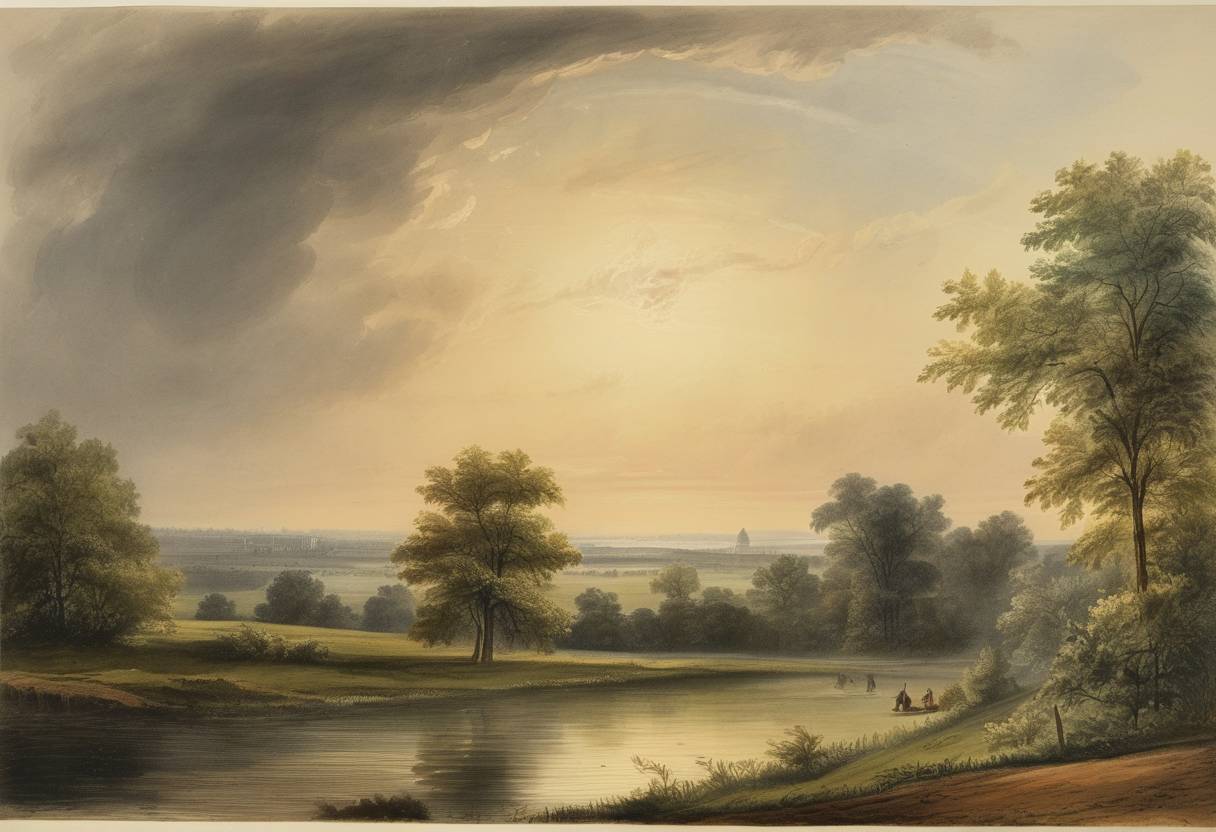
The First Official Weather Forecast by The Weather Bureau
On November 1, 1870, the United States established a pivotal moment in meteorological history when The Weather Bureau, which would eventually be known as the National Weather Service (NWS), issued its very first official weather forecast. This event marked the inception of systematic meteorological observations and forecasting in the United States and laid the groundwork for modern weather prediction.
Background and Establishment
Meteorology as a scientific discipline was gaining recognition in the mid-19th century, driven by the need for reliable weather information to serve agriculture, shipping, and burgeoning industries. The U.S. Congress, recognizing the importance of meteorological data collection, passed a joint resolution on February 9, 1870, mandating the Secretary of War to take meteorological observations.
The mandate stipulated that observations were to be recorded and used for forecasting, primarily to warn of approaching storms. This responsibility was assigned to the Signal Service, a part of the War Department, because of its existing infrastructure for communication and trained personnel capable of undertaking the task.
The First Forecast
The first official forecast was issued from the Signal Service’s headquarters in Washington, D.C. The data for this forecast was collected from various stations, largely military outposts and telegraph offices spread across the nation. These stations reported local weather conditions such as temperature, wind, precipitation, and much more to a central point using telegraphs, making it possible to compile and analyze the national weather picture.
The forecast on November 1, 1870, was a relatively simple affair by modern standards. It provided general information about expected weather conditions, focusing principally on areas that would experience significant changes, such as impending storms which could impact human activity and safety.
Impact and Legacy
The early success of The Weather Bureau’s forecasts demonstrated the utility of systematic meteorological observations, validating the federal government’s investment in weather services. As technology and understanding of meteorological sciences advanced, so did the accuracy and utility of the forecasts.
This effort to institutionalize meteorology eventually led to the separation of the meteorological function from the military. By 1890, civilian meteorologists began taking over the responsibilities, and in 1970, the agency was renamed the National Weather Service under the National Oceanic and Atmospheric Administration (NOAA).
The establishment of The Weather Bureau and its first forecast is a significant milestone in the history of weather observation and prediction, serving as the foundation upon which today’s sophisticated global weather monitoring systems are built. The continual development of technology and methods in the field testifies to the enduring significance and evolution initiated by that initial forecast in 1870.