The Alamanni Cross the Frozen Rhine River - January 2, 366
366 · Rhine River, Roman Empire
The Alamanni cross the frozen Rhine River in large numbers, invading the Roman Empire.
November 1, 0365
The Alamanni cross the Rhine and invade Gaul. Roman Emperor Valentinian I moves to Paris to command the army and defend the Gallic cities.
Paris, Roman Empire (modern-day France) | Roman Empire
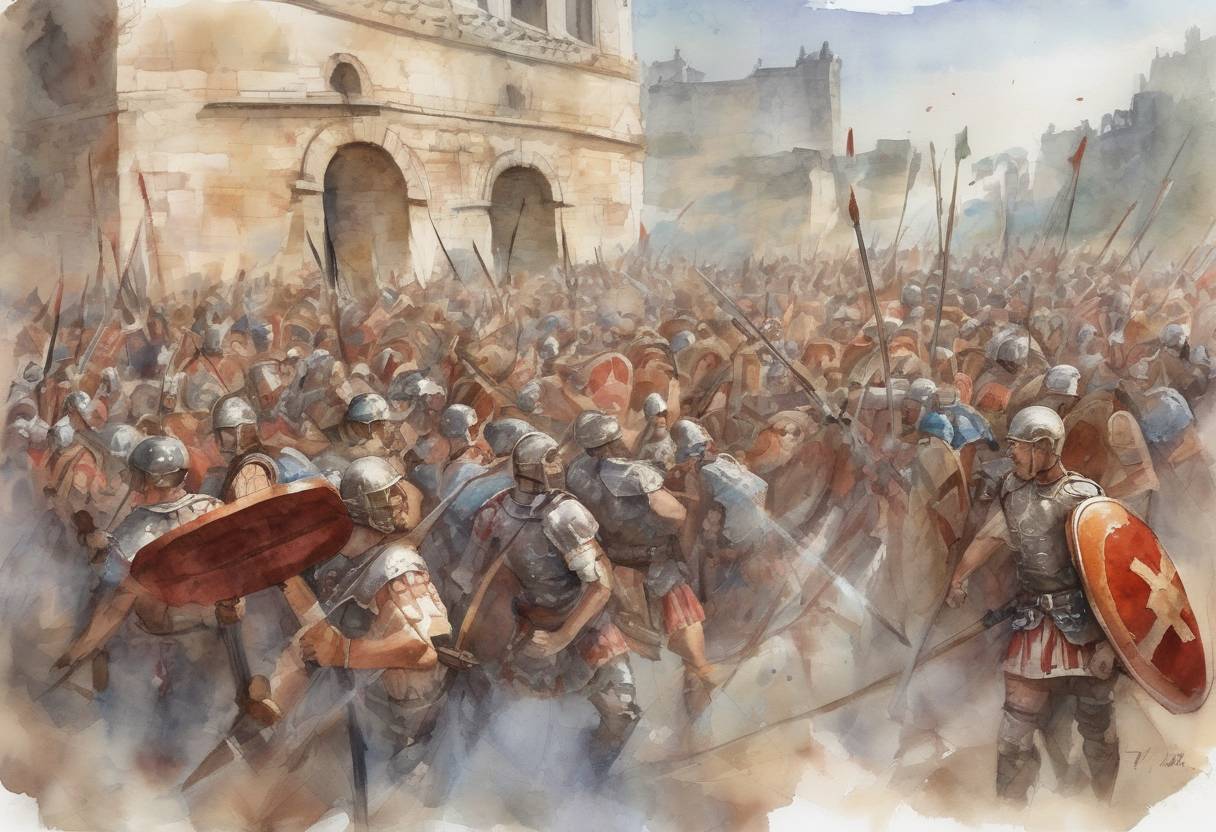
On November 1, 365, a significant event unfolded in the late Roman Empire as the Alamanni, a confederation of Germanic tribes, crossed the Rhine River and invaded the Roman province of Gaul. This incursion marked a pivotal moment in the ongoing struggle between the Roman Empire and various Germanic tribes during the late antiquity period.
The Roman Empire, during the 4th century, was under constant pressure from various barbarian groups along its frontiers. The Rhine River served as a critical boundary between the Roman territories and the Germanic tribes. The Alamanni, known for their frequent raids and incursions into Roman lands, were one of the most formidable groups challenging Roman authority in the region.
On November 1, 365, the Alamanni took advantage of the Roman Empire’s internal distractions and vulnerabilities to launch a significant invasion across the Rhine into Gaul. This bold move threatened the stability and security of the Roman provinces in the region, prompting a swift military response.
In response to the Alamanni invasion, Roman Emperor Valentinian I, who reigned from 364 to 375, took decisive action. Recognizing the gravity of the threat, Valentinian I moved to Paris (then known as Lutetia) to personally command the Roman army and organize the defense of the Gallic cities. His presence in the region underscored the importance of the situation and the need for strong leadership to repel the invaders.
Valentinian I’s efforts to defend Gaul were part of his broader strategy to secure the Roman Empire’s frontiers and maintain its territorial integrity. His leadership during this crisis demonstrated the resilience of the Roman military and its ability to respond to external threats despite the empire’s internal challenges.
The invasion by the Alamanni and the subsequent Roman defense had several significant consequences:
Military Reforms: The ongoing conflicts with Germanic tribes like the Alamanni prompted further military reforms within the Roman army, emphasizing mobility and the fortification of frontier defenses.
Roman-Germanic Relations: The event highlighted the complex relationship between the Roman Empire and the Germanic tribes, characterized by both conflict and diplomacy.
Legacy of Valentinian I: Valentinian I’s actions during this period solidified his reputation as a capable military leader and a defender of the Roman Empire’s western provinces.
In conclusion, the Alamanni invasion of Gaul on November 1, 365, and the subsequent Roman response under Emperor Valentinian I were crucial events in the late Roman Empire’s history. They exemplified the ongoing challenges faced by the empire in maintaining its borders and the resilience required to confront external threats.
Source: en.wikipedia.org