571 · Mecca, Saudi Arabia
According to Islamic tradition, the Prophet Muhammad was born in Mecca on this date, although the exact date is debated among historians.
November 25, 0571
The birth of Muhammad, the founder of Islam, is traditionally celebrated on this date according to some Islamic traditions, although the exact date is subject to historical debate.
Mecca, Saudi Arabia | N/A
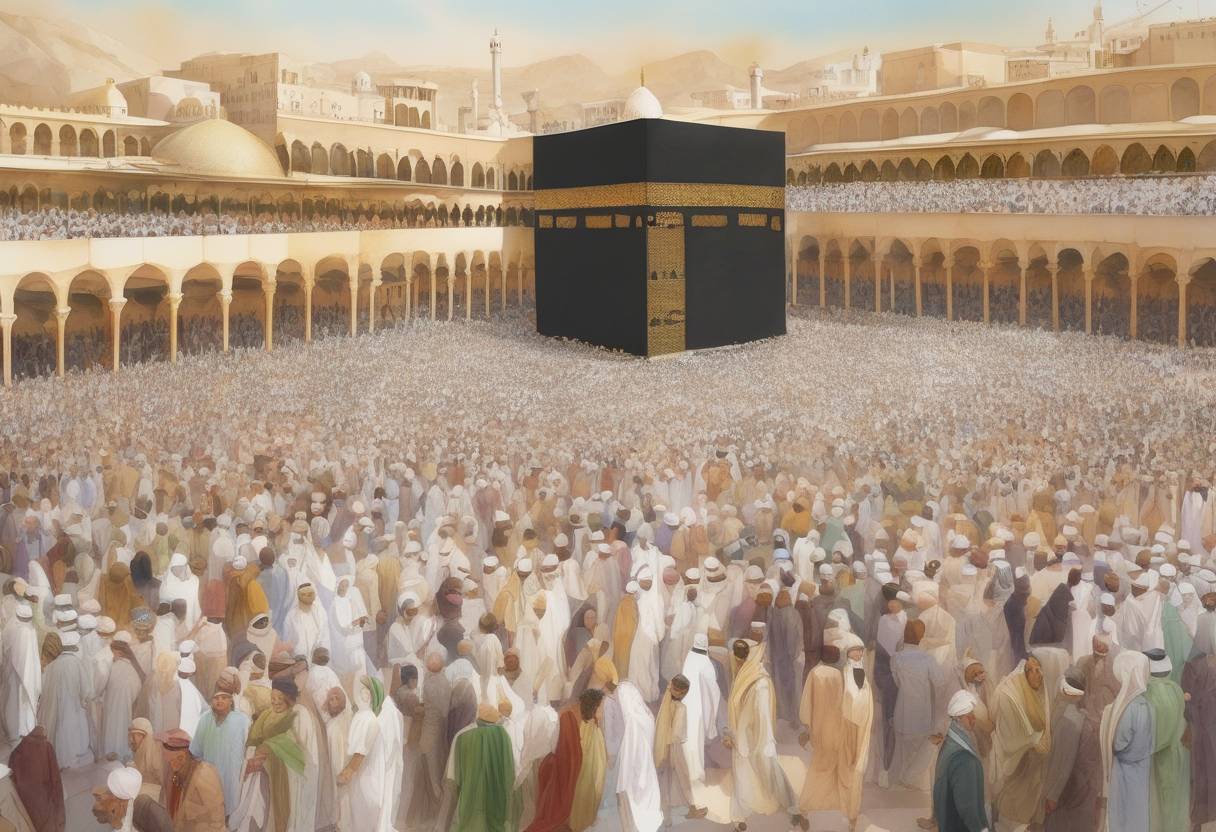
The birth of Muhammad, the founder of Islam, is a significant event in world history, traditionally celebrated by some Islamic traditions on the 12th of Rabi’ al-Awwal, which corresponds to different dates in the Gregorian calendar due to the lunar nature of the Islamic calendar. One such date often cited is November 25, 571 CE, although the exact date remains a subject of historical debate.
Muhammad was born in Mecca, in present-day Saudi Arabia, into the Quraysh tribe, a powerful and respected tribe in the region. His birth is traditionally placed in the Year of the Elephant, a year named after an event in which Mecca was reportedly saved from an invasion by an army that included war elephants. This event is mentioned in Islamic tradition and is seen as a miraculous occurrence.
Pre-Islamic Arabia: Before Muhammad’s birth, Arabia was a region characterized by tribal societies with polytheistic beliefs. Mecca was a significant religious and commercial center, home to the Kaaba, a sacred sanctuary.
The Quraysh Tribe: Muhammad’s tribe, the Quraysh, were the custodians of the Kaaba and played a central role in Meccan society. His grandfather, Abdul Muttalib, was a prominent leader of the tribe.
Muhammad’s Parents: His father, Abdullah, died before Muhammad’s birth, and his mother, Amina, passed away when he was six years old. Muhammad was subsequently raised by his grandfather and later by his uncle, Abu Talib.
Muhammad’s birth is considered a pivotal moment in Islamic history. He would go on to receive revelations from Allah (God) through the Angel Gabriel, which would form the Quran, the holy book of Islam. His teachings emphasized monotheism, social justice, and moral conduct, leading to the establishment of Islam as a major world religion.
The Rise of Islam: Muhammad’s prophetic mission began at the age of 40, and over the next 23 years, he preached the message of Islam, gaining a substantial following.
Unification of Arabia: Through his leadership, Muhammad united the Arabian Peninsula under the banner of Islam, transforming the social and political landscape of the region.
Legacy: Muhammad’s influence extends beyond religion; his life and teachings have shaped Islamic culture, law, and civilization. His legacy continues to impact millions of Muslims worldwide.
In conclusion, while the exact date of Muhammad’s birth is debated, its significance is universally acknowledged in Islamic tradition. His life and teachings have left an indelible mark on history, shaping the course of civilizations and cultures across the globe.
Source: www.britannica.com