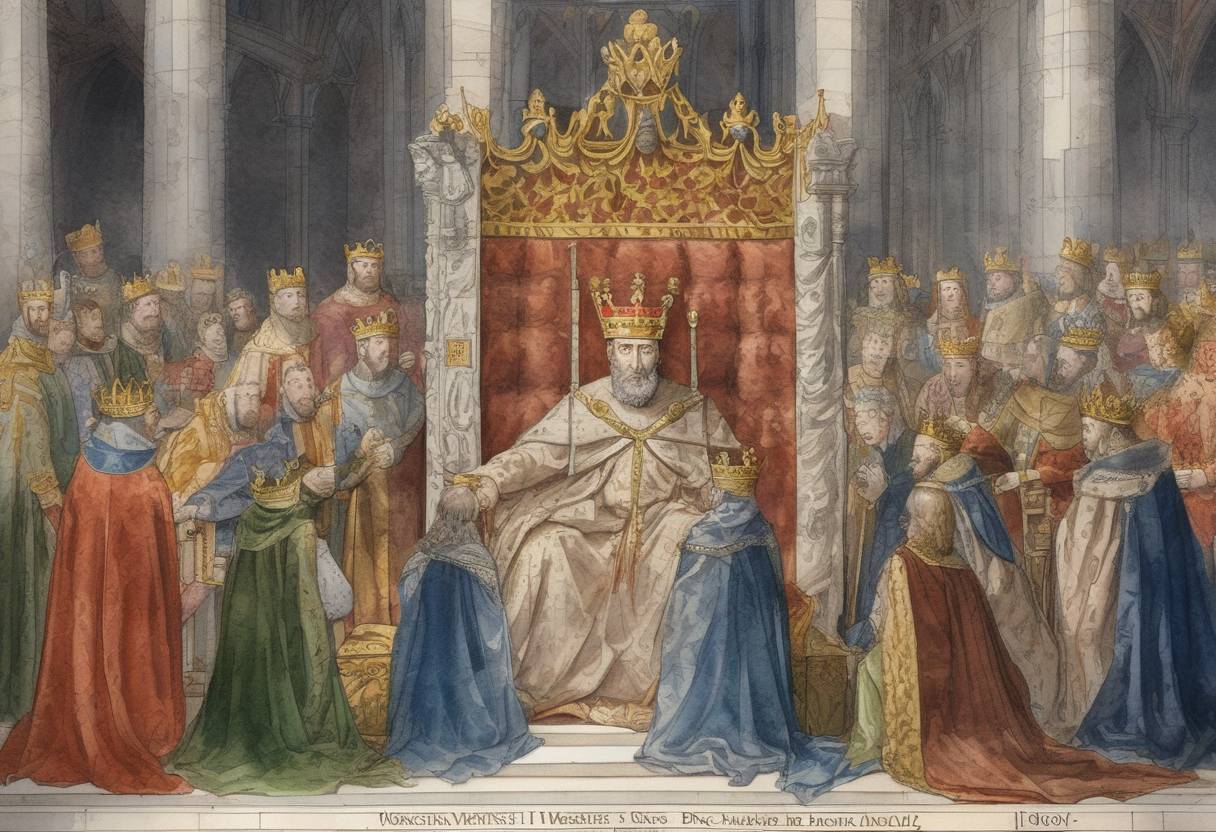
Henry II Crowned King of England - December 19, 1154
On December 19, 1154, Henry II was crowned King of England, marking the beginning of the Plantagenet dynasty, which would rule England for over three centuries. His coronation took place at Westminster Abbey, a significant event that followed a period of civil strife known as “The Anarchy.”
Background
- The Anarchy (1135-1153): This was a civil war in England and Normandy, characterized by a succession crisis following the death of Henry I. The conflict was primarily between Henry I’s daughter, Empress Matilda, and her cousin Stephen of Blois, who had seized the throne.
- Treaty of Wallingford (1153): This treaty effectively ended the civil war. It was agreed that Stephen would remain king for the rest of his life, but he recognized Matilda’s son, Henry, as his heir.
Henry II’s Ascension
- Lineage: Henry II was the son of Empress Matilda and Geoffrey Plantagenet, Count of Anjou. His claim to the throne was bolstered by his maternal grandfather, Henry I.
- Marriage to Eleanor of Aquitaine: In 1152, Henry married Eleanor of Aquitaine, one of the most powerful and wealthy women in Europe. This alliance significantly expanded his territories, adding Aquitaine to his domains.
Significance of the Coronation
- Plantagenet Dynasty: Henry’s coronation marked the beginning of the Plantagenet dynasty, which would rule England until 1485. The dynasty is known for its significant influence on English history, including the development of common law and the expansion of royal authority.
- Reforms and Governance: Henry II is credited with restoring order after the chaos of The Anarchy. He implemented legal and administrative reforms that strengthened the monarchy and laid the groundwork for the English common law system.
Aftermath and Legacy
- Expansion of Empire: Henry II’s reign saw the expansion of the Angevin Empire, which at its height included territories in France, Ireland, and Wales.
- Conflict with Thomas Becket: One of the most notable events during his reign was the conflict with Thomas Becket, the Archbishop of Canterbury, which culminated in Becket’s murder in 1170.
- Succession and the Plantagenet Line: Henry’s reign set the stage for future conflicts among his sons, leading to the eventual division of his empire. However, the Plantagenet line continued to play a crucial role in English and European politics for centuries.
Henry II’s coronation was a pivotal moment in English history, establishing a dynasty that would shape the medieval landscape of England and beyond. His reign is often seen as a period of consolidation and reform, setting the stage for the future development of the English state.