Recapture of Seoul: March 14, 1951
1951 · Seoul, South Korea
During the Korean War, United Nations forces recapture Seoul from Chinese and North Korean forces.
March 3, 1951
The United Nations Command issues Operation Ripper's operational plan, a military operation targeted against North Korean and Chinese forces during the Korean War.
Seoul, South Korea | United Nations Command
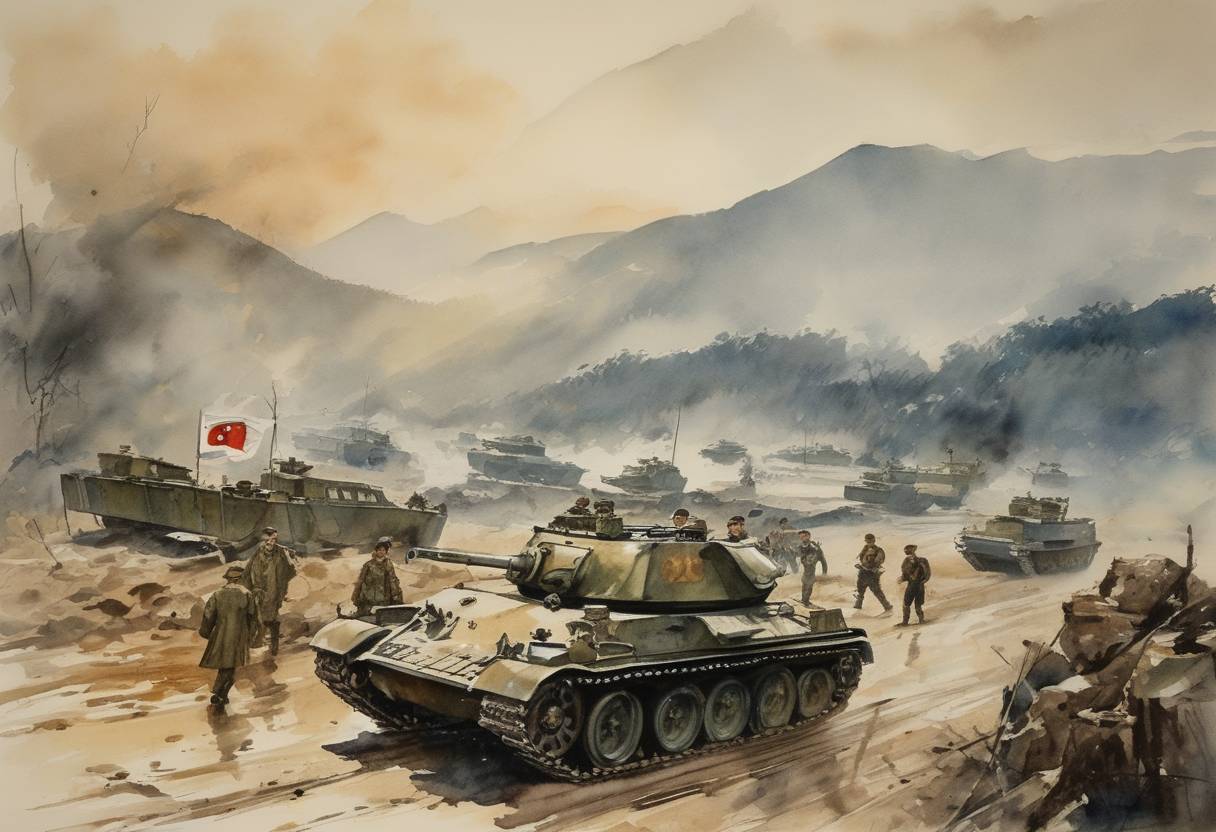
On March 3, 1951, during the Korean War, the United Nations Command issued the operational plan for Operation Ripper. This plan outlined a major offensive aimed at recapturing the South Korean capital of Seoul and driving Chinese and North Korean forces north of the 38th parallel.
Following the Communist Chinese intervention in late 1950, United Nations forces had been pushed back significantly. The tides began to turn again with Operation Thunderbolt, which helped stabilize the front lines south of the Han River. By early March 1951, General Matthew Ridgway, the commander of the United Nations and U.S. Eighth Army, sought to exploit enemy weaknesses and regain lost territory through a coordinated offensive.
Operation Ripper was planned with several key objectives:
The operation involved a series of phased advances by the Eighth Army and the U.S. I and IX Corps. Each phase aimed to incrementally secure strategic locations, starting from the Han River line, moving progressively toward Seoul and beyond. The tactics involved heavy use of artillery and air support to soften enemy defenses before infantry advances.
Operation Ripper officially commenced on March 7, 1951, and was largely successful in achieving its initial objectives. By mid-March, UN forces had recaptured Seoul, dealing a substantial blow to the Chinese and North Korean forces operating in the south.
Operation Ripper is notable for its demonstration of effective coordination among allied forces, showcasing improved morale and operational capability of UN troops. This operation provided a pivotal psychological advantage, reaffirming UN commitment to the Korean Peninsula and setting the stage for future offensives.
Source: en.wikipedia.org