The Incorporation of the Baltimore and Ohio Railroad
1827 · Baltimore, United States
The Baltimore and Ohio Railroad is incorporated, becoming the first U.S. company to be granted a charter for the transportation of passengers and freight.
March 7, 1827
The Baltimore and Ohio Railroad, the first common carrier railroad and the oldest railroad in the United States, was incorporated. It played a crucial role in the development of the American transportation industry and the expansion westward.
Baltimore, United States | Baltimore and Ohio Railroad
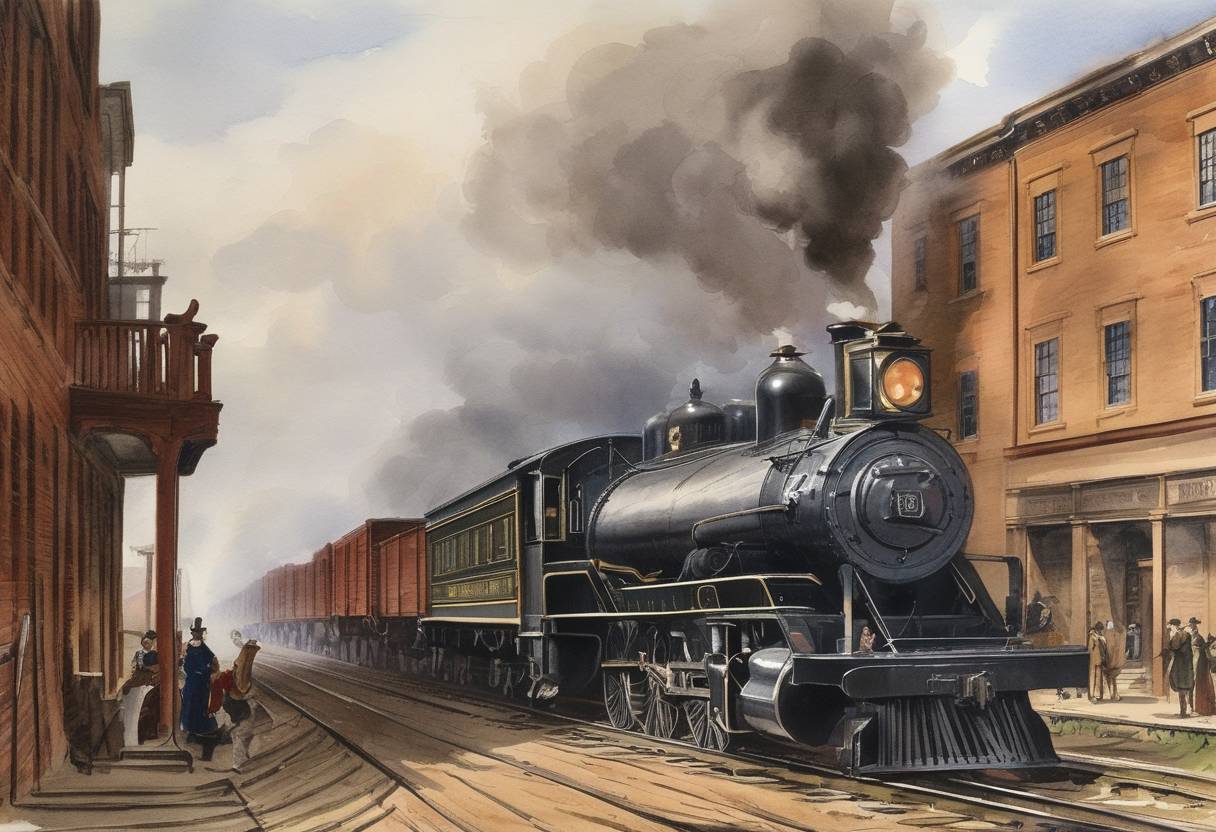
On March 7, 1827, the Baltimore and Ohio Railroad (B&O) was incorporated, marking a pivotal moment in American transportation history. The B&O Railroad was conceived as the first common carrier railroad and quickly became the oldest railroad in the United States.
In the early 19th century, Baltimore was at a competitive disadvantage compared to other port cities like New York, which had benefitted from the development of the Erie Canal. Maryland’s local merchants and businessmen were determined to retain Baltimore’s commercial relevance and sought to create a more efficient means of transporting goods and people across the Allegheny Mountains to the Ohio River Basin.
Early Efforts: Discussions began in the mid-1820s among Baltimore’s business community to find a solution to compete with canals and improve transportation infrastructure. Railroads emerged as the most innovative idea, representing cutting-edge technology at the time.
Charter Acquisition: On March 7, 1827, the Maryland Legislature granted a charter to the Baltimore and Ohio Railroad Company. The state of Maryland extended full support, including financial incentives, to ensure its success. This legislative move legally established the B&O Railroad.
Technological Innovation: The B&O was instrumental in introducing steam-powered locomotives to the railroad industry, eventually demonstrating greater reliability and efficiency than horse-drawn carriages.
Economic Impact: The railroad served as a practical and economical solution for moving goods and people across vast distances. It played a significant role in enhancing trade routes and economic activity in regions connected by it.
Westward Expansion: As one of the first major arteries of the American railway system, the B&O Railroad facilitated the expansion westward, enabling settlers and businesses to reach new territories with greater ease.
The Baltimore and Ohio Railroad set a precedent for future railroads in the United States, pioneering standards in railway construction and operation. Its development and eventual expansion contributed significantly to the economic growth of Baltimore and influenced the broader American industrial revolution. The success of the B&O inspired numerous other railroad projects, thereby transforming America’s transportation network and stimulating the push towards the interconnected nation seen today.
Source: www.history.com