1326 · Novgorod, Russia
The Treaty of Novgorod was signed between the Kingdom of Norway and the Republic of Novgorod, establishing agreed borders in the region shared by the two entities and ending hostilities in the Norwegian-Novgorodian Wars.
June 26, 1243
The Treaty of Kremmen was signed, ending disputes between Brandenburg and Pomerania.
Kremmen, Holy Roman Empire | Brandenburg-Pomeranian alliance
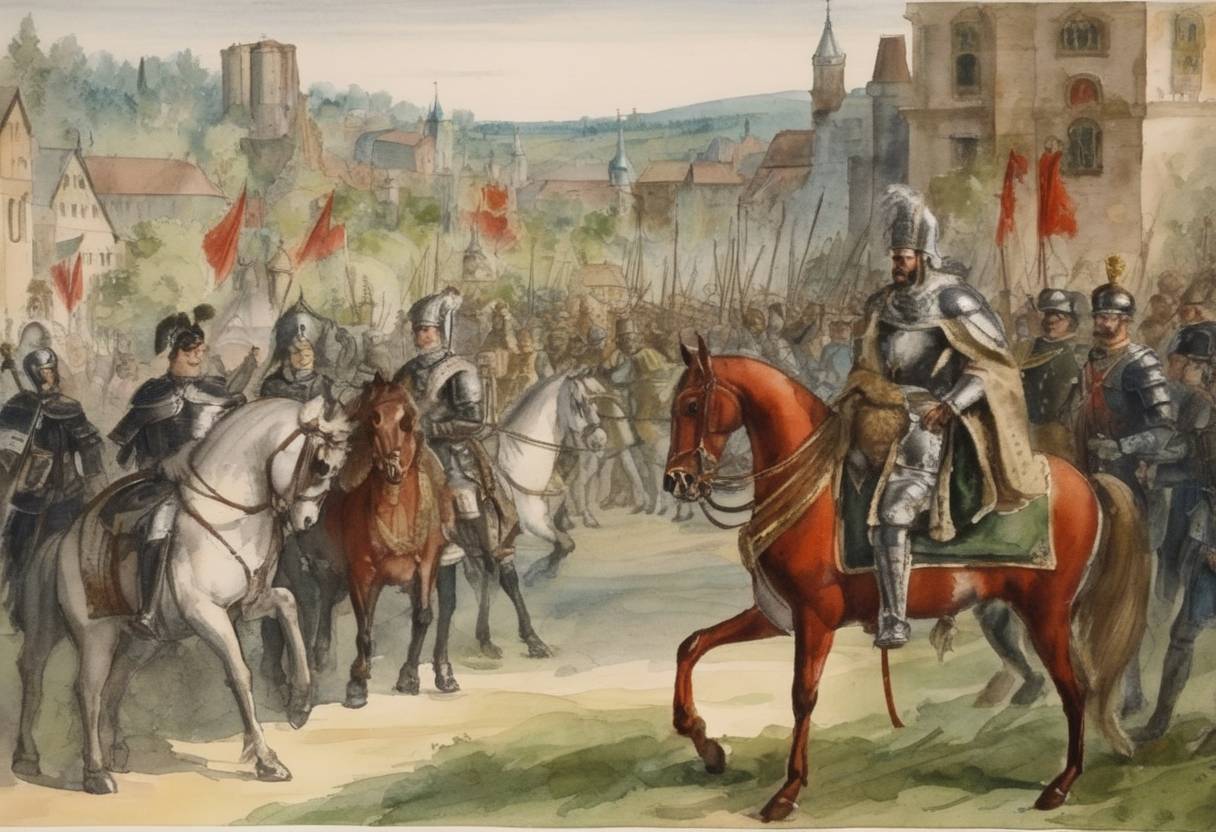
The Treaty of Kremmen, signed on June 26, 1236, was a significant medieval agreement that aimed to resolve ongoing territorial disputes between the Margraviate of Brandenburg and the Duchy of Pomerania. This treaty is notable for the resolution of conflicts that had plagued these regions in the territory of modern-day northeastern Germany.
During the early 13th century, the regions of Brandenburg and Pomerania were embroiled in territorial conflicts. The Margraves of Brandenburg sought to expand their influence over neighboring territories, including the strategically positioned Pomerania. These tensions were rooted in broader regional power struggles within the Holy Roman Empire and were exacerbated by issues of dynastic succession and territorial claims.
The Treaty of Kremmen was the result of negotiations aimed at stabilizing the region by delineating clear boundaries and asserting mutual agreements on governance. According to the terms, certain disputed lands were transferred or clarified in their governance. A significant provision was the formal acknowledgment by Pomerania of the suzerainty of the Brandenburg margraves, which underscored Brandenburg’s rising power in the region.
The treaty fortified Brandenburg’s position in northeastern Germany and contributed to the stabilization of the region, allowing for more predictable governance and development. Additionally, it set a precedent for diplomatic engagement and negotiation among feuding regions, emphasizing legal agreements over military confrontations in resolving disputes.
This arrangement, and the relative peace it established, allowed the regions of Brandenburg and Pomerania to focus on internal consolidation and economic development, laying groundwork for future growth and power within the broader Holy Roman Empire.
The Treaty of Kremmen highlights the medieval process of resolving territorial disputes through diplomacy, a practice increasingly favored over direct military confrontation. It exemplifies the shifting alliances and power structures of the time, illustrating the complexities of medieval politics within the Holy Roman Empire. This treaty remains a significant example of early inter-regional diplomacy in Europe.
By establishing clearer regional boundaries, the treaty contributed to the political landscape that would continue to evolve throughout the medieval period, impacting the development of territorial states in Germany.
Source: en.wikipedia.org