The Roman Catholic Relief Act of 1829
1829 · London, United Kingdom
The Roman Catholic Relief Act was passed by the British Parliament, allowing Catholics to sit in the parliament and hold public office.
June 7, 1832
The Great Reform Act received royal assent, marking a major political reform in Britain.
London, United Kingdom | British Parliament
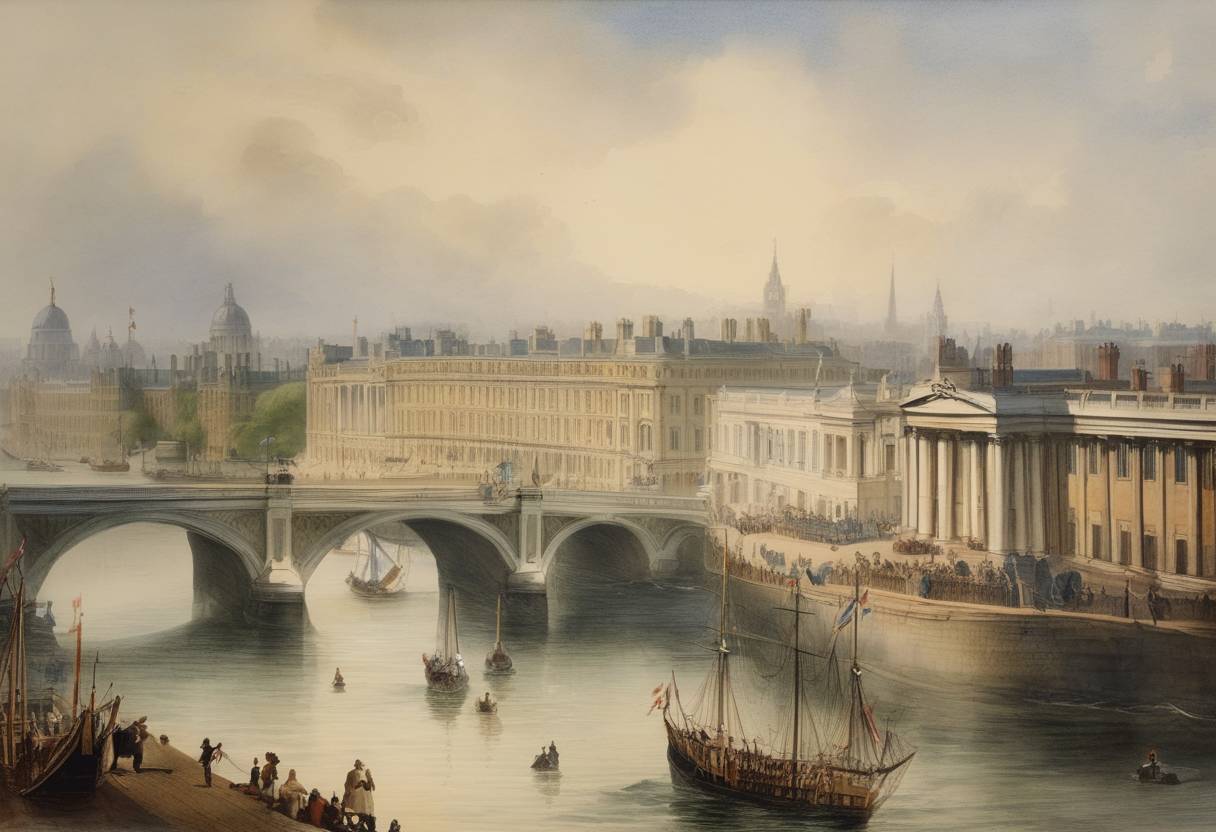
On June 7, 1832, the Great Reform Act, formally known as the Representation of the People Act 1832, received royal assent from King William IV, marking a watershed moment in British political history. This legislation was a response to growing demand for electoral reform and aimed at addressing widespread electoral malfeasance and the inadequacies of the voting system.
Prior to the Reform Act, Britain’s electoral system was deeply inequitable. Many parliamentary districts, known as “rotten boroughs,” had declined in population but still retained the right to elect MPs, often through a tiny number of eligible voters, sometimes controlled by a single influential patron. Conversely, burgeoning industrial cities like Manchester and Birmingham had little to no representation.
Reallocation of Seats: The Act disenfranchised 56 rotten boroughs in England and Wales and reduced representation in 30 others. It redistributively granted seats to 42 new boroughs, including industrial cities, and expanded representation in existing ones.
Franchise Expansion: While the Act did not democratize voting entirely, it extended voting privileges to more property-owning middle-class men. It lowered property qualifications, allowing more males of certain wealth brackets to vote. This expanded the electorate from roughly 500,000 to 800,000 out of a population then exceeding 24 million.
Abolition of Inequitable Voting Practices: The Act sought to standardize voting regulations and minimize corruption by implementing uniform rules across different regions.
Though the 1832 Reform Act did not establish universal suffrage, it laid the foundation for further democratic reforms in Britain. It signified the shift of political power from the aristocracy towards the middle class and set a precedent for future reforms. The Act also contributed to the weakening of the old patronage networks and the gradual rise of the political party system.
The process leading to the act involved significant public pressure, including demonstrations like the large-scale protests in Birmingham and the occasional threat of civil unrest. The passage of the Act is seen as a pivotal moment that pacified immediate demands for reform and helped avoid potential revolution, indicating a shift towards more responsive governance.
Today, the Great Reform Act is viewed as a critical step in the UK’s journey towards democracy, highlighting the evolving relationship between the government and the governed, and it is considered a key milestone in British legislative history.
Source: www.britannica.com