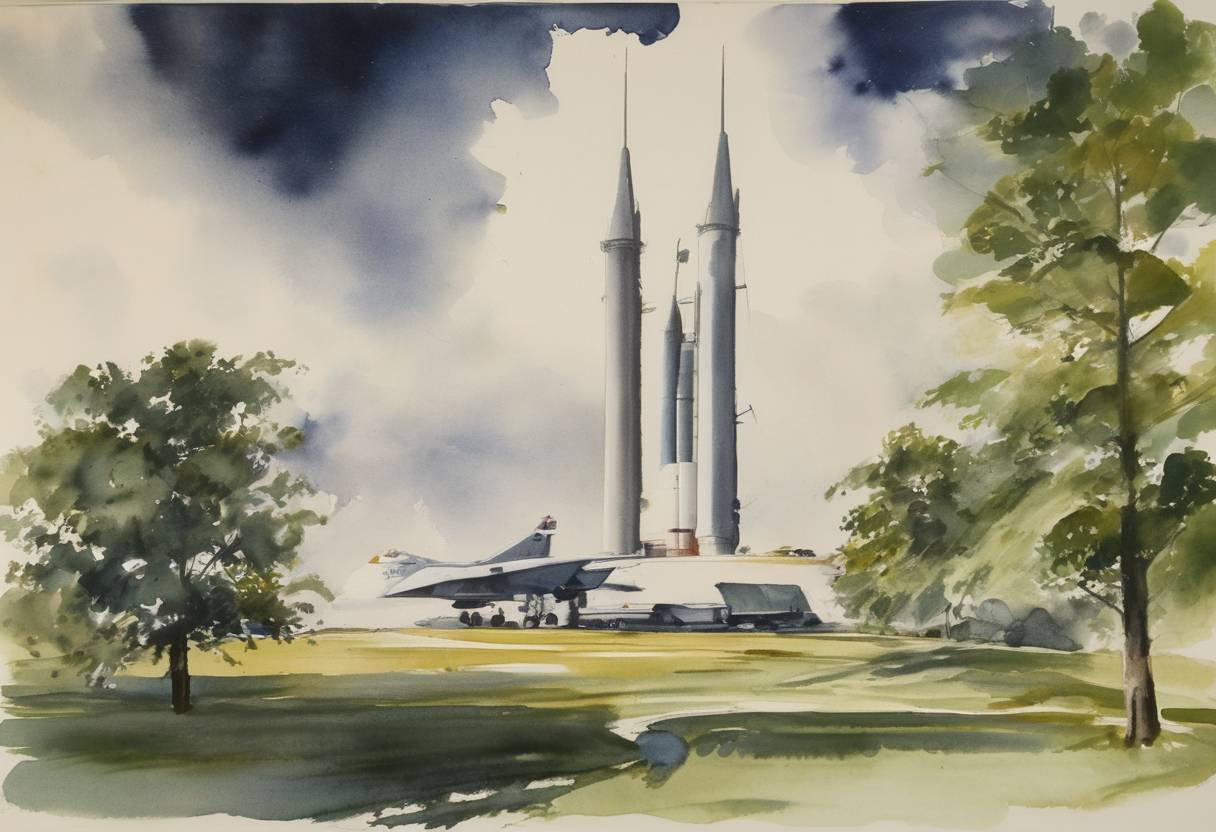
Signing of the NORAD Agreement: May 19, 1958
On May 19, 1958, the United States and Canada formalized a significant bilateral defense collaboration through the creation of the North American Air Defense Command (NORAD). This strategic agreement was designed to provide a coordinated and joint defense system for the airspace over North America during a period marked by heightened tensions in the Cold War.
Context and Background
Amidst the burgeoning threat of Soviet intercontinental ballistic missiles (ICBMs), both nations recognized the necessity of enhanced air defense coordination. The aftermath of World War II had firmly ushered in the Cold War era, characterized by the fear of nuclear conflict and espionage. The development of advanced radar and detection technology during the 1950s provided a technical foundation for such an undertaking.
Purpose and Objectives
The primary objective of the NORAD Agreement was to unify the air defense networks of both countries under a single organizational command. This alignment allowed for the seamless sharing of radar and early warning data, effectively creating a more robust shield against potential airborne incursions.
Key Features
Bilateral Command Structure: NORAD was structured to facilitate integrated command, with personnel from both nations working in tandem. The command was co-located across installations in both the United States and Canada.
Radar and Detection Capabilities: Significant investments were made in radar stations, notably the Distant Early Warning (DEW) Line, which tracked potential Soviet missile or bomber threats across the polar routes.
Operational Coordination: The agreement facilitated coordinated responses to unidentified aircraft or missile threats, reducing response times and enhancing defense readiness.
Broader Significance
The formal establishment of NORAD marked a pivotal step in Canada-U.S. military cooperation, reinforcing the strong bilateral defense ties. It exemplified Cold War defense dynamics, as Western nations sought collaborative measures to counter Soviet military capabilities.
Aftermath and Legacy
NORAD has undergone several transformations and expansions over the decades, notably evolving to address aerospace threats and adopting responsibilities for maritime and space surveillance. Its enduring existence underscores the continued significance of North American defense collaboration well beyond the Cold War, adapting to emerging global security challenges in the 21st century.
The signing of the NORAD Agreement not only fortified mutual defense commitments but also laid the groundwork for enduring military and strategic partnerships between Canada and the United States.