Thomas Edison and the Patent for the Mimeograph
1876 · Menlo Park, United States
Thomas Edison received a patent for his mimeograph, which would be an important tool for office duplicating, eventually evolving into modern photocopying technology.
April 8, 1766
The first fire escape was patented by Englishman Henry Wills. This invention marked a significant advancement in fire safety, providing a mechanism for people to escape burning buildings.
N/A, England | Patent Office
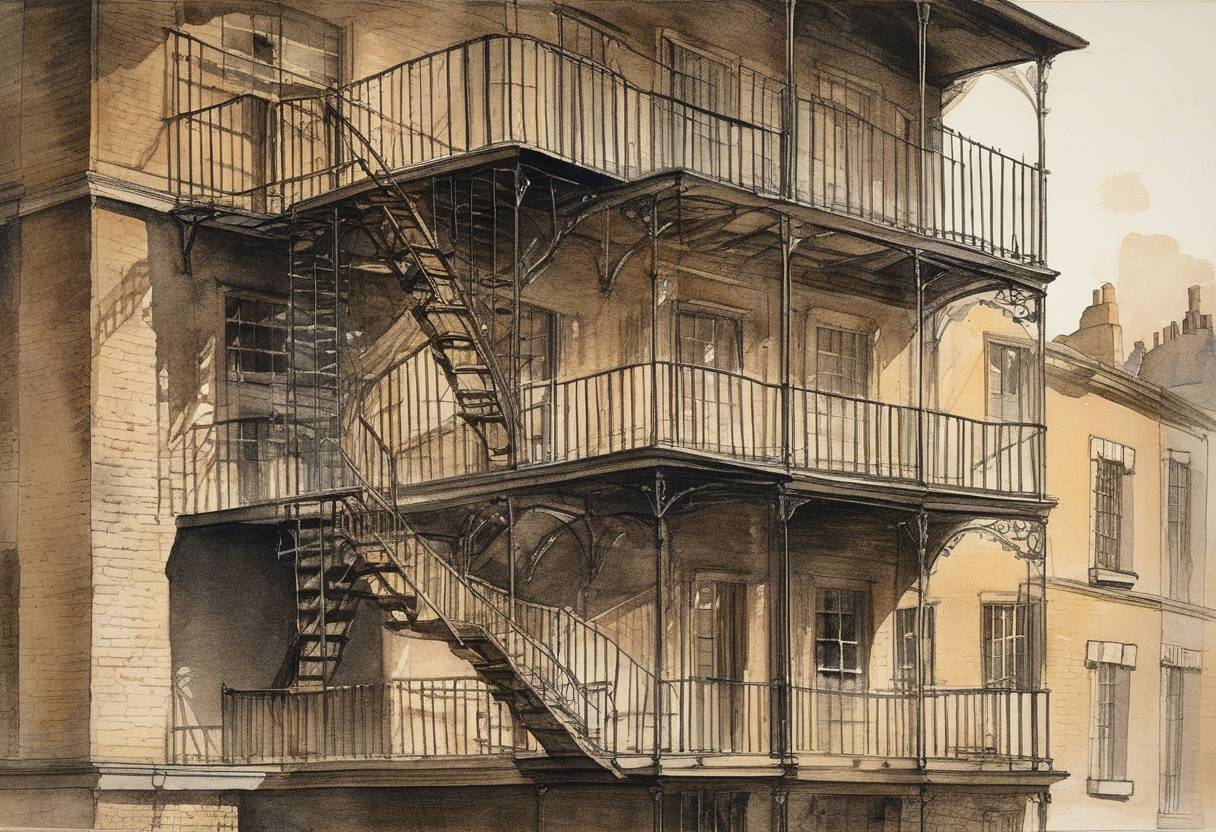
On April 8, 1766, Henry Wills, an English inventor, patented what is considered one of the earliest fire escape devices. This innovation marked a pivotal moment in the development of fire safety measures, as it provided a novel solution for the evacuation of individuals from buildings during a fire emergency.
Before the advent of organized fire escape systems, building occupants had limited means for safe egress in the event of a fire. The rapid urbanization in the 18th century, along with the increased construction of multi-story buildings, heightened the risks and potential casualties associated with fires.
Henry Wills’s fire escape involved a mechanized contraption designed to facilitate a safe exit from burning structures. While specific details of this early model have varied in historical accounts, it generally involved a mechanism that could be deployed to assist inhabitants in descending from perilous heights to the ground level safely.
The patenting of Wills’s fire escape represented a significant advancement in the burgeoning field of fire prevention and response. It laid the groundwork for future developments in fire escape technology, including the introduction of ladders, fire escapes with stairs, and various other systems that became integral to building codes and safety regulations in subsequent years.
The innovative thinking behind Henry Wills’s fire escape underscores the importance of addressing life safety in building design and architecture. It also highlights the early recognition of the need for emergency planning and measures to protect urban populations from the ever-present risk of fires. As such, Wills’s contribution to fire safety continues to be acknowledged as a foundational step in the ongoing efforts to improve public safety and emergency response practices in buildings around the world.
Source: www.history.com