1909 · Ottawa, Canada
The strategic St. Lawrence Seaway agreement was concluded.
June 13, 1898
The Yukon Territory was officially formed in Canada, separating it from the Northwest Territories, in response to the Klondike Gold Rush.
Dawson City, Canada | Canadian Government
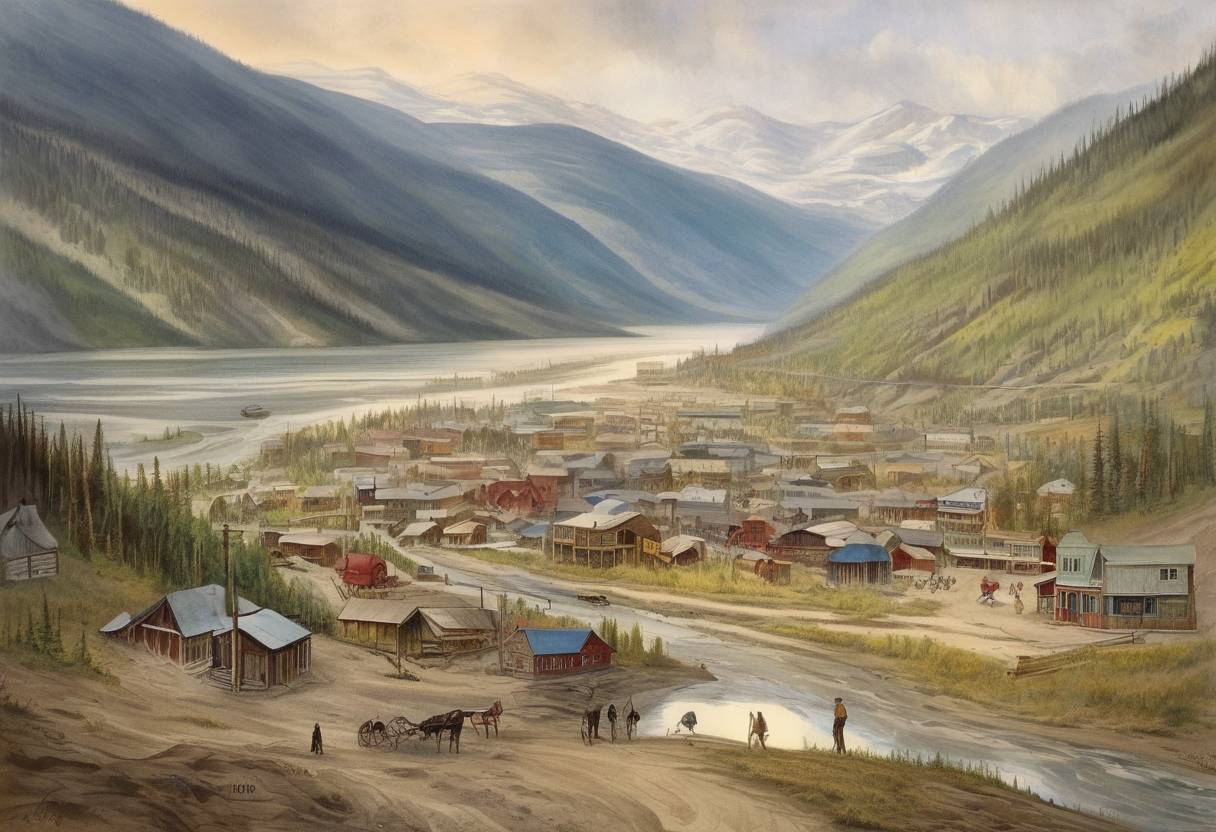
On June 13, 1898, the Yukon Territory was officially formed, separating it from the Northwest Territories in Canada. This significant administrative change was primarily a response to the Klondike Gold Rush, which had begun in 1896 and dramatically increased the population and economic activity in the region.
The Klondike Gold Rush: The discovery of gold in Bonanza Creek, a tributary of the Klondike River, in August 1896, triggered a massive influx of prospectors and settlers to the area. By 1897, news of the gold strike had reached the United States and other parts of the world, leading to a stampede of approximately 100,000 prospectors to the region.
Challenges of Governance: The sudden population boom and economic activity in the Klondike region presented significant challenges for the Canadian government. The remote and rugged terrain, coupled with harsh climatic conditions, made governance and law enforcement difficult under the existing administrative structure of the Northwest Territories.
Need for Administrative Control: The Canadian government recognized the need for more direct and efficient governance to manage the influx of people and maintain order. The establishment of a separate territory allowed for more focused administration and resource allocation.
Legislative Action: The Yukon Territory Act was passed by the Canadian Parliament, officially creating the Yukon Territory. This act provided the framework for a territorial government, including the appointment of a Commissioner and the establishment of a council to assist in governance.
Dawson City: Dawson City, which had rapidly grown into a bustling town due to the gold rush, became the capital of the new territory. It served as the administrative and economic center of the Yukon during the height of the gold rush.
Economic Impact: The creation of the Yukon Territory facilitated the development of infrastructure and services necessary to support the burgeoning population and economic activities. This included the establishment of law enforcement, postal services, and transportation networks.
Long-term Significance: The formation of the Yukon Territory marked a pivotal moment in Canadian history, reflecting the country’s ability to adapt its administrative structures in response to economic and demographic changes. It also underscored the importance of the region in Canada’s northern development.
The establishment of the Yukon Territory was a direct response to the unique challenges posed by the Klondike Gold Rush, and it played a crucial role in shaping the region’s future. Today, the Yukon remains an important part of Canada’s cultural and historical landscape, known for its rich natural resources and vibrant history.
Source: en.wikipedia.org