Election of Pope Nicholas I on April 24, 858
858 · Rome, Italy
Pope Nicholas I is elected as the 105th pope of the Catholic Church.
April 26, 0757
Pope Paul I is elected as the 93rd pope of the Catholic Church.
Rome, Italy | Catholic Church
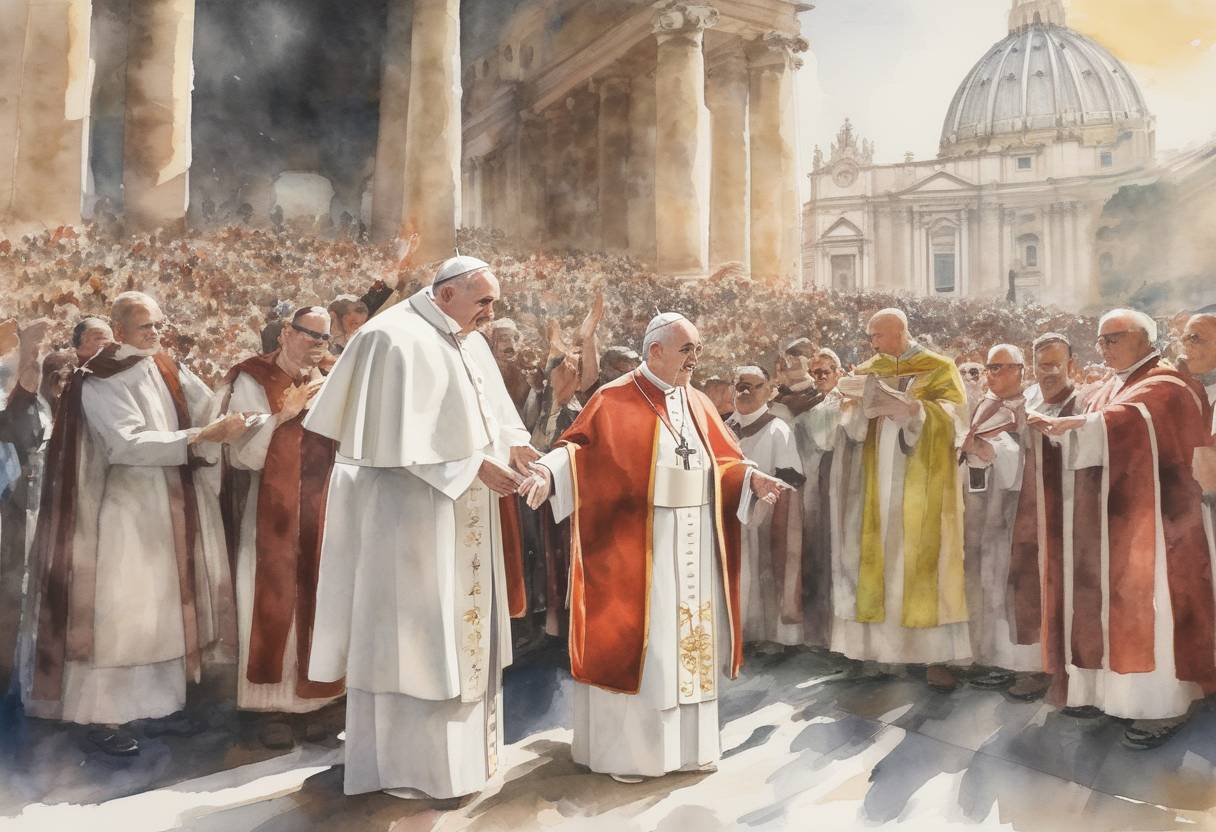
On April 26, 757, Paul I was elected as the 93rd pope of the Catholic Church. His election marked a significant moment in the history of the papacy during a period of considerable political and religious transformation in Europe.
Paul I was born in Rome around 700 AD into a prominent Roman family. He was the brother of Pope Stephen II, who preceded him. Before his papacy, Paul served as a deacon under his brother’s pontificate, where he gained valuable experience in ecclesiastical and diplomatic matters.
The mid-8th century was a time of political instability and shifting alliances. The Lombards, a Germanic people who had settled in Italy, posed a constant threat to the Papal States. The Byzantine Empire, which traditionally protected the papacy, was weakening in its influence over Italy. This geopolitical landscape necessitated a pope who could navigate these challenges effectively.
Paul I’s election was influenced by his strong connections within the Roman clergy and his diplomatic skills, which were crucial for maintaining the delicate balance of power between the Lombards, the Franks, and the Byzantine Empire.
Relations with the Lombards and Franks: Pope Paul I continued his brother’s policy of seeking protection from the Frankish king, Pepin the Short, against the Lombard threat. This alliance laid the groundwork for the future relationship between the papacy and the Carolingian dynasty.
Religious Reforms and Church Administration: Paul I was known for his efforts to strengthen the church’s spiritual and administrative structures. He worked to ensure the orthodoxy of the church and addressed various heresies that were emerging at the time.
Preservation of Relics: Paul I was dedicated to the preservation of Christian relics. He transferred many relics from the catacombs to churches within Rome to protect them from Lombard raids, a move that also helped to enhance the spiritual prestige of the city.
Pope Paul I’s papacy lasted until his death on June 28, 767. His tenure is noted for reinforcing the papal alliance with the Frankish kingdom, which would later culminate in the crowning of Charlemagne as Emperor in 800 AD. This alliance significantly influenced the political landscape of medieval Europe and the role of the papacy within it.
Paul I’s efforts to protect and promote the church’s interests during a time of external threats and internal challenges helped to stabilize the papal authority and laid the groundwork for the future expansion of papal influence.
In summary, Pope Paul I’s election and subsequent papacy were pivotal in navigating the complex political and religious dynamics of the 8th century, ensuring the continued prominence and influence of the papacy in European affairs.
Source: en.wikipedia.org